Blog
Guides and notes on getting more out of everyday file, text, and image tools.
- 4 min read · Ganesh Patil
A Black Box Over the Text Removed Nothing At All
Covering words with a black rectangle is what every general-purpose PDF editor makes easy, and it is the single most common way confidential documents leak. The rectangle is drawn on top. The words are still underneath it, in the file, and any extractor will hand them back in full.
pdfredactionprivacy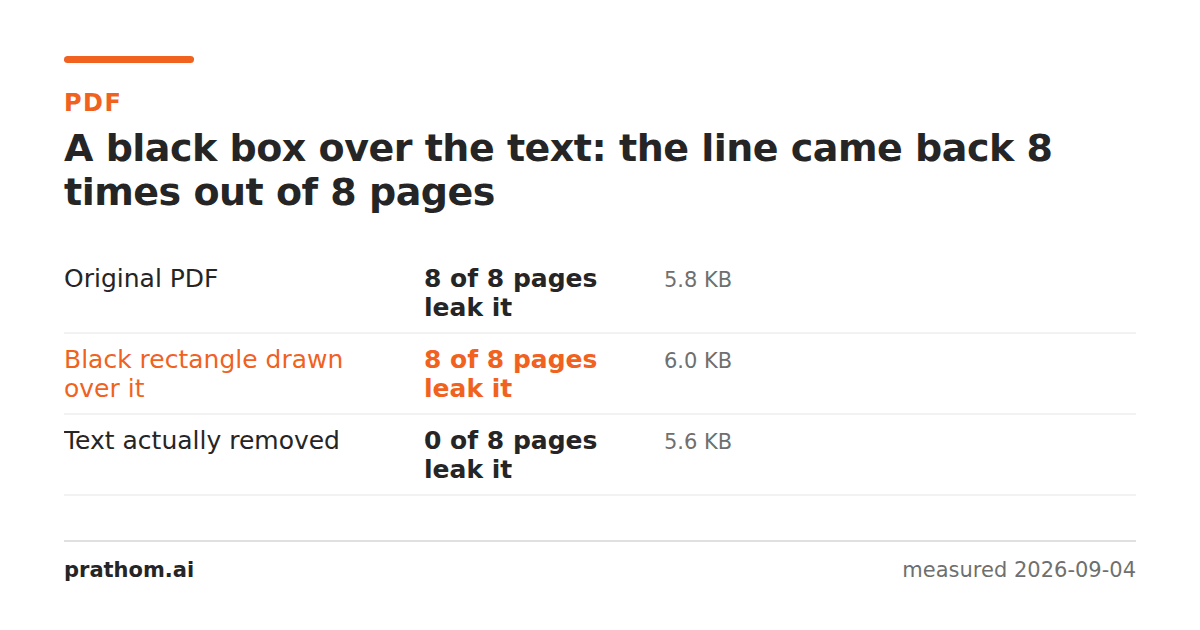
- 4 min read · Ganesh Patil
The Same Clip Was Four Times Bigger as a GIF, at Fewer Frames
Converting a video to a GIF feels like a downgrade, so the file should get smaller. It gets much bigger. The clip we measured quadrupled while losing four frames in every ten, and the reason is that a GIF has no idea what a video codec knows.
videogiffile size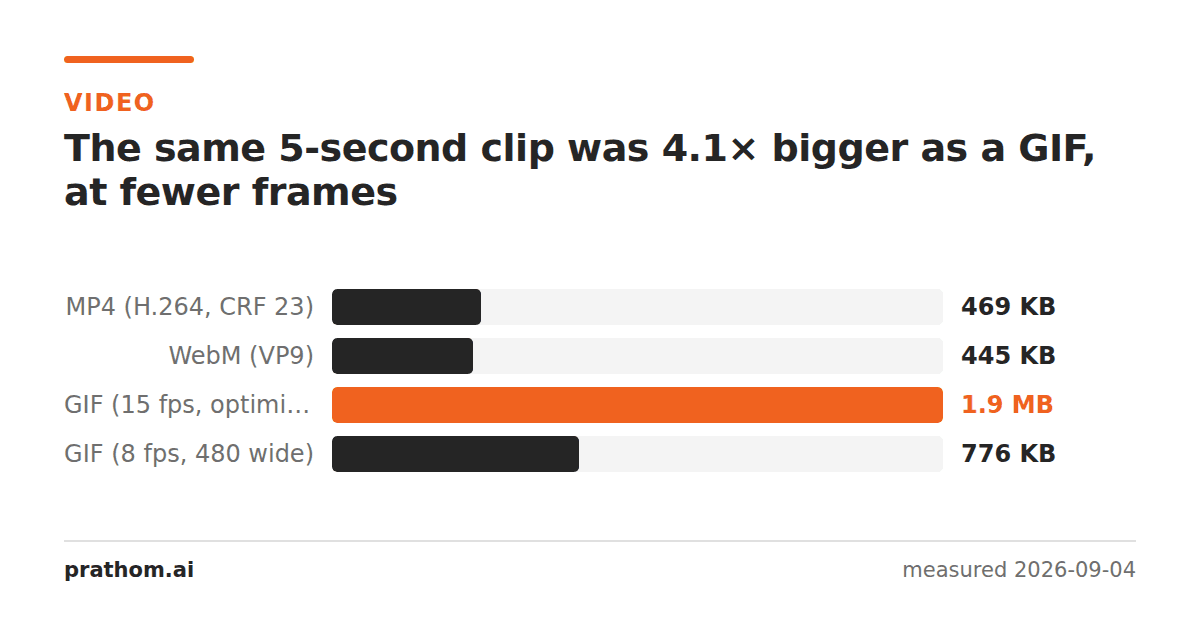
- 4 min read · Ganesh Patil
A Three-Size Favicon Was 15 KB and the Same Images Were 1.3 KB
A favicon is the smallest image on a website and one of the larger files in its root directory, which is a strange thing to be true. The reason is that .ico is not a compressed format at all, and every extra size you add costs its full uncompressed weight.
faviconicofile size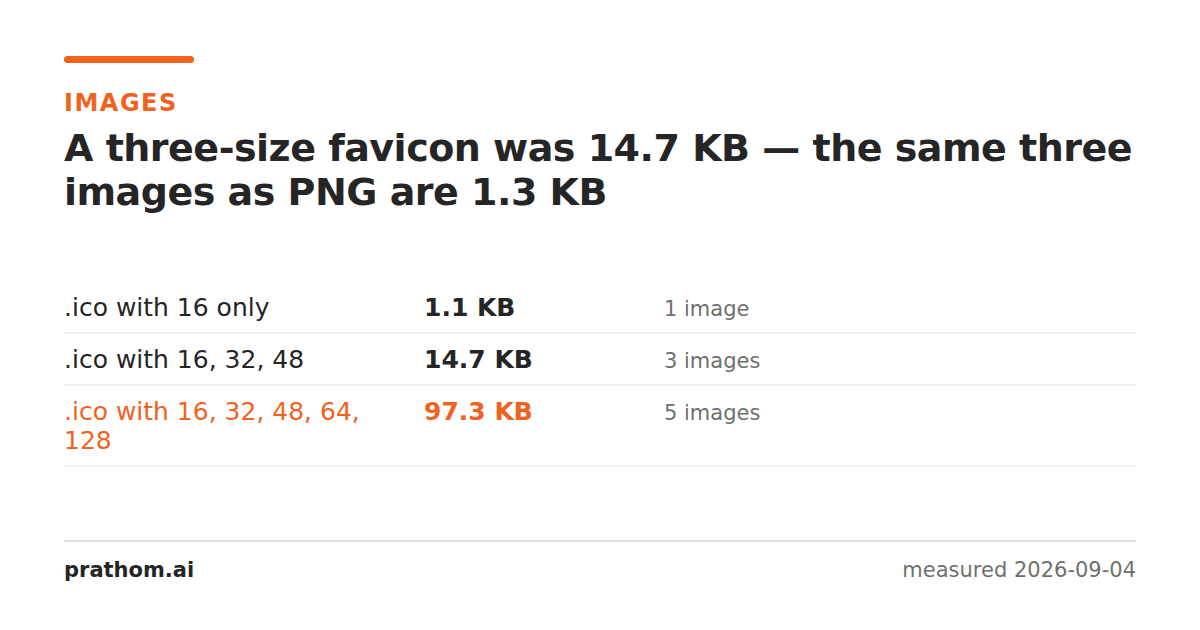
- 4 min read · Ganesh Patil
Exported as HTML, the Table Was Sixteen Times the CSV
Exporting a spreadsheet to HTML is the quickest way to put a table on a page, and it produces a file that dwarfs every other format the same data fits in. Knowing where the weight comes from tells you when the export is fine and when it will cost you a page load.
htmlspreadsheetsfile size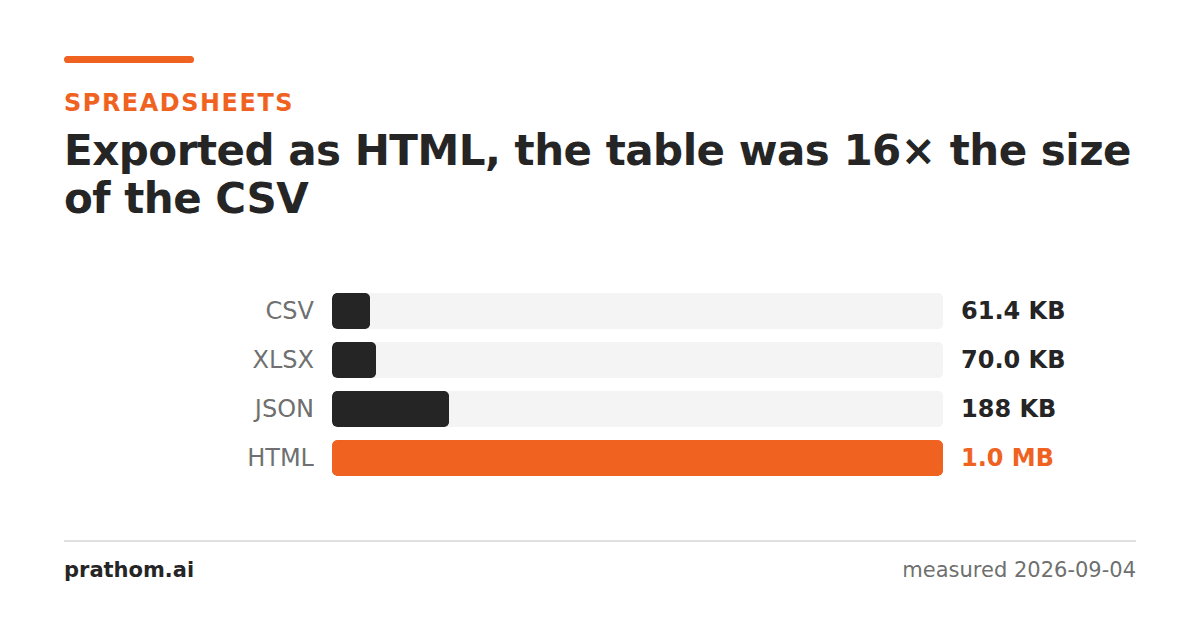
- 4 min read · Ganesh Patil
Base64 Adds Exactly a Third, Whatever You Put Into It
Base64 has a reputation for making files bigger, and people are vague about by how much. It is exactly a third, every time, for every kind of data — and the reason it is exact is more useful to know than the number.
base64encodingfile size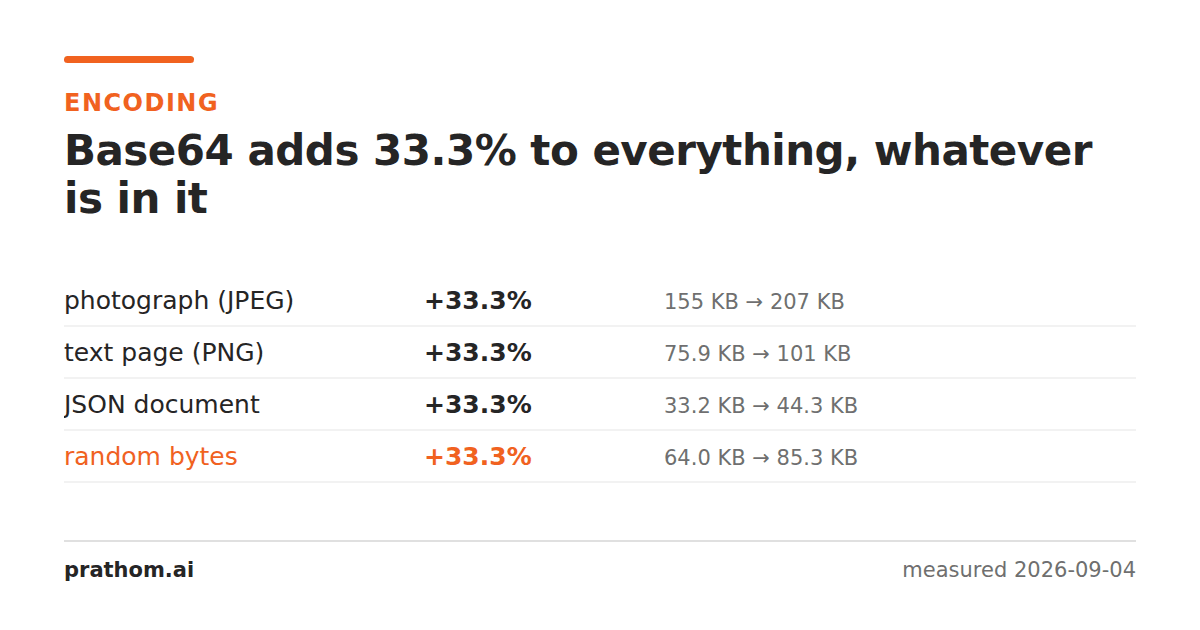
- 4 min read · Ganesh Patil
Cropping a JPEG Re-Encodes the Part You Kept
Cropping feels subtractive — you are taking pixels away, not changing them — so the part you keep should arrive untouched. In a JPEG it usually does not, and the reason is the same one that makes rotation lossy.
jpegcropimage quality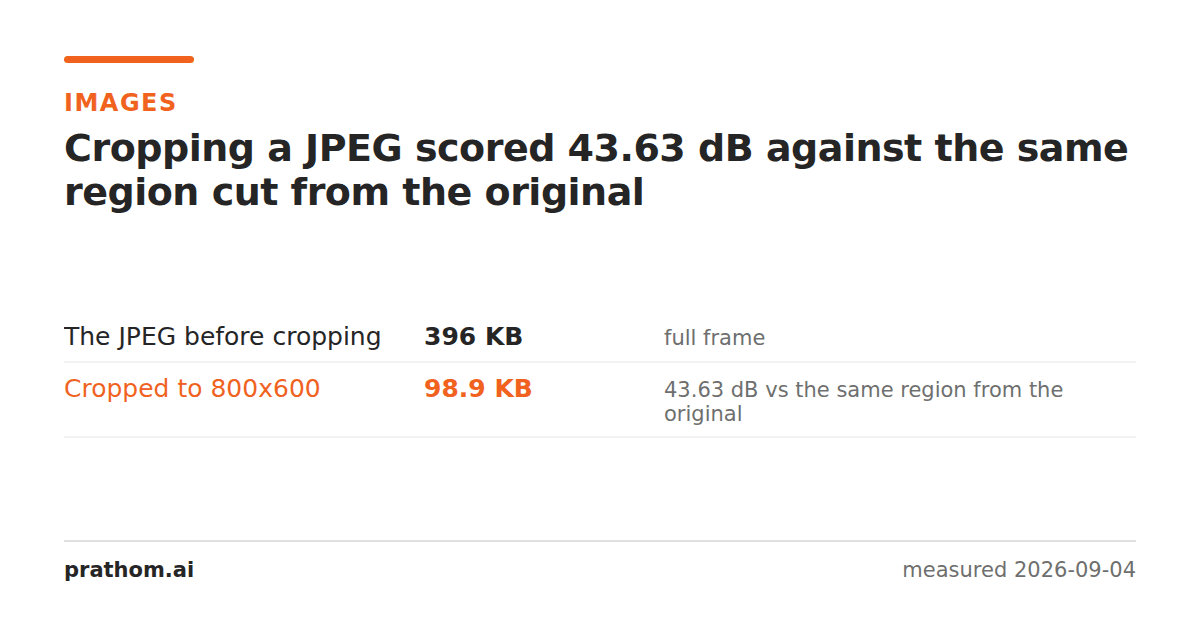
- 4 min read · Ganesh Patil
The Same Table Was Three Times Bigger as JSON
CSV writes each column name once, at the top. JSON writes it again on every single row. On a table of any size that is not a subtlety — it is the dominant term, and it explains both why the conversion inflates and why it barely matters over the wire.
csvjsonfile size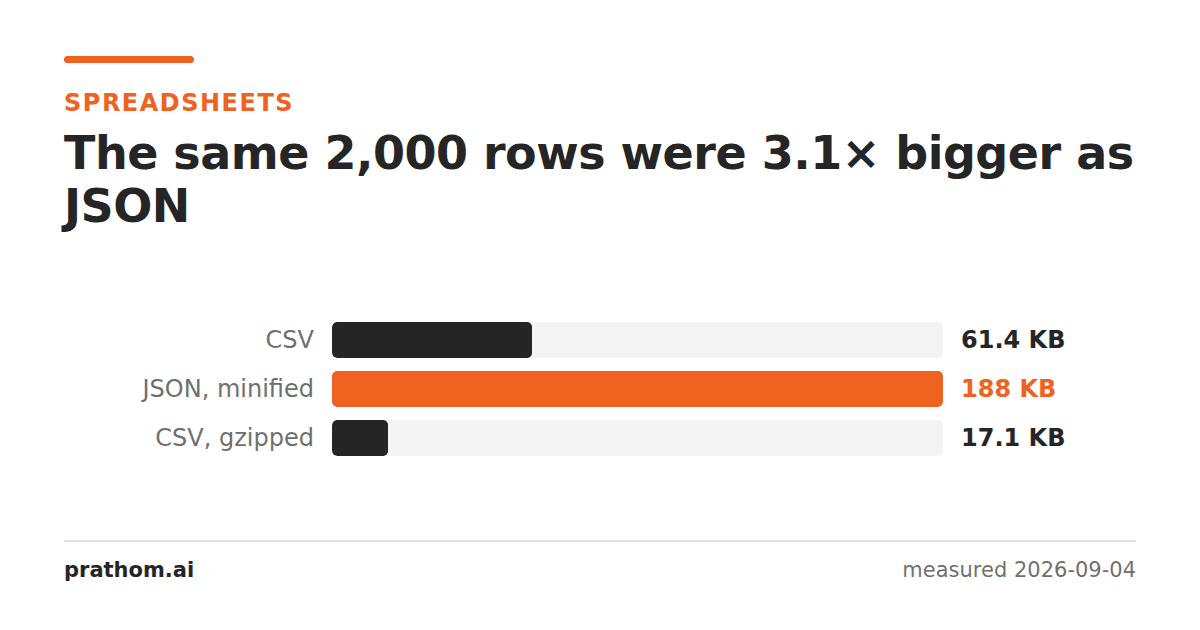
- 4 min read · Ganesh Patil
Cutting a Graphic to Sixteen Colors Saved Fourteen Per Cent
Reducing the palette is standard advice for shrinking a PNG, and on a graphic that is already flat color it buys far less than the drastic-sounding change suggests. The reason is that PNG was already exploiting the same redundancy, and it had got there first.
pngcolorsfile size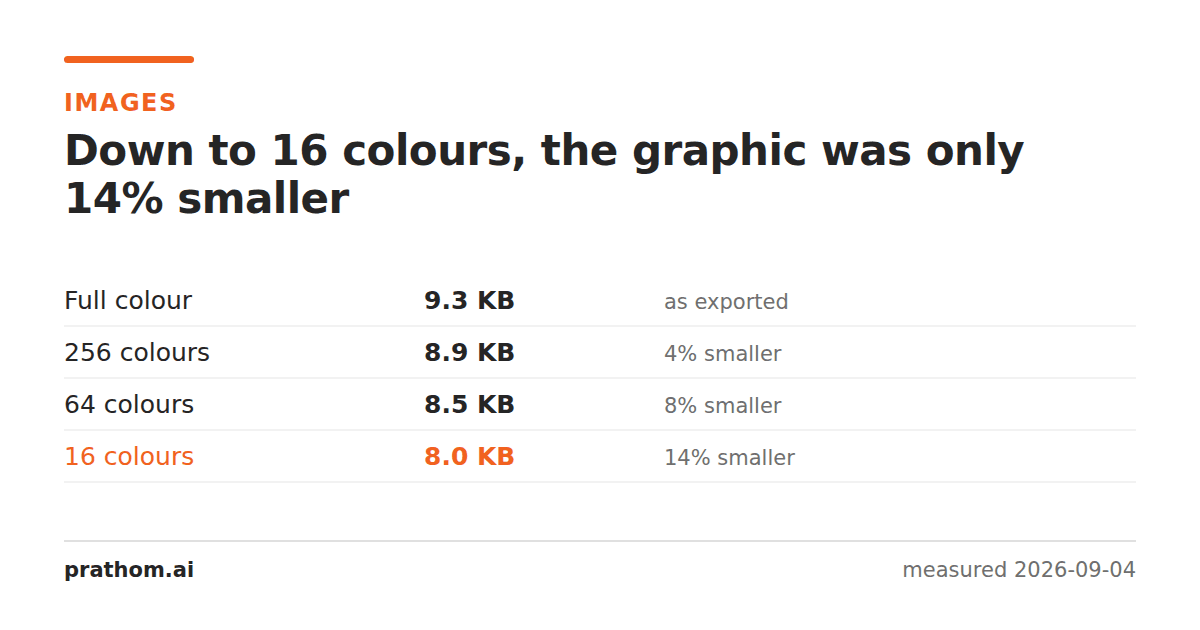
- 4 min read · Ganesh Patil
Flattening a PDF Made It 14 Times Bigger and Deleted Every Searchable Word
Flattening is what you do when a form must stop being fillable or a signature must stop being movable, and it is often described as if it just locks things down. It does more than that: it replaces the page with an image of the page, and everything that made the page text goes with it.
pdfflattentext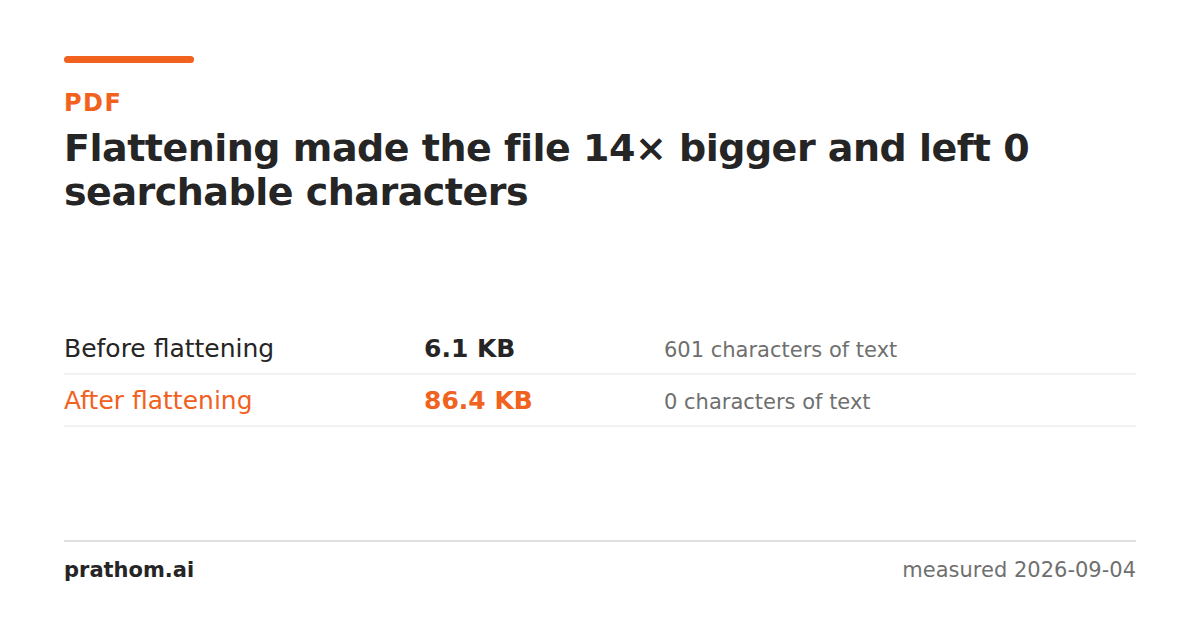
- 4 min read · Ganesh Patil
Converting a PDF to Grayscale Made It Bigger
Removing color sounds like removing data, so grayscale gets used as a compression step. On a document that was already black text on white, the conversion made the file larger — and the reason it did is the reason it sometimes makes a scan dramatically smaller.
pdfgrayscalefile size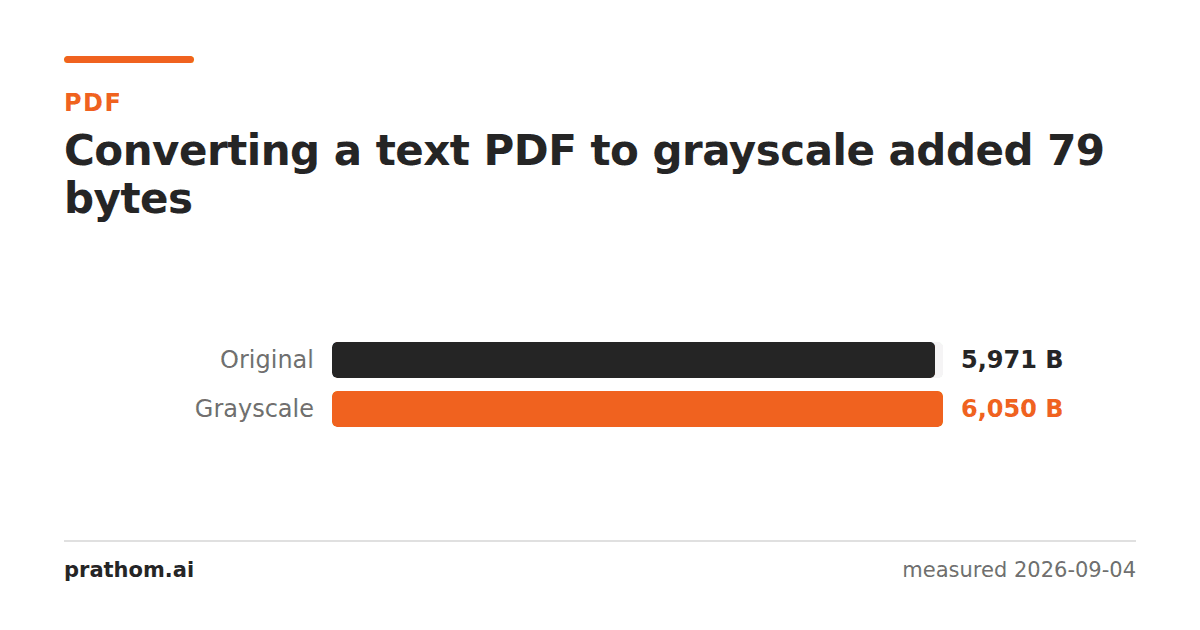
- 4 min read · Ganesh Patil
Compressed, Base64 Cost Nothing on a JPEG and 17% on JSON
Base64 costs a third, and almost everything it travels over is compressed, so the real question is what survives the compressor. The answer is not one number: on already-compressed data the overhead vanishes, and on compressible data a sixth of it stays.
base64compressionencoding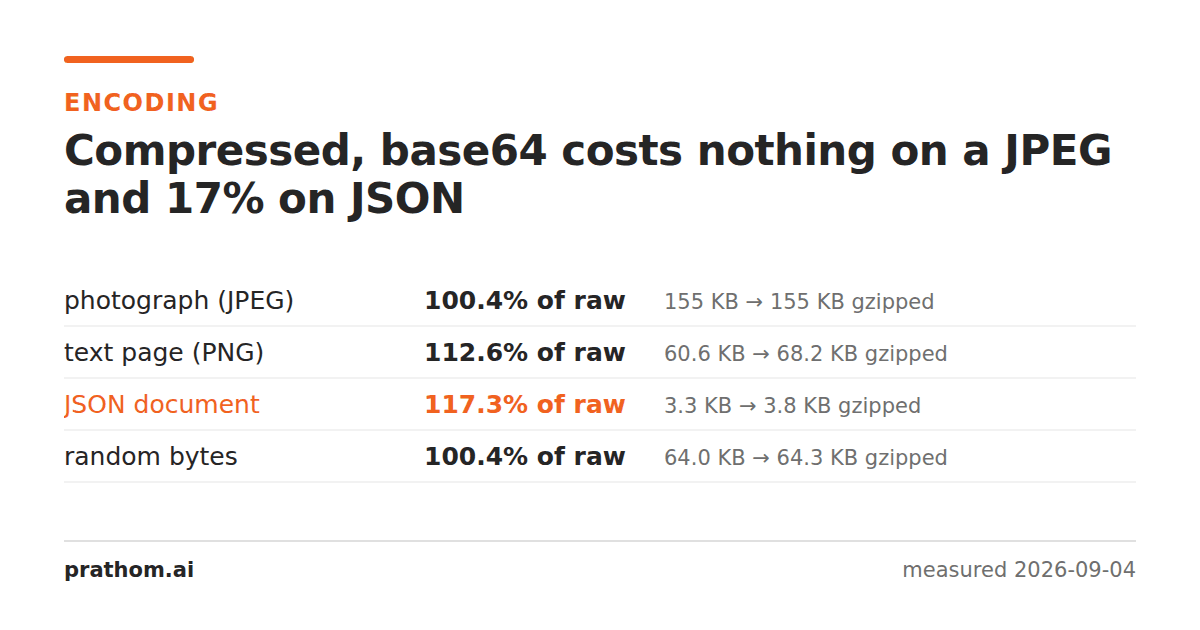
- 4 min read · Ganesh Patil
Hex Is Twice the Size of Your Data, Base64 Is a Third More
Hex and base64 solve the same problem — get binary through a channel that only carries text — and one of them costs six times as much as the other. Hex still turns up constantly, and usually for a reason that has nothing to do with size.
encodinghexbase64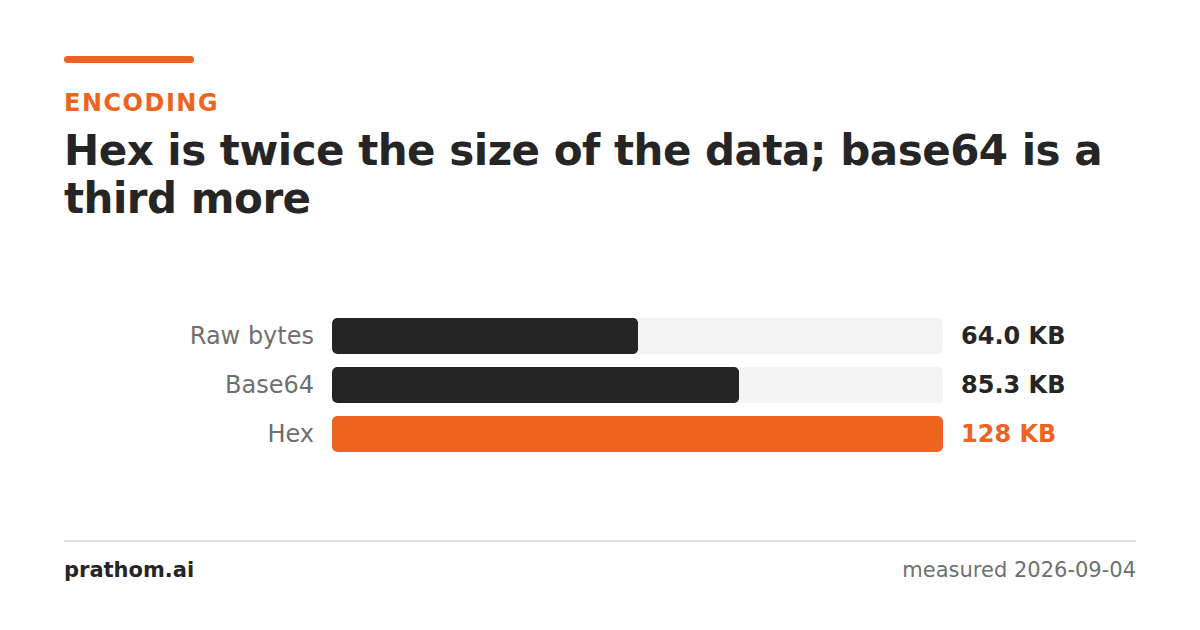
- 4 min read · Ganesh Patil
Half the Width and a Third of the Frames Took 60% Off the GIF
There are exactly three things that make a GIF smaller, and two of them are visible to the viewer. Knowing which one to spend first — and how much each is actually worth — saves a lot of guessing at a file that will not fit.
gifvideofile size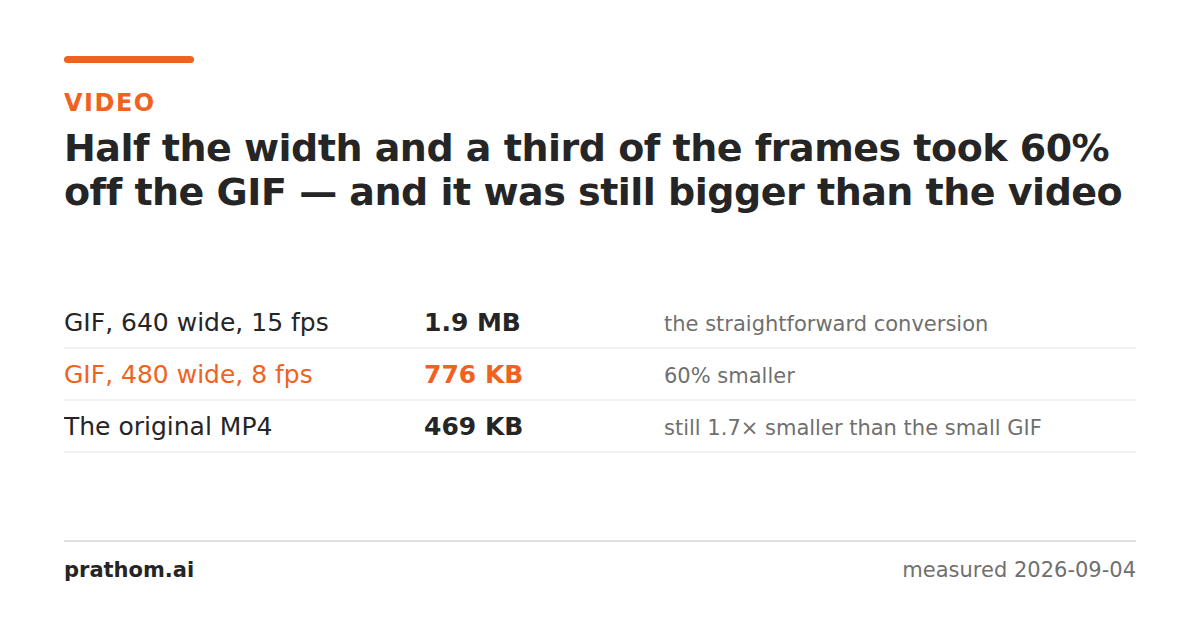
- 4 min read · Ganesh Patil
Three PDFs Merged Into Less Than Half Their Combined Size
People expect a merged PDF to weigh what its inputs weighed, and are surprised when it does not. Joining three copies of an eight-page document produced a file well under half the combined size, and the reason explains something useful about what is actually inside a PDF.
pdffile sizemerge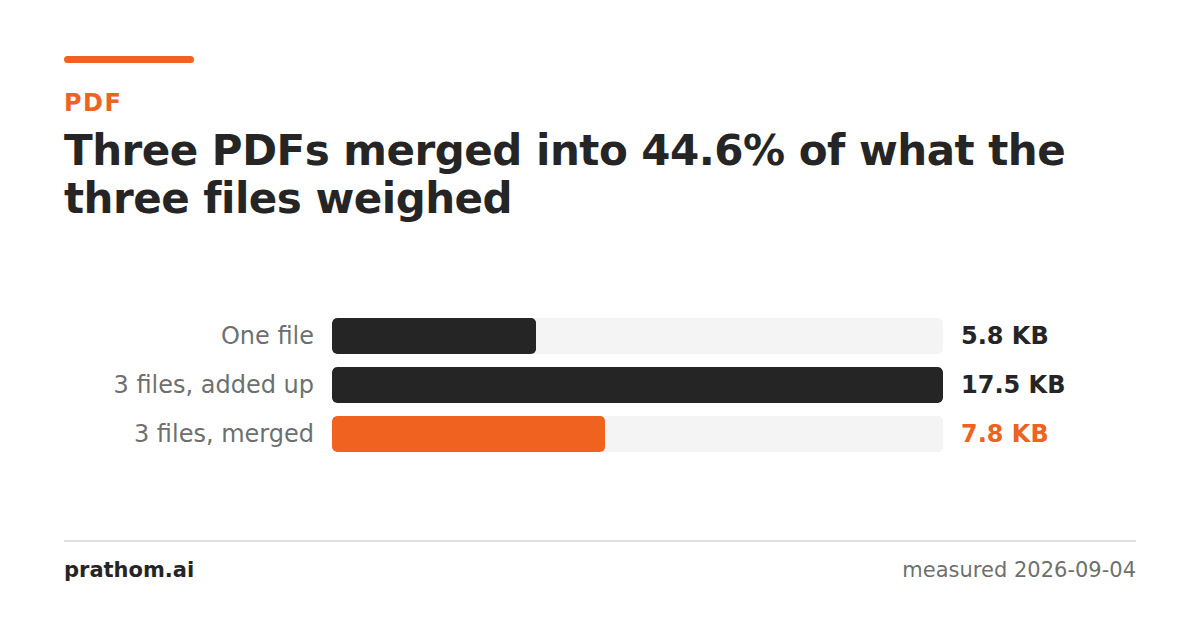
- 4 min read · Ganesh Patil
Minifying JSON Saved 36%, and 3.7% Once It Was Compressed
Minifying JSON is standard advice and the raw saving is large enough to make it look obviously correct. Almost everything that carries JSON compresses it first, and once you measure the compressed sizes the case mostly disappears.
jsoncompressionfile size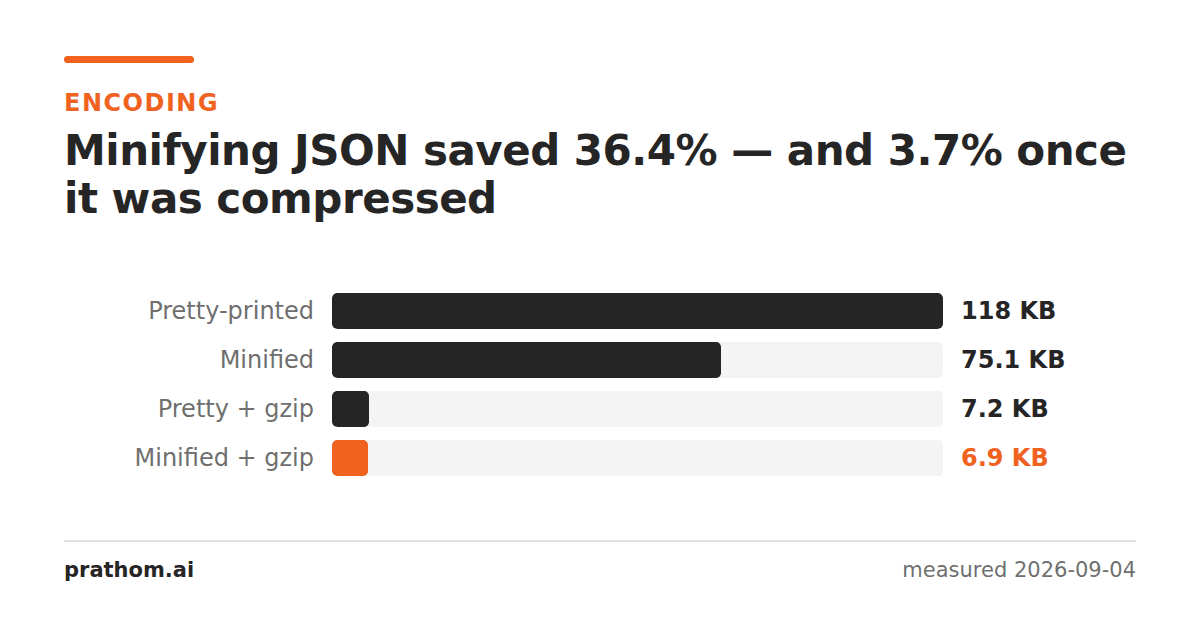
- 4 min read · Ganesh Patil
Mono at 16 kHz Was a Fifth of Stereo, and at a Fixed Bitrate Nothing Changed
Making a recording mono is the standard advice for shrinking speech audio, and whether it works depends entirely on a setting most people never touch. Set one way it saves eighty per cent; set the other way it saves nothing at all and quietly improves the quality instead.
audiomp3file size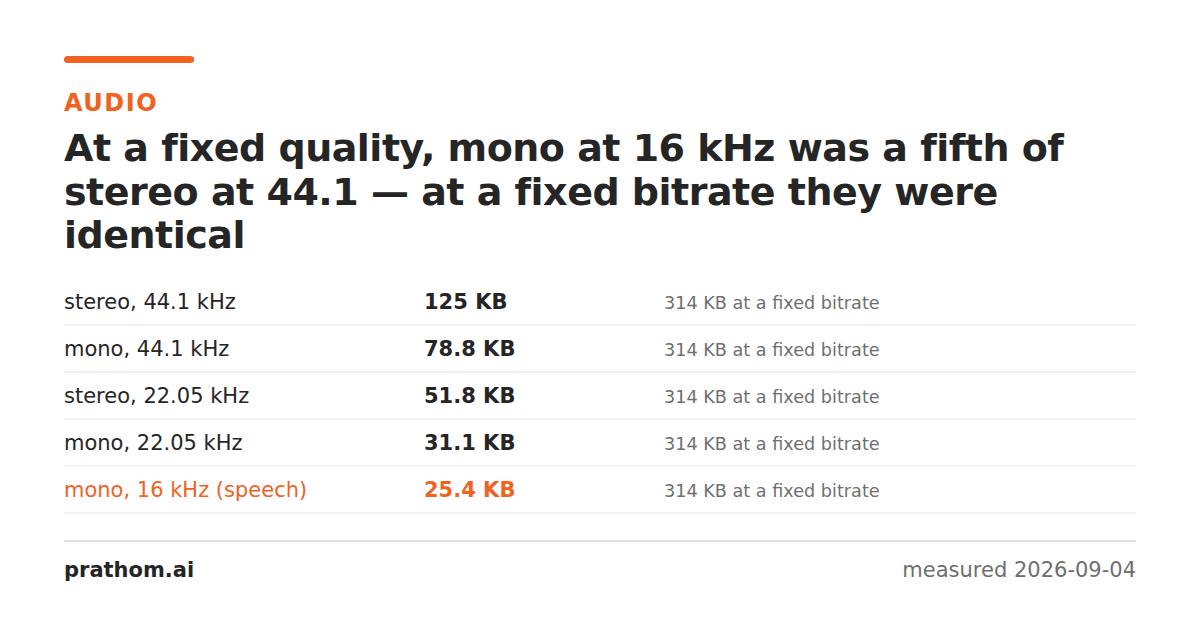
- 4 min read · Ganesh Patil
OCR Recovered Every Character Flattening Had Removed
A flattened PDF has no text layer, which is often described as the text being lost. It is not lost, it is only no longer written down — the words are still drawn on the page, and reading them off a picture is exactly what OCR does.
ocrpdftext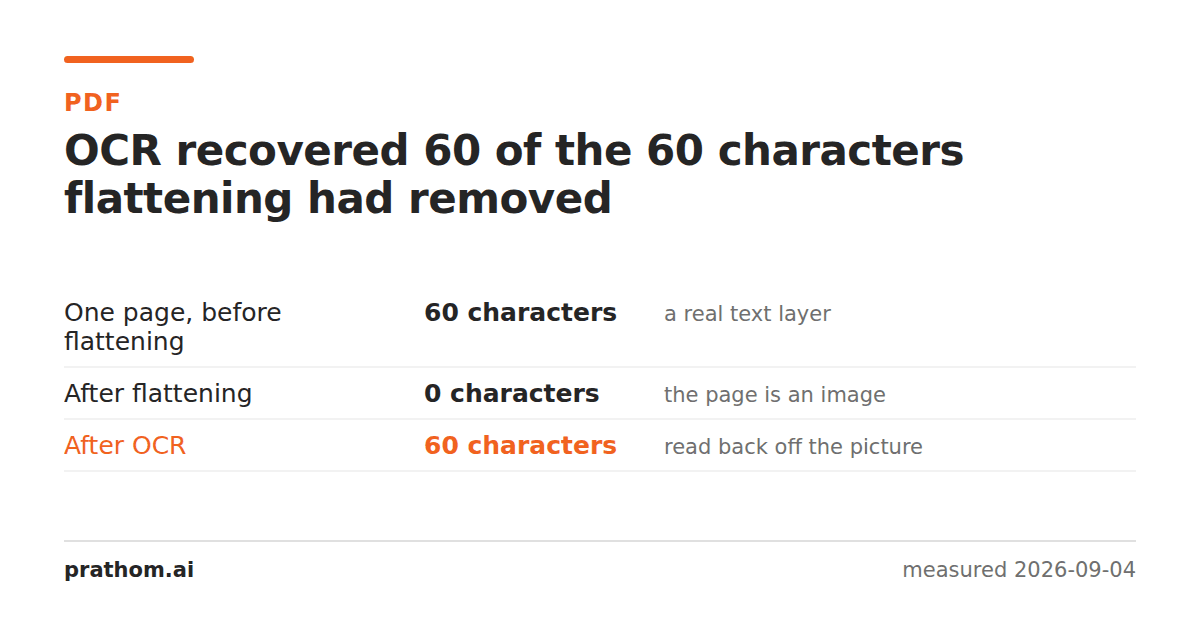
- 4 min read · Ganesh Patil
One Page Out of Eight Was a Quarter of the File
Splitting a document feels like slicing a loaf: take an eighth, get an eighth. PDFs do not divide that way. A single page pulled out of an eight-page file was a quarter of it, and the gap between what you expect and what you get is the most useful thing a PDF will teach you about its own structure.
pdffile sizesplit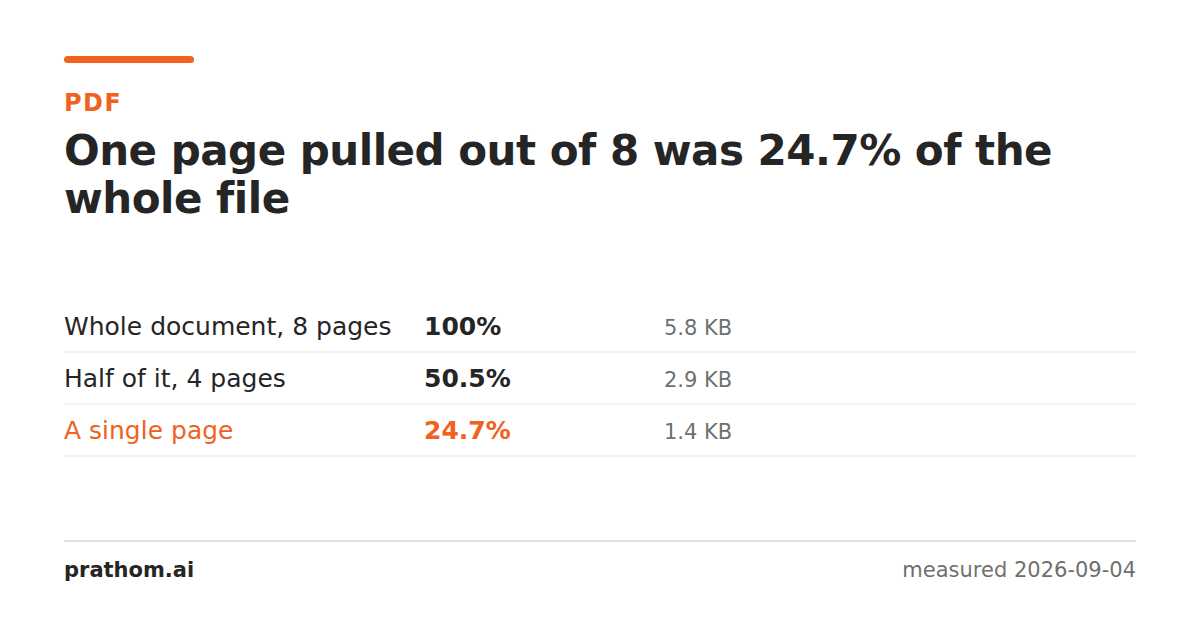
- 4 min read · Ganesh Patil
Rotating a JPEG and Back Changed 560,770 Pixels
Rotating a photo is not editing it. Nothing about the picture changes, only which way up it is — so it is reasonable to expect the pixels to survive. With most tools they do not, and the loss is the same kind a re-save costs.
jpegrotationimage quality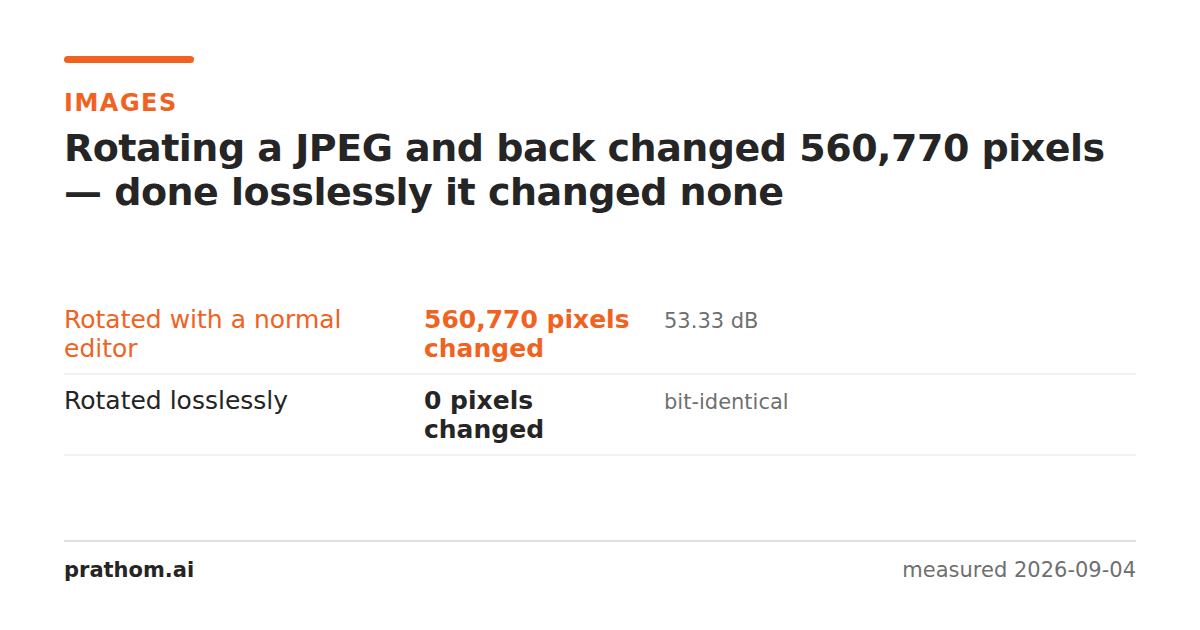
- 4 min read · Ganesh Patil
Rotating Every Page of a PDF Cost 29 Bytes
A rotated PDF looks like a document that has been redrawn, so people expect rotating one to cost something — quality, size, or both. It costs almost nothing, and understanding why tells you which other PDF operations are safe and which are not.
pdfrotatefile size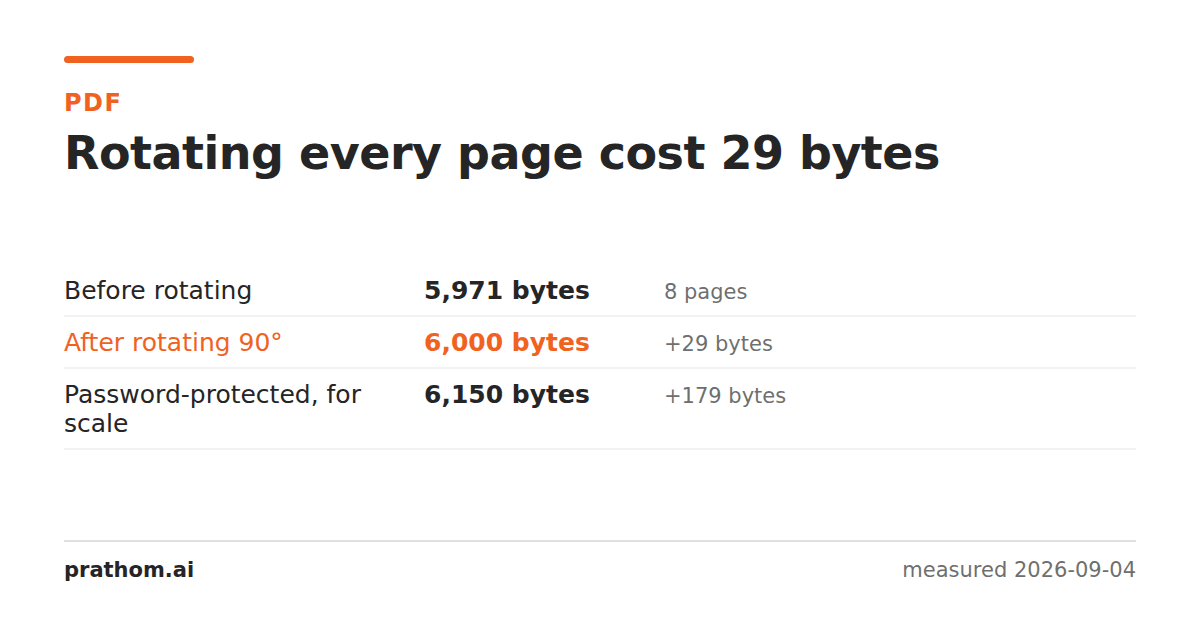
- 4 min read · Ganesh Patil
Stripping Camera, Lens and GPS Data Saved Eighteen Bytes
"Strip the metadata to make the file smaller" is advice that has been repeated for twenty years, and on the fields people actually worry about it is worth almost nothing. That does not make stripping pointless — it makes the reason for doing it a different one.
exifmetadataprivacy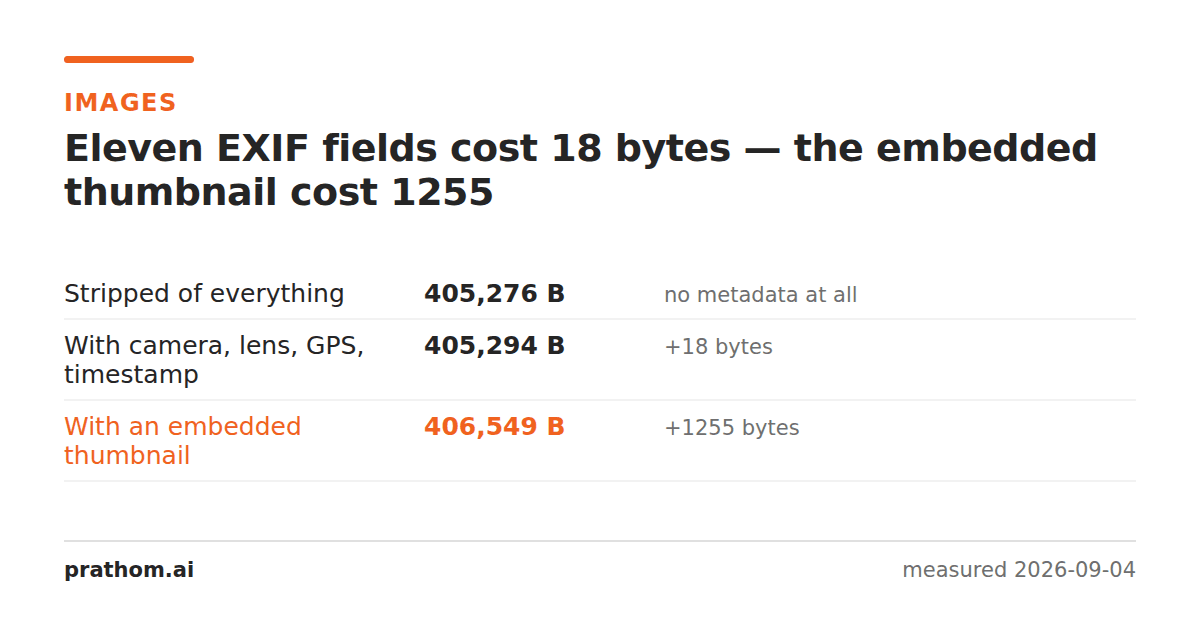
- 4 min read · Ganesh Patil
The Soundtrack Was a Sixth of the File the Video Came In
A lecture, an interview, a podcast recorded on camera — plenty of video is kept for its sound. The picture is almost all of the file, and dropping it is the single largest saving available on any video you only listen to.
videoaudiofile size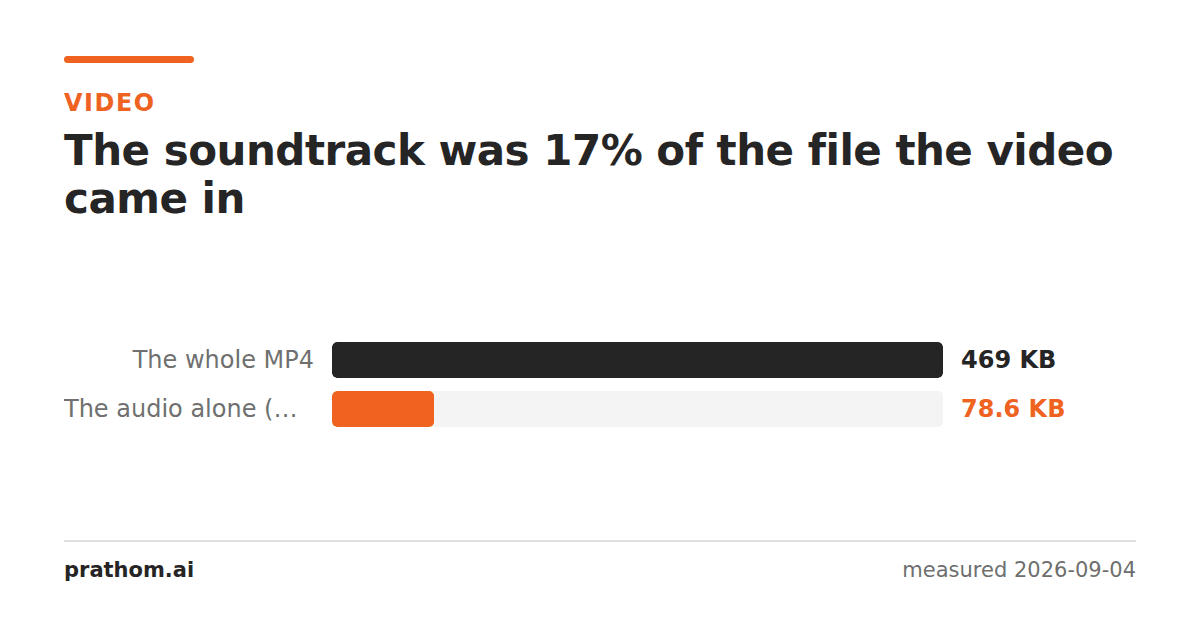
- 4 min read · Ganesh Patil
Upscaling Gave Back 91% of the File Size and None of the Detail
An upscaled image has the dimensions of the original and a file size close to it, which makes it look like the detail came back too. It did not. What the extra bytes are storing is the interpolation between pixels that were thrown away, and no amount of it is the same as having them.
upscalingimage qualityresize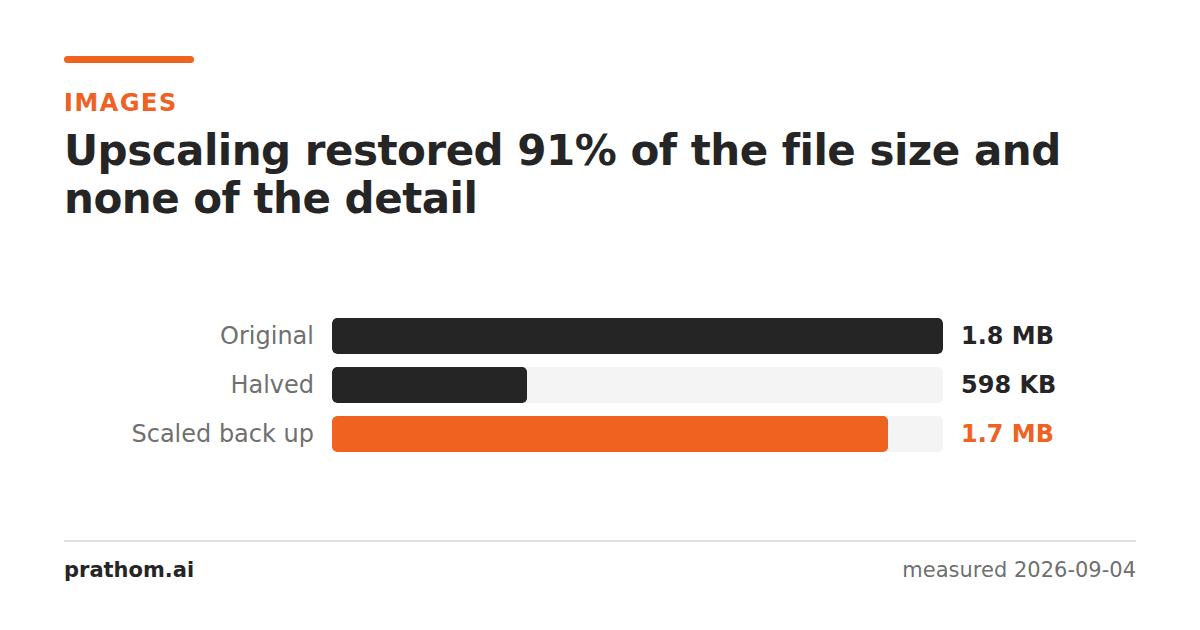
- 4 min read · Ganesh Patil
What a PDF Password Actually Costs, in Bytes and in Protection
Putting a password on a PDF costs almost nothing in size, which is the least interesting thing about it. The interesting part is that a PDF can carry two completely different kinds of password, and only one of them is protection.
pdfsecurityencryption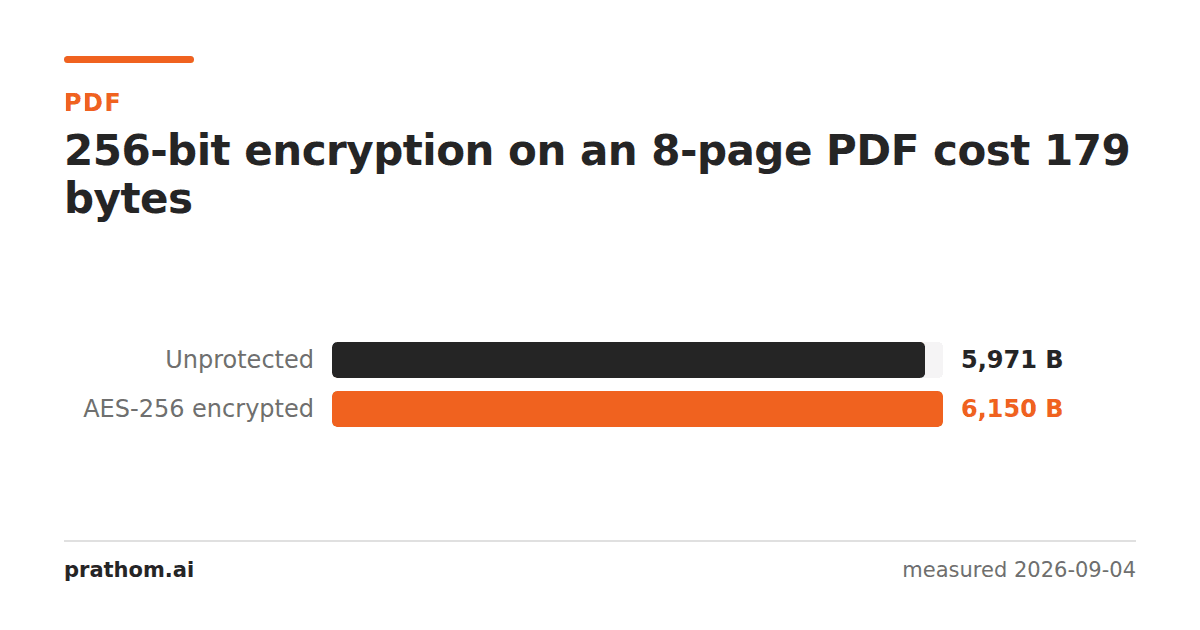
- 4 min read · Ganesh Patil
A Watermark on Ten Pages Cost 458 Bytes and Page Numbers Cost 199
Putting something on every page of a document sounds like it should cost something per page, and it does — about twenty bytes. What a watermark does not do is anything to protect the document, which is the reason most people add one.
pdfwatermarkfile size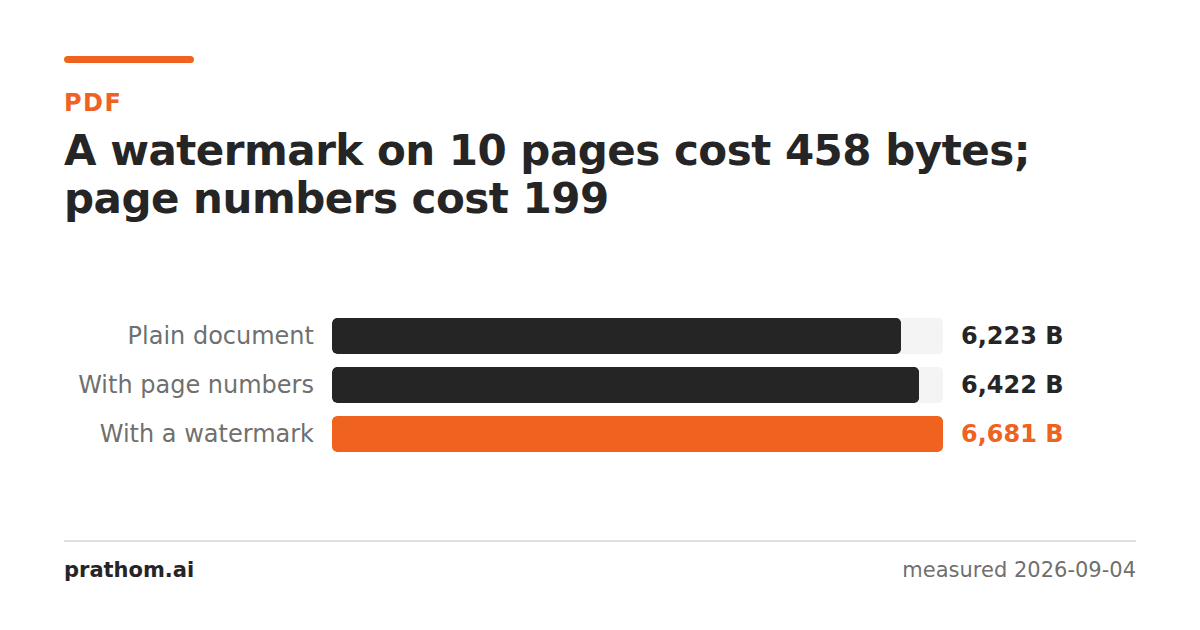
- 4 min read · Ganesh Patil
An SVG Straight Out of the Export Dialog Was 38% Metadata and Spare Digits
SVG is text, and an export dialog writes a lot of text nobody asked for: who made the file, when, in what, and every coordinate to six decimal places. None of it draws anything, and on a small logo it is more than a third of the file.
svgoptimizationfile size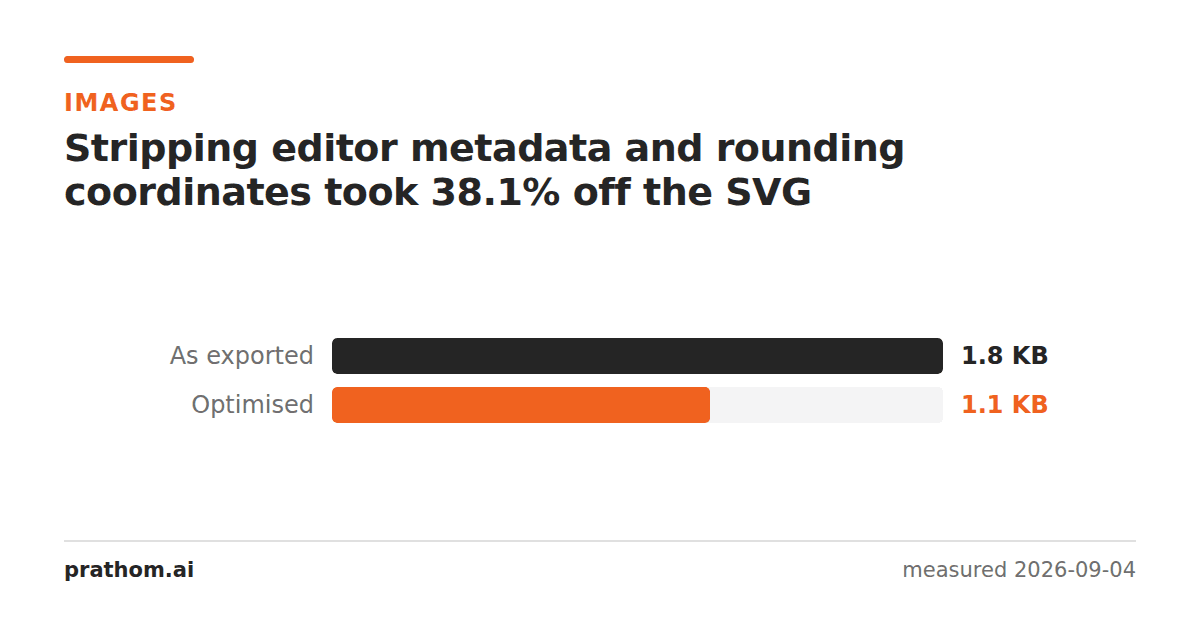
- 4 min read · Ganesh Patil
A PNG Logo Wins Up to 128 Pixels, and the SVG Wins Everywhere Above
A vector file costs the same whatever size it is drawn at, and a raster costs what its grid costs — so there is a size where one overtakes the other. On a logo it arrives sooner than most people assume, and the file-size argument is the least important half of the decision anyway.
svgpngfile size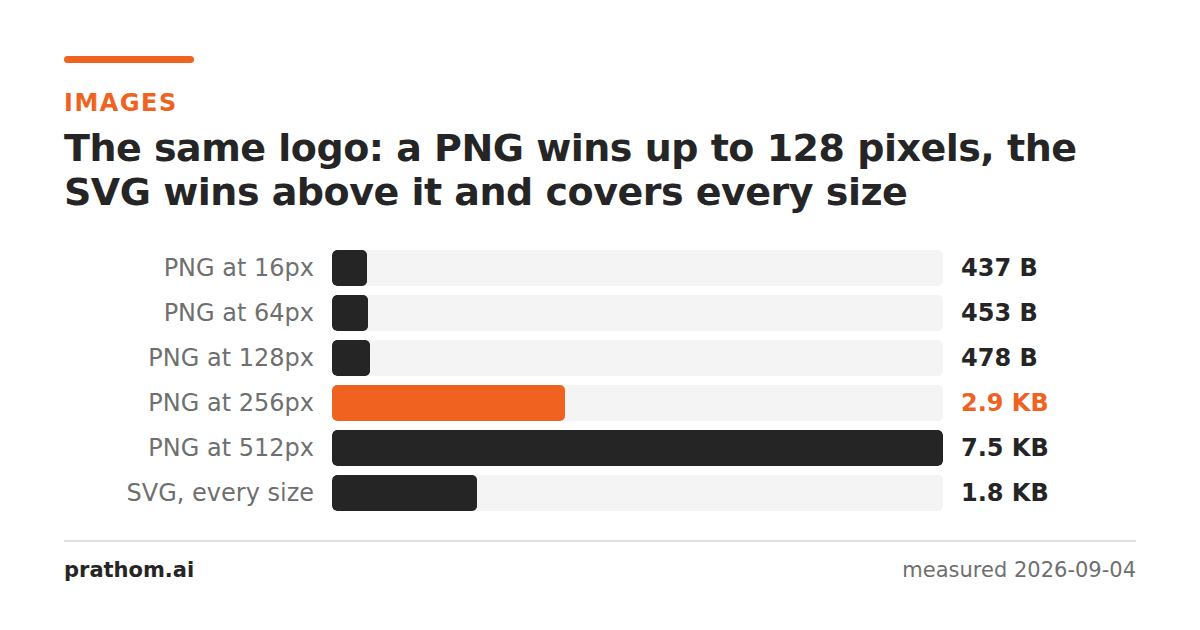
- 4 min read · Ganesh Patil
Windows Line Endings Cost 1.8% on Disk and Three Bytes Compressed
Every line of a Windows text file ends with two characters where a Unix one ends with one. It is the oldest formatting difference in computing and it is worth a measurement, because the size argument turns out to be the least important thing about it.
textline endingsencoding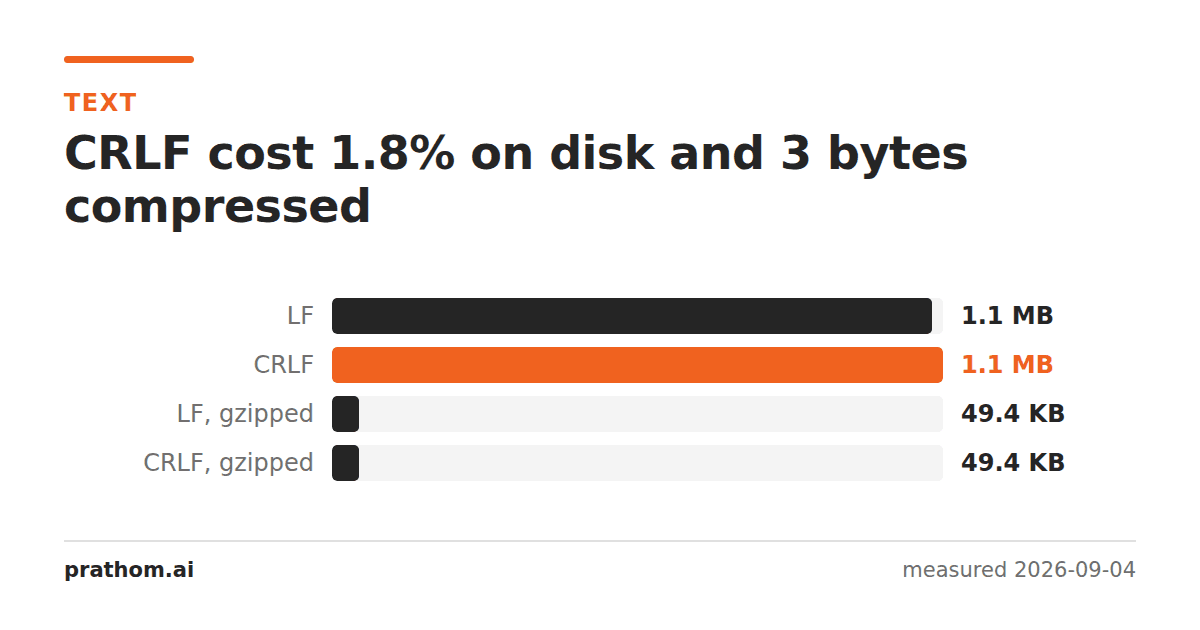
- 4 min read · Ganesh Patil
XLSX Cost 14% More Than the CSV and the Old XLS Cost Nearly Four Times
The modern spreadsheet formats have a reputation for bloat that they no longer deserve, and the old one has a reputation for compactness it never had. A plain table in four formats puts numbers on both, and the ranking is not the one most people would guess.
spreadsheetscsvfile size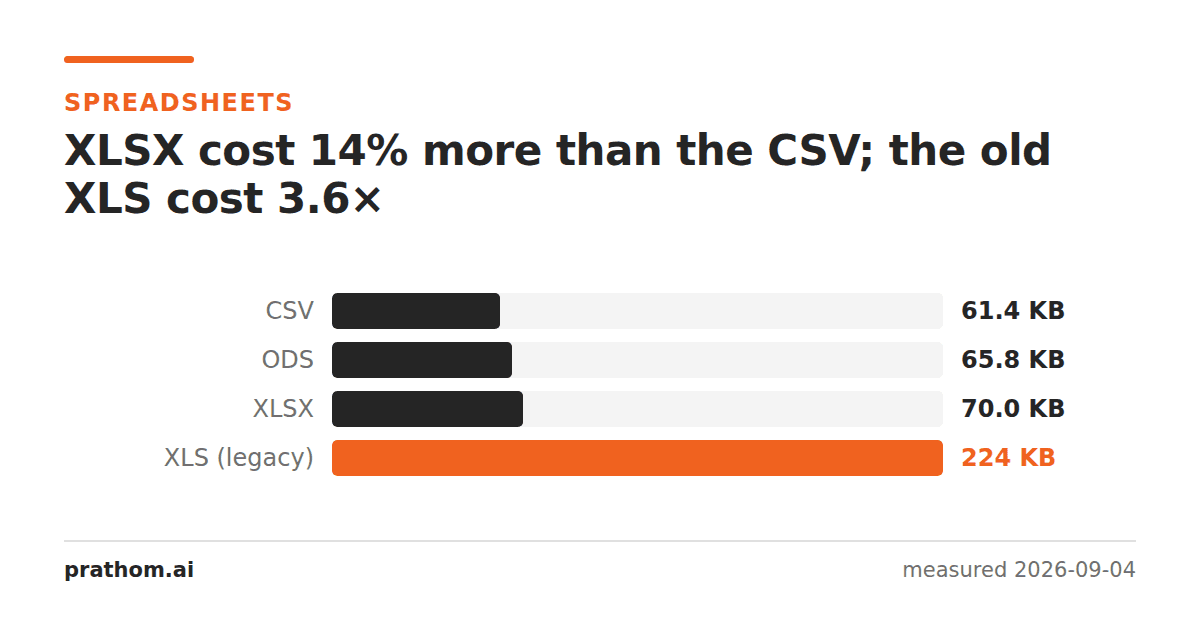
- 4 min read · Ganesh Patil
Zipping 500 Tiny Files Made the Archive Bigger Than the Files
A zip is supposed to make things smaller, and on a folder of many small files it can do the opposite. Each entry carries its own header, its own directory record and its own compression stream, and below a certain file size that bookkeeping is bigger than the file.
archivescompressionfile size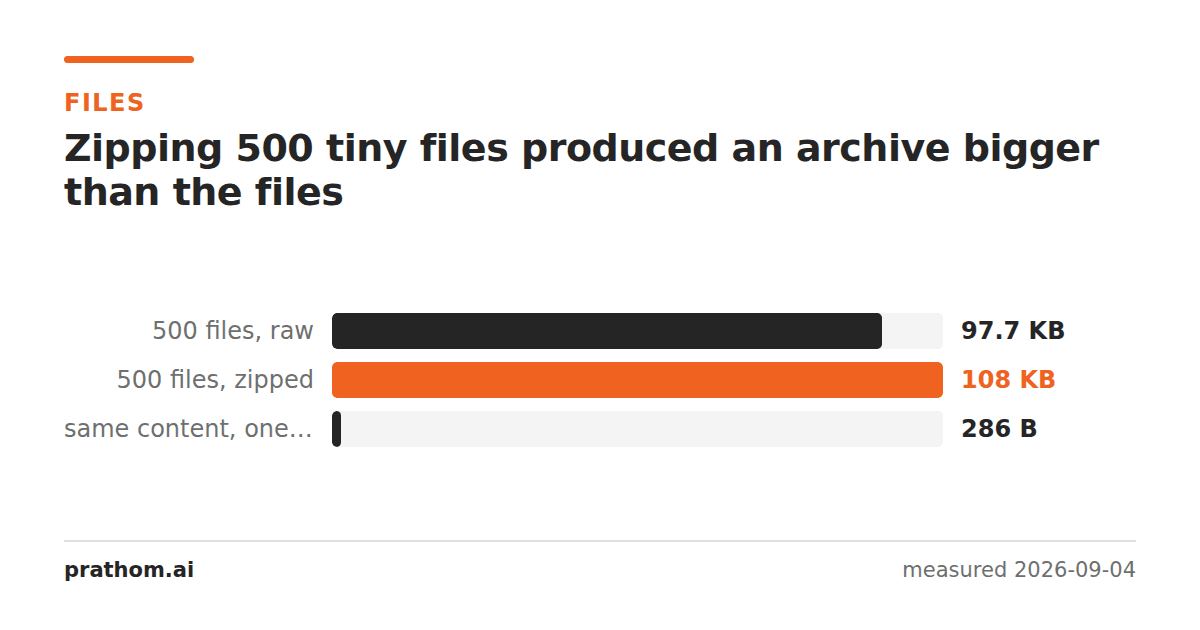
- 4 min read · Ganesh Patil
Which Favicon Sizes You Actually Need
Most favicon guides list a dozen sizes and explain none of them. Only a few are ever actually drawn, the rest are cargo from an older web, and knowing which is which turns an afternoon of exporting into about five minutes.
faviconicopng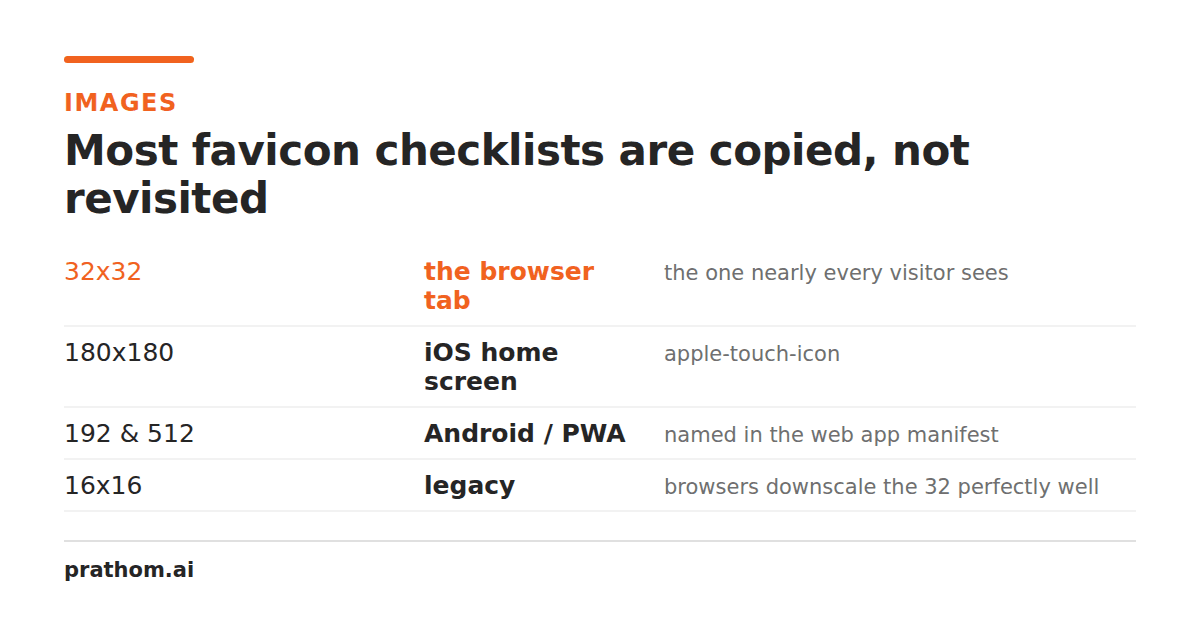
- 5 min read · Ganesh Patil
The Same Image Was 10 KB as PNG and 7.6 MB as BMP
BMP files are famous for being large, and the scale of it still surprises people when they see it directly. The same image, unchanged, was seven hundred and twenty-two times bigger in BMP than in PNG. The reason is simple and worth understanding, because it explains what every other format is doing for you.
bmpimage formatscompression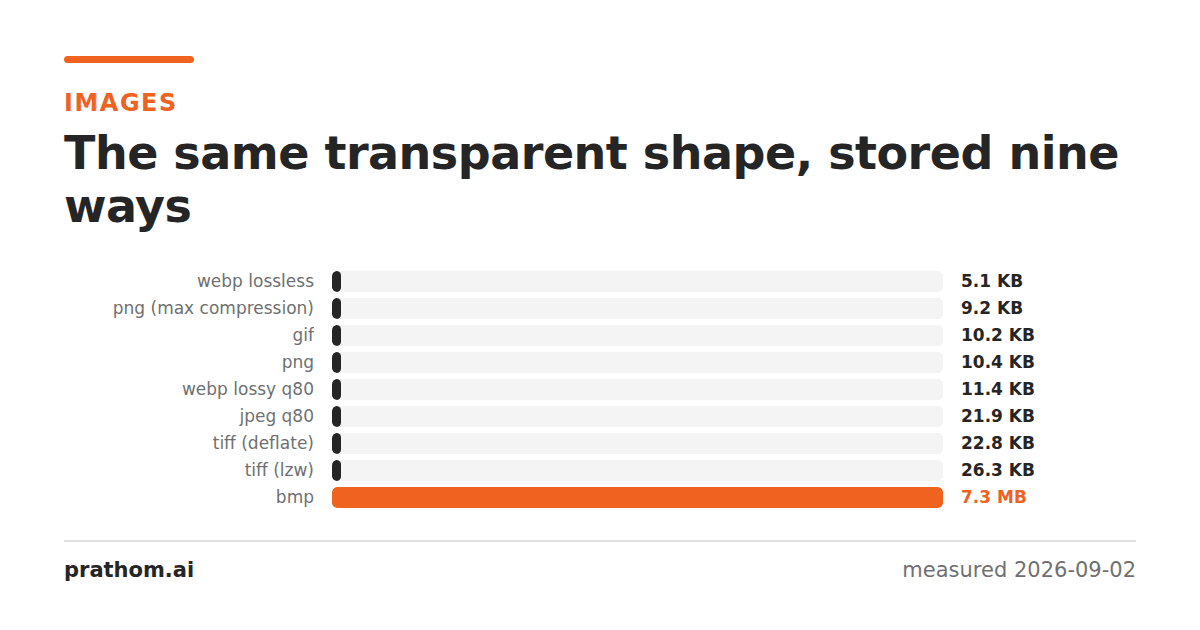
- 4 min read · Ganesh Patil
A Word Document Became 119 Bytes and Kept Every Word
A short document containing a heading, a table, a bulleted list, bold and italic text and a colored paragraph was exported to five formats. The results ranged over a factor of 350 in size, and the differences are entirely about how much of the formatting each format is able to carry.
docxdocumentsconversion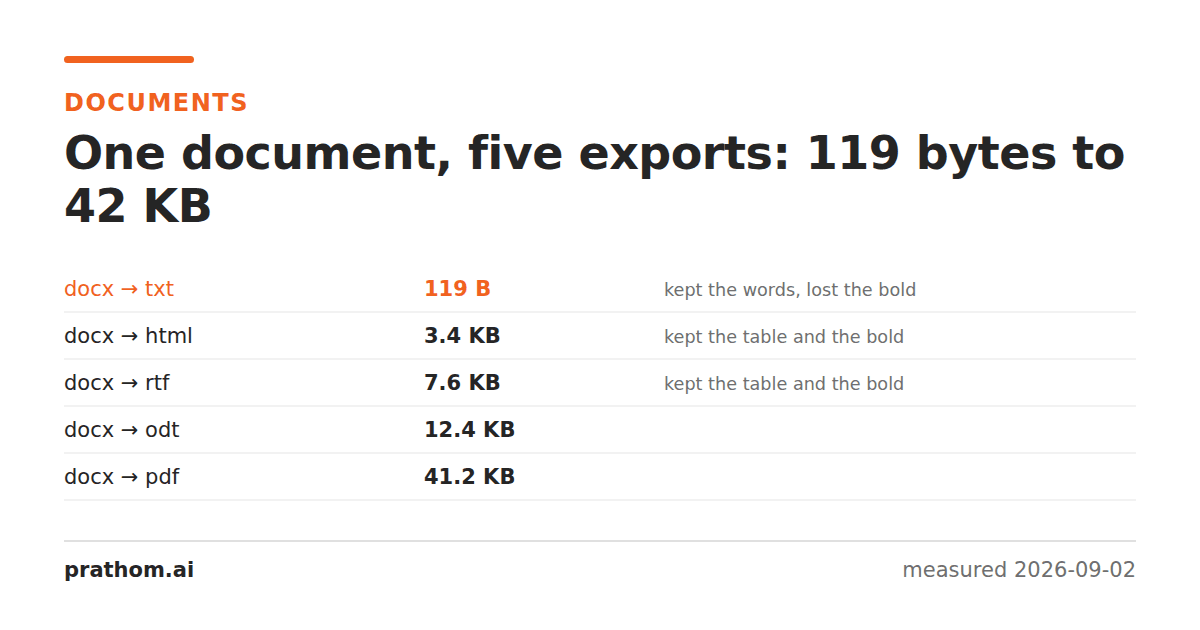
- 4 min read · Ganesh Patil
We Re-Saved a JPEG Twenty Times and Nothing Happened
Everyone has heard that a JPEG gets worse every time you open and save it, and most people have seen the artwork made by re-saving an image five hundred times to prove it. So we measured it properly. Re-saving at the same quality, twenty times, changed the image by nothing at all — and then we found the conditions where it degrades badly.
jpegcompressionimage formats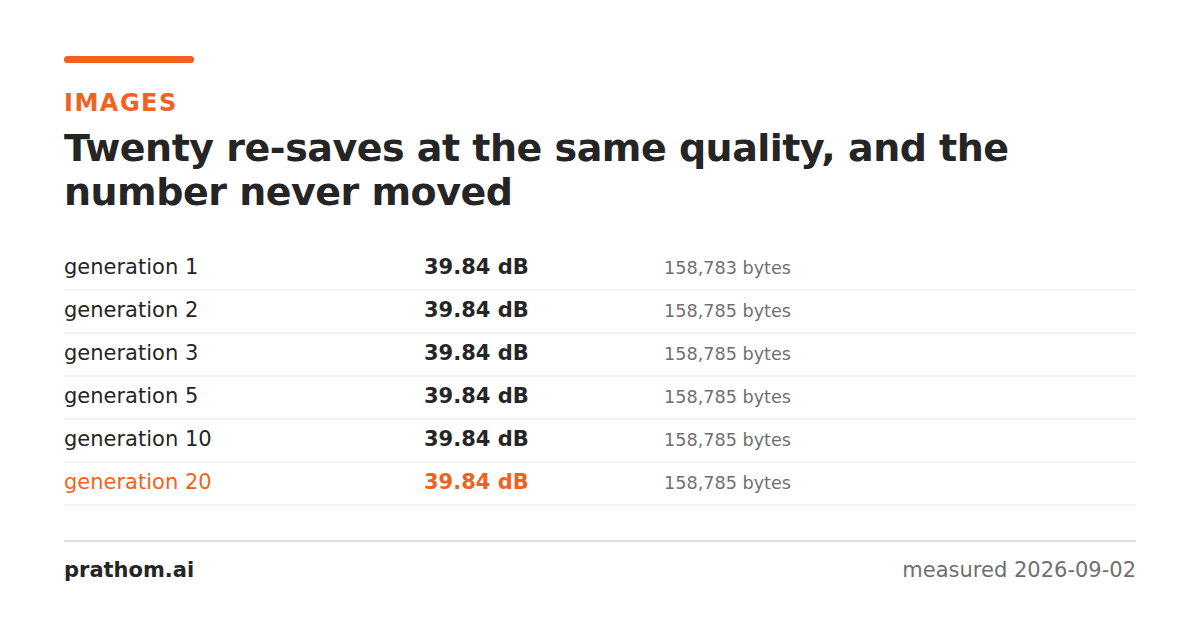
- 4 min read · Ganesh Patil
Lossless Audio Costs 40% of the Original and People Still Avoid It
Lossless audio has a reputation as the choice you make when storage is no object. The measured ratio suggests otherwise: the same recording that took 5.3 MB as an uncompressed WAV took 2.1 MB as FLAC, bit for bit identical. That is a better result than lossless image compression usually achieves, and on difficult material rather than easy.
audioflaccompression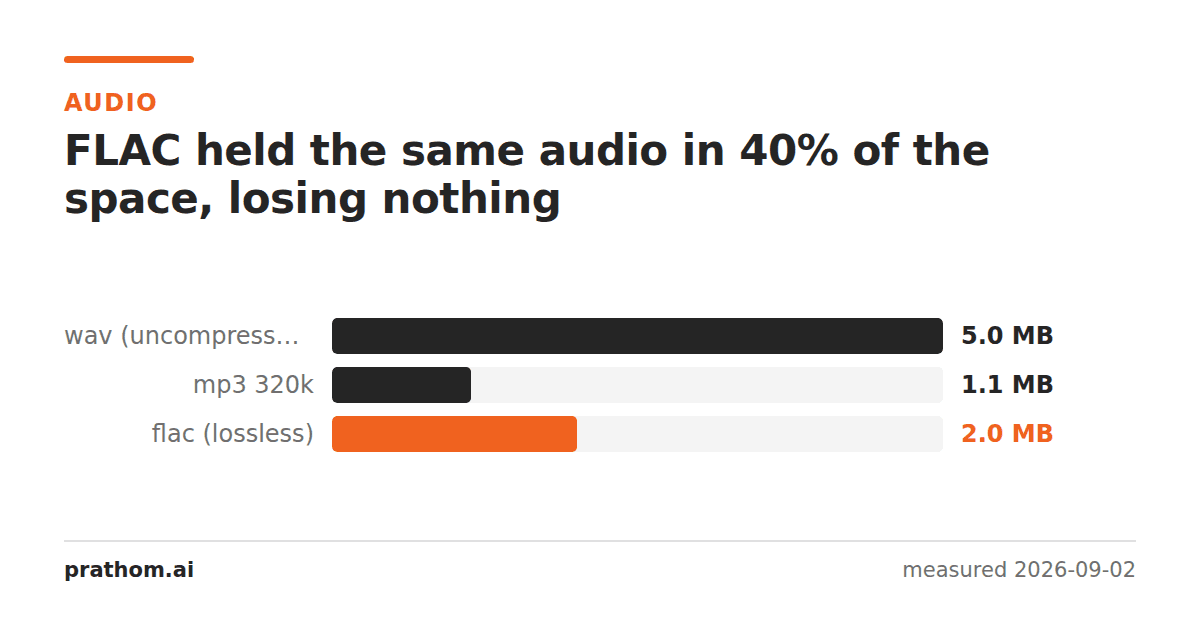
- 5 min read · Ganesh Patil
GIF Was Perfect on a Page of Text and Ruined the Photograph
GIF is usually described as a lossy format, or at least as one that ruins images. That is not quite right. GIF's compression is lossless; what it cannot do is hold more than 256 colors. On an image that already has fewer than that, GIF is perfect. On a photograph it is a disaster. The same format, two completely different outcomes.
gifimage formatscompression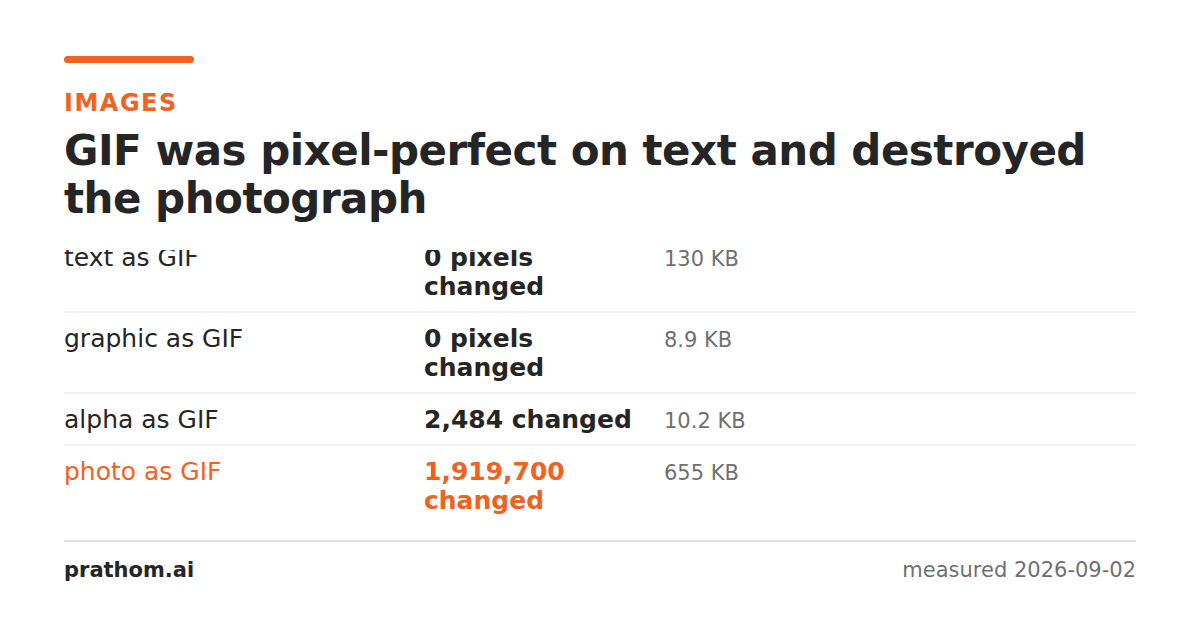
- 4 min read · Ganesh Patil
GIF Transparency Has Exactly One Bit, and It Shows on Every Edge
A PNG can record a pixel as 37% transparent. A GIF cannot — each pixel is either fully visible or fully invisible, and there is nothing in between. On a shape with a soft anti-aliased edge, that difference is measurable, and it is why a logo saved as GIF gets a jagged fringe that no amount of care in the original file prevents.
giftransparencyimage formats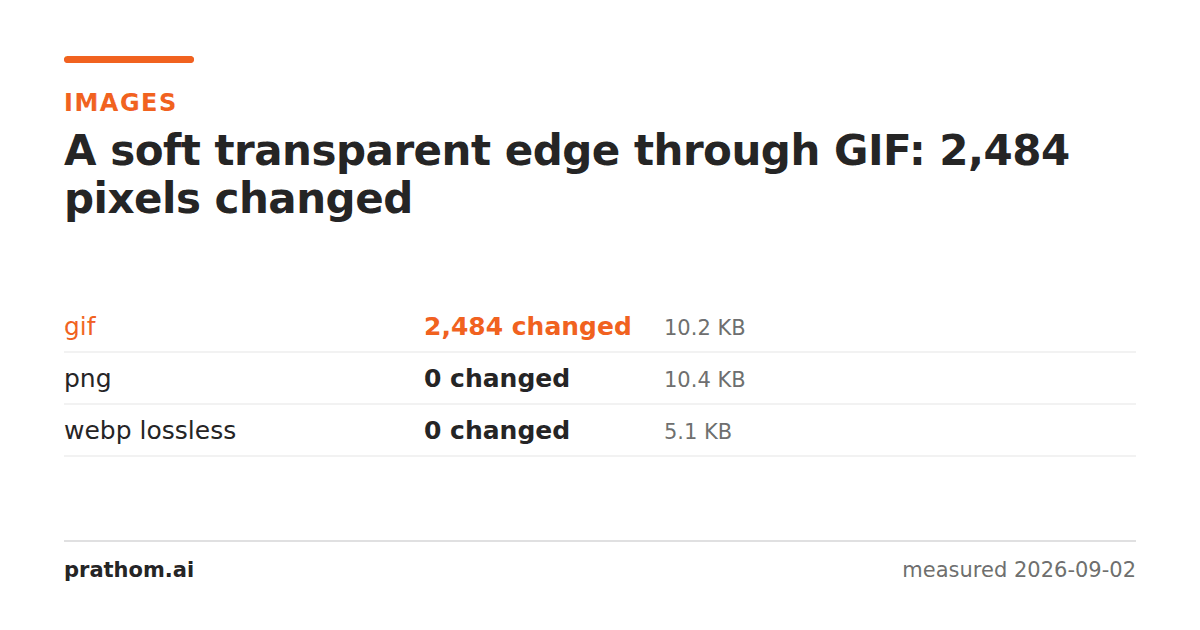
- 5 min read · Ganesh Patil
How to Check Whether a Conversion Actually Kept Your File
Every conversion tool reports success. None of them report what they threw away, because from the tool's point of view nothing went wrong — it did the conversion it was asked for, and the things the destination format cannot hold were discarded before compression even started. Here is how to find out what you actually got.
conversionverificationimage formats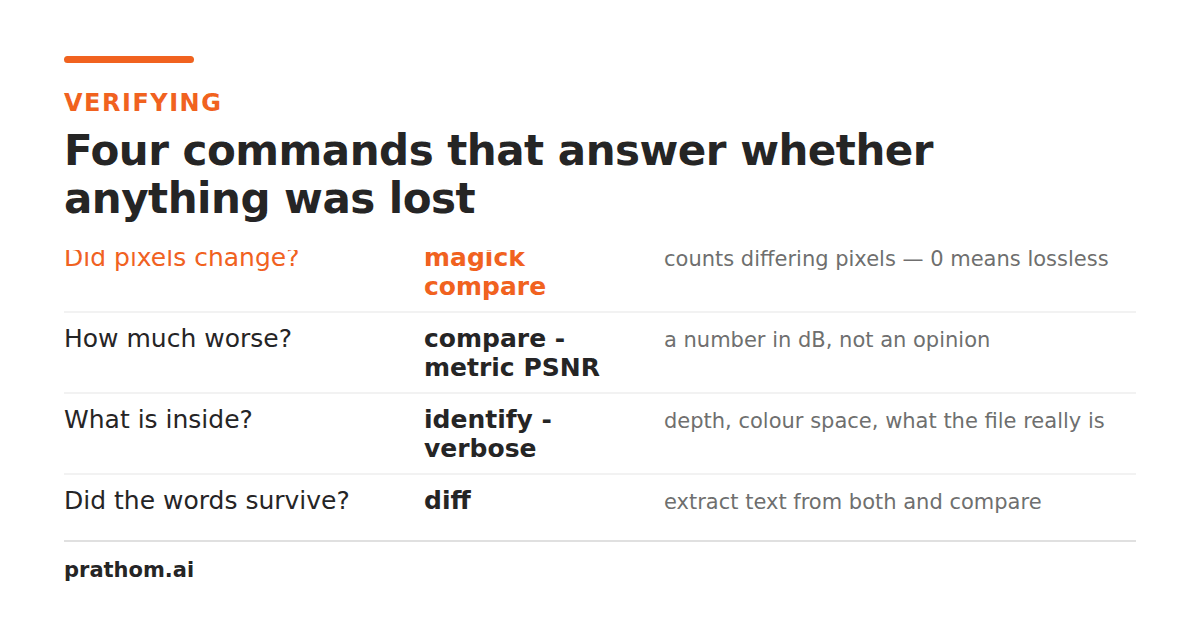
- 4 min read · Ganesh Patil
Interlacing a PNG Made It 27% Bigger and Did Not Help
PNG has an interlacing option that shows a rough version of the image while it loads, in the same spirit as progressive JPEG. Unlike progressive JPEG, it is reliably and substantially more expensive — and the preview it produces is worse. Here is what it cost on two very different images.
pngperformanceimage formats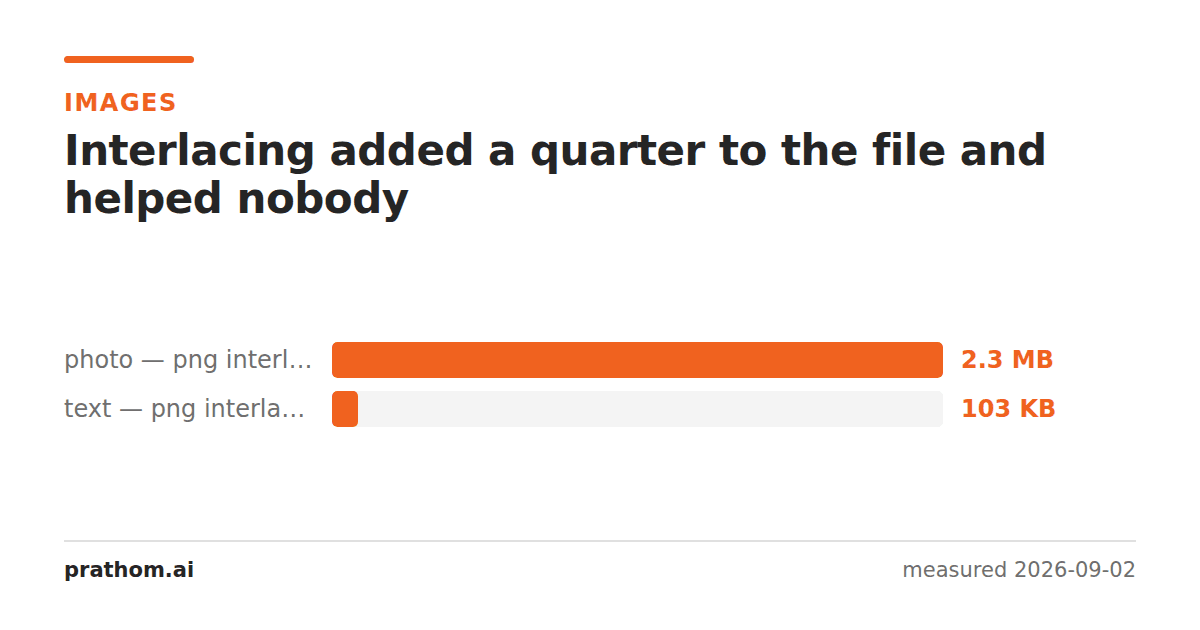
- 4 min read · Ganesh Patil
JPEG Compression Made No Difference to OCR Accuracy At All
Scanning guides tell you to save as TIFF or PNG because JPEG artifacts confuse OCR. It sounds obviously right — lossy compression smears exactly the hard edges that letter recognition depends on. We measured it across a wide range of quality settings and found no difference whatsoever, which changes the storage arithmetic for anyone digitising a lot of paper.
ocrjpegscanning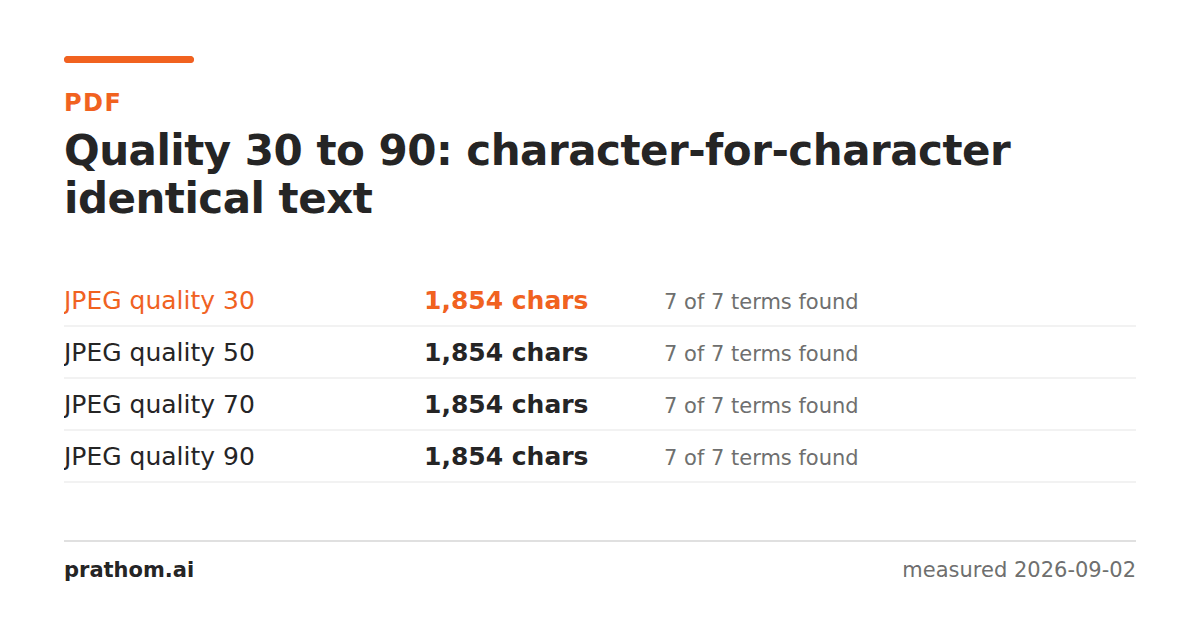
- 5 min read · Ganesh Patil
JPEG Does Not Just Look Worse on Text — It Is Bigger Too
The usual advice is "JPEG for photos, PNG for graphics", and it is given as a quality argument: JPEG smears the edges of text and flat color. That is true, and it buries the more useful half. On the same image, at the same settings, the JPEG is also the bigger file — three times bigger on a page of text. You are not trading size for quality. You are losing both.
image formatsjpegpng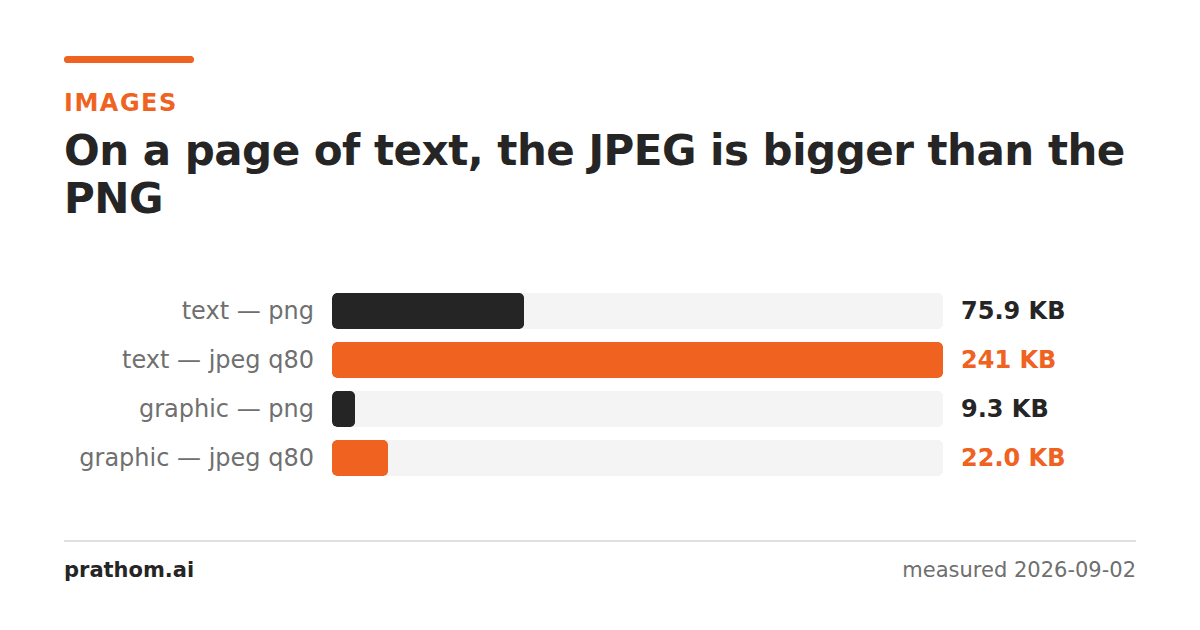
- 5 min read · Ganesh Patil
A Lossless Conversion Changed Every Pixel in the Image
Convert a 16-bit PNG to lossless WebP, convert it back, and compare the two files pixel by pixel. Every single pixel is different. Nothing malfunctioned and the encoder did exactly what it advertises — because the word lossless makes a narrower promise than almost everybody assumes it does.
losslessimage formatswebp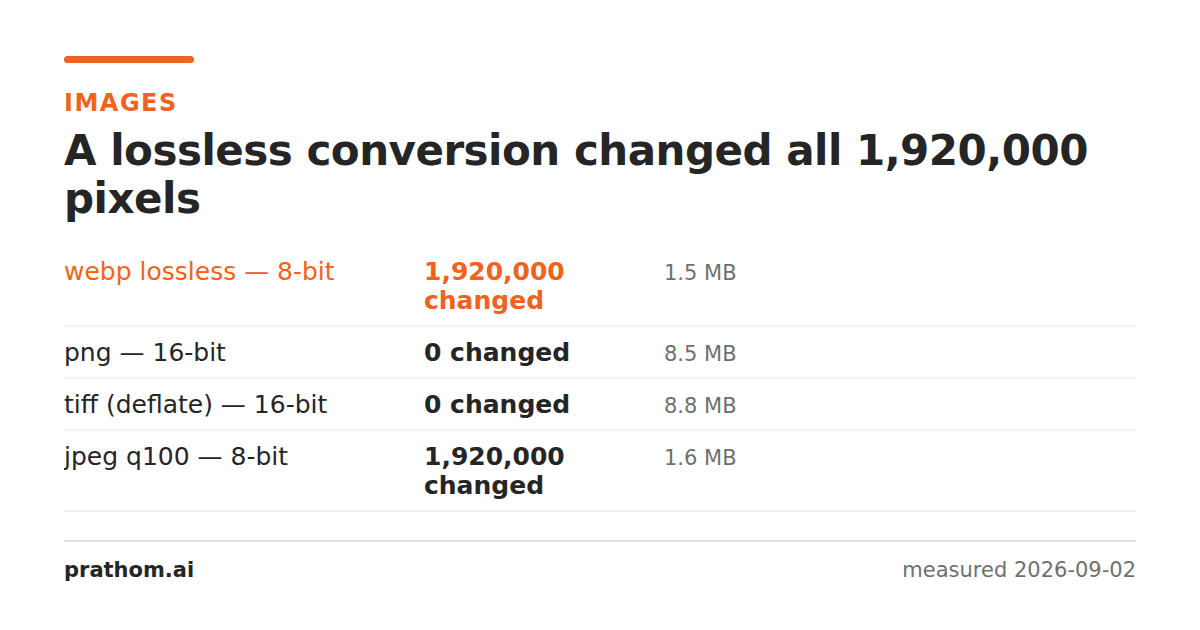
- 4 min read · Ganesh Patil
What Each MP3 Bitrate Actually Costs, in Bytes
Audio bitrate is one of the few compression settings where the size is completely predictable — unlike image quality settings, where the same number produces wildly different files depending on the picture. Here is the same recording at six bitrates plus lossless, and what the predictability means for choosing one.
audiomp3compression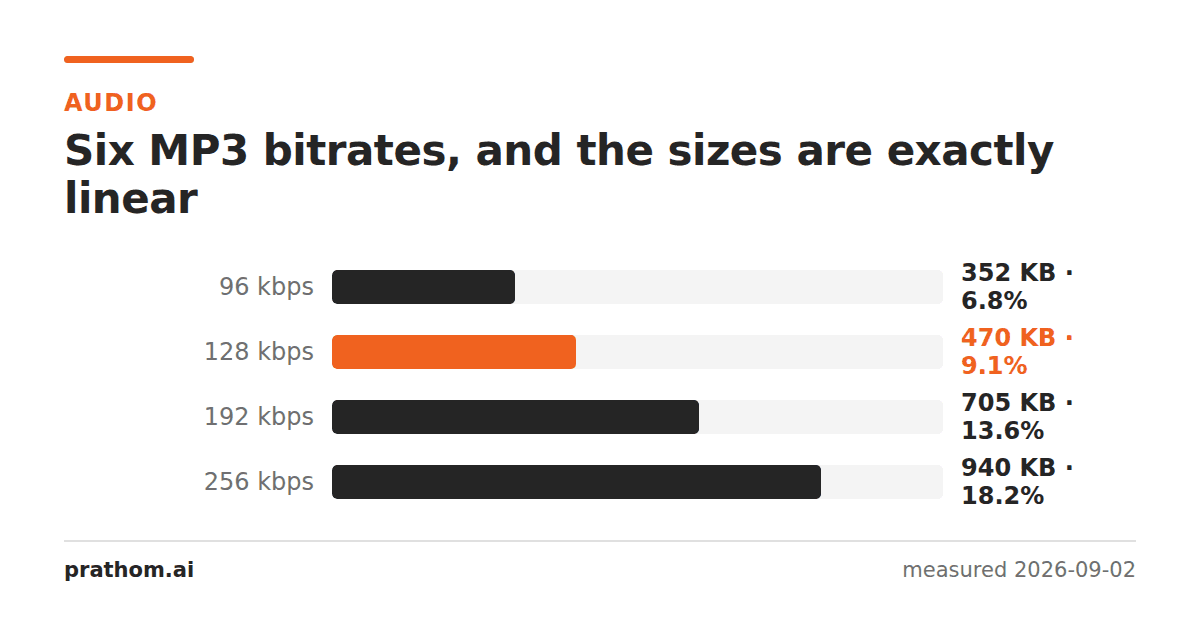
- 4 min read · Ganesh Patil
Choose an Image Format by Content, Not by What the File Is For
Advice about image formats is usually organized by purpose — logos, photos, screenshots, icons. That works until you meet a logo that is a photograph or a screenshot of a video. A better question predicts the right answer in every case we measured, and it takes about two seconds to ask.
image formatscompressionwebp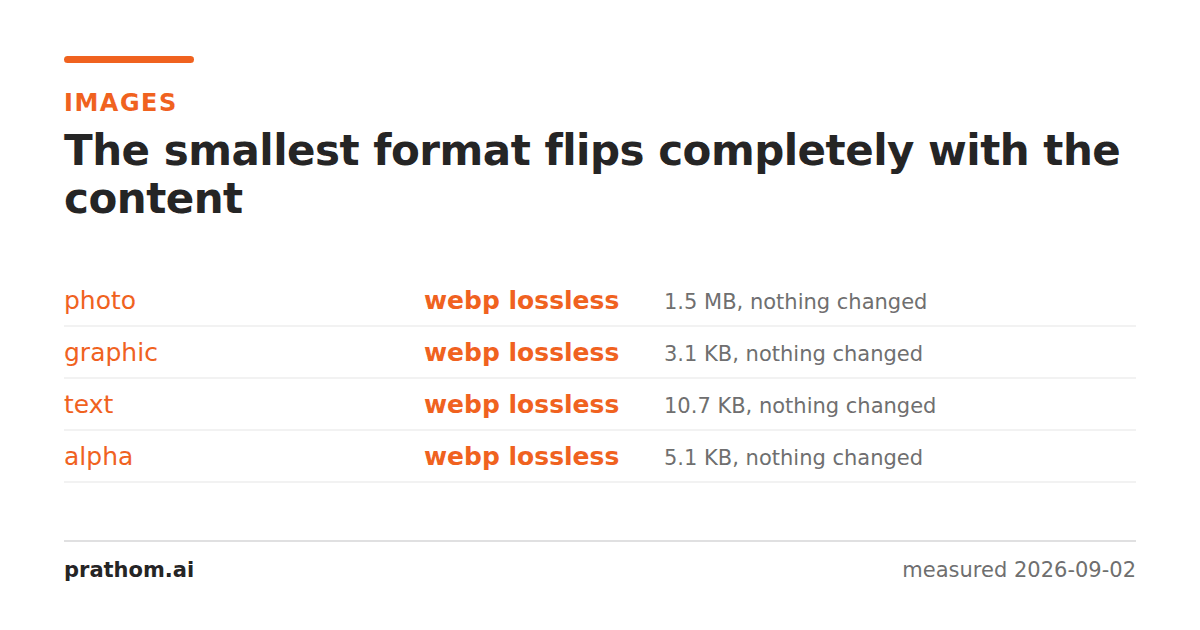
- 5 min read · Ganesh Patil
PNG's Maximum Compression Setting Is Free and Nobody Uses It
PNG has a compression level from 0 to 9 that almost nobody changes, partly because the name suggests a quality trade-off that does not exist. Every level produces a bit-identical image; the only thing that varies is how long the encoder spends looking for savings. Here is what the highest setting is worth.
pngcompressionimage formats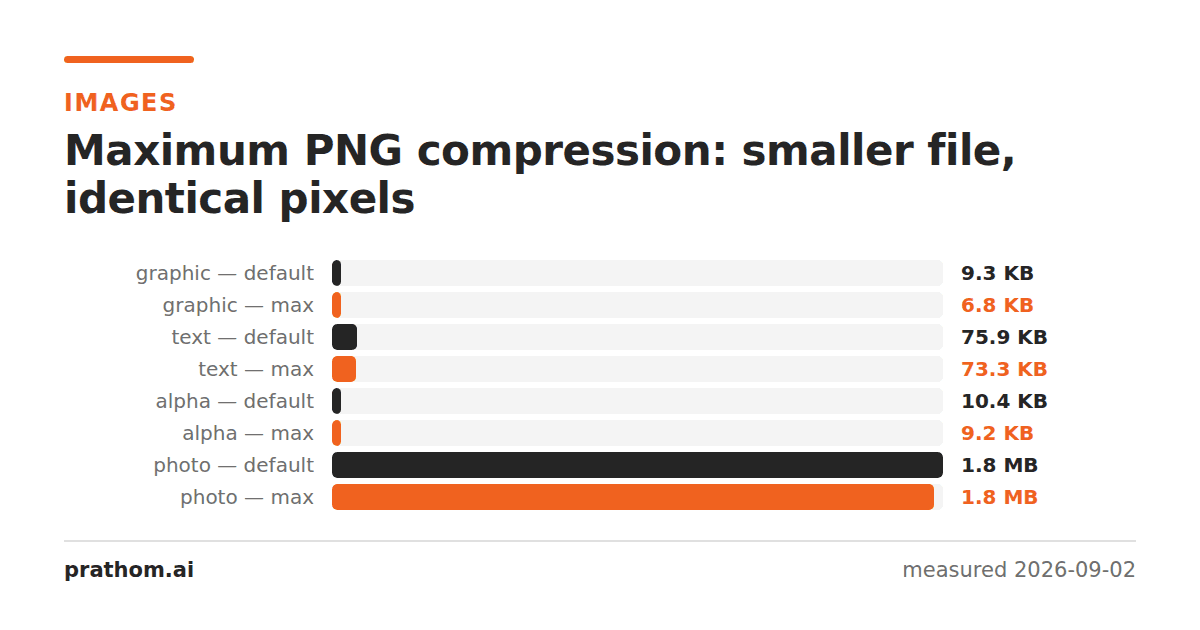
- 4 min read · Ganesh Patil
Progressive JPEG Is Usually Smaller, Except When It Is Not
Performance guides tell you to save JPEGs as progressive, because they render in increasing detail rather than top to bottom and because they are smaller. The rendering claim is straightforwardly true. The size claim depends on the image, and on one of our two test images progressive was the larger file.
jpegperformanceimage formats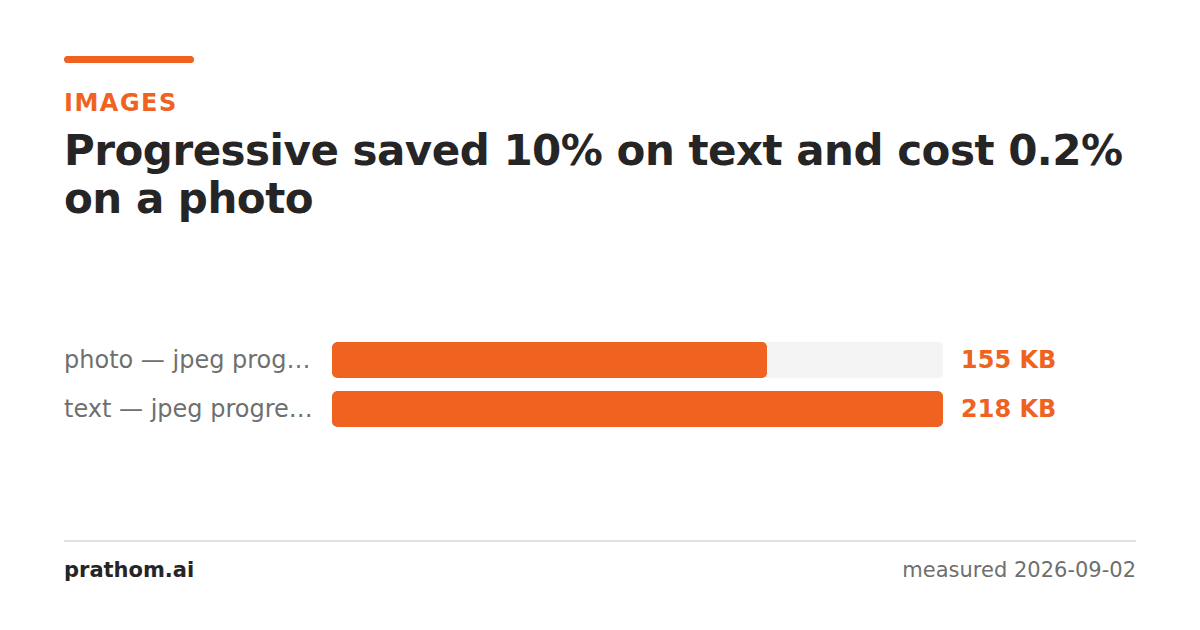
- 5 min read · Ganesh Patil
This PDF Kept Every Pixel and Still Came Out Looking Worst
Compress a PDF and the obvious way to check what happened is to look at the resolution of the images inside. It is the number every tool reports and the one every comparison uses. It is also, on its own, close to useless — here is a file that kept every single pixel at full resolution and looked worse than one that threw three quarters of them away.
pdfimage qualitycompression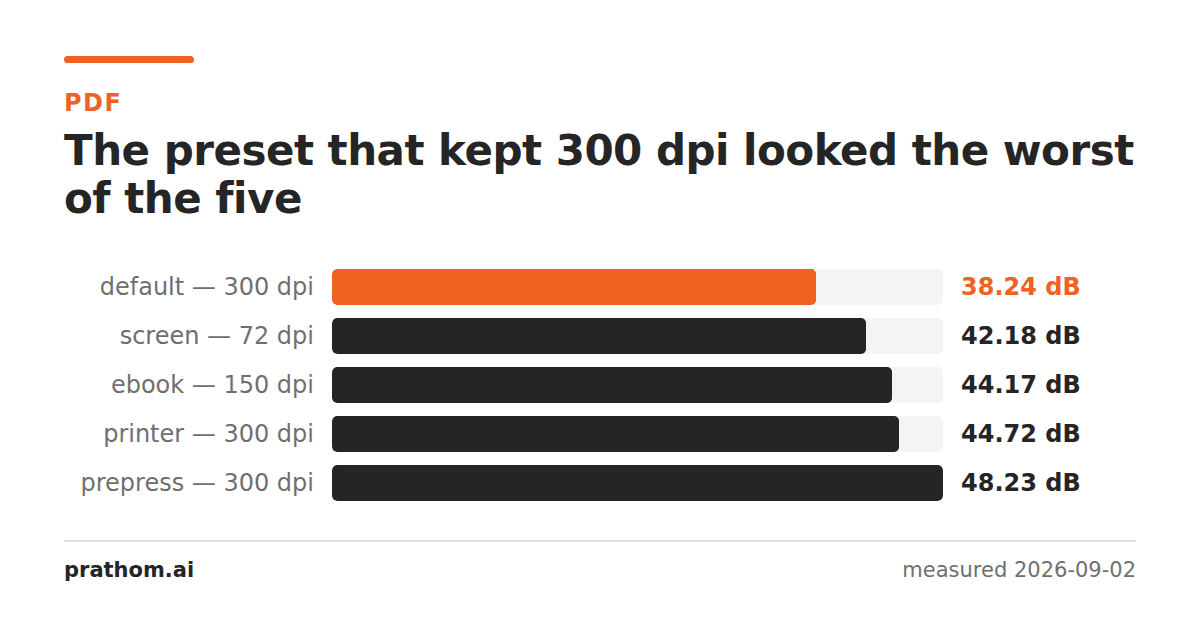
- 5 min read · Ganesh Patil
We Sent a CSV Through a Spreadsheet and Watched What Died
Open a CSV in a spreadsheet, change nothing, save it again, and the file that comes out is not the file that went in. This is well known for postcodes and product codes with leading zeros. We ran a deliberately awkward CSV through the round trip to find out exactly which fields survive and which do not.
csvspreadsheetsdata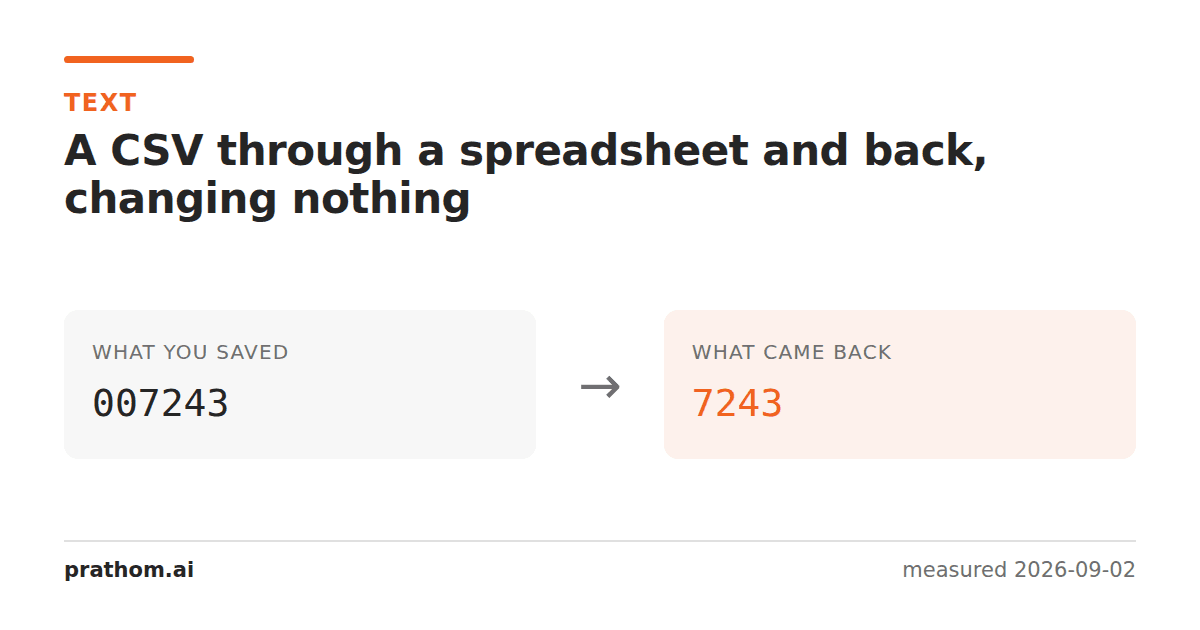
- 5 min read · Ganesh Patil
OCR Reads Nothing at 72 DPI and Everything at 150
The standard advice for scanning documents you intend to run through OCR is 300 DPI. We measured where the accuracy actually changes, and it is not a gentle curve with 300 comfortably on the good end. It is a cliff between 96 and 150, and everything above 150 was identical.
ocrscanningpdf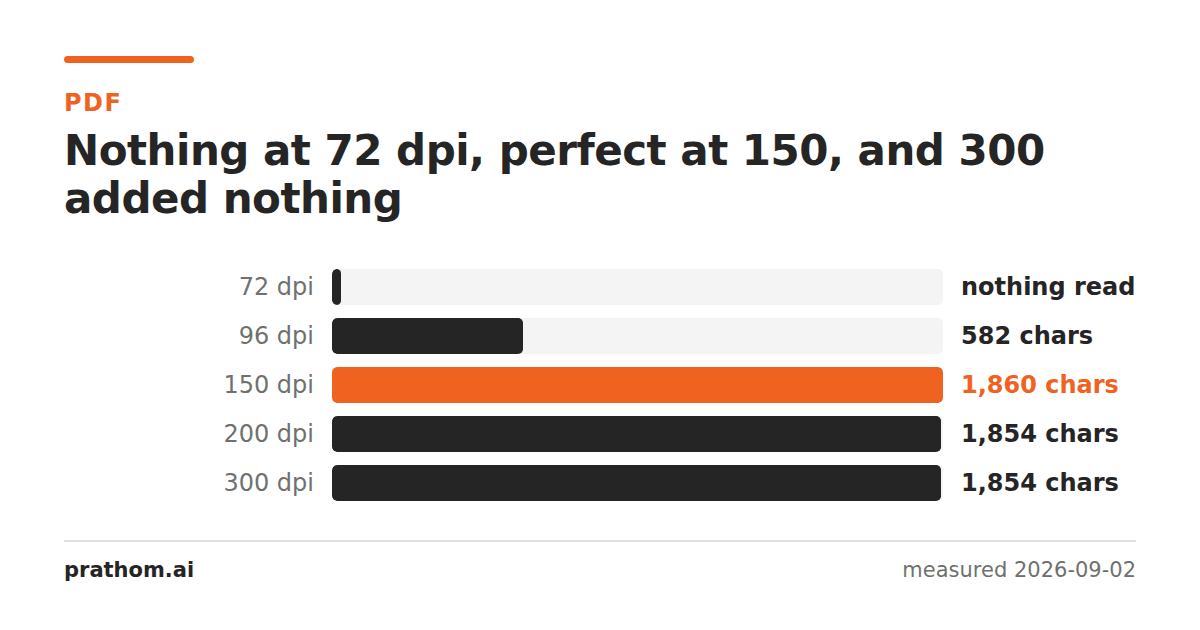
- 5 min read · Ganesh Patil
The JPEG Quality Cliff at 90, and What Actually Changes
Push a JPEG from quality 85 to 89 and the file grows by about 40 KB. Push it one more step, to 90, and it grows by 171 KB. That is not a smooth curve with a steep end — it is a switch being thrown. Something specific changes at 90, it is visible in the file itself, and knowing what it is tells you exactly which side of it you want to be on.
jpegcompressionimage formats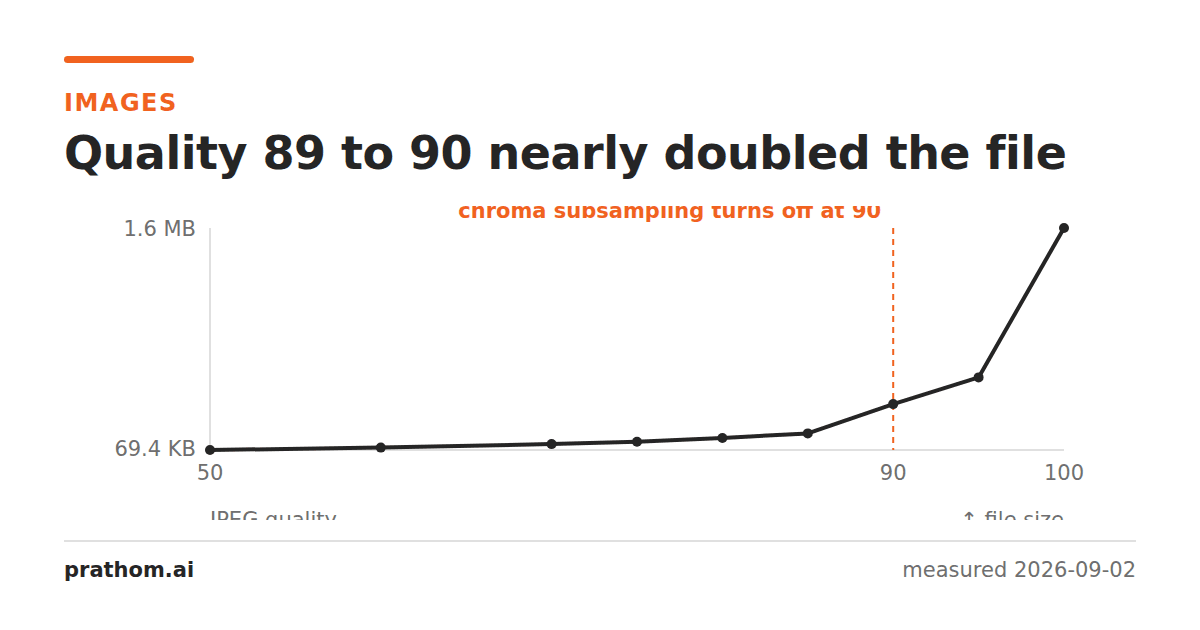
- 5 min read · Ganesh Patil
JPEG Quality 80 Does Not Mean 80% of Anything
Quality 80 sounds like it should mean 80% of the original, or 20% of the detail discarded. It means neither. The number is not part of the JPEG format at all — it is a convention one library invented, other programs copied loosely, and it does not transfer between them. Which has practical consequences when a file passes through more than one tool.
jpegcompressionimage formats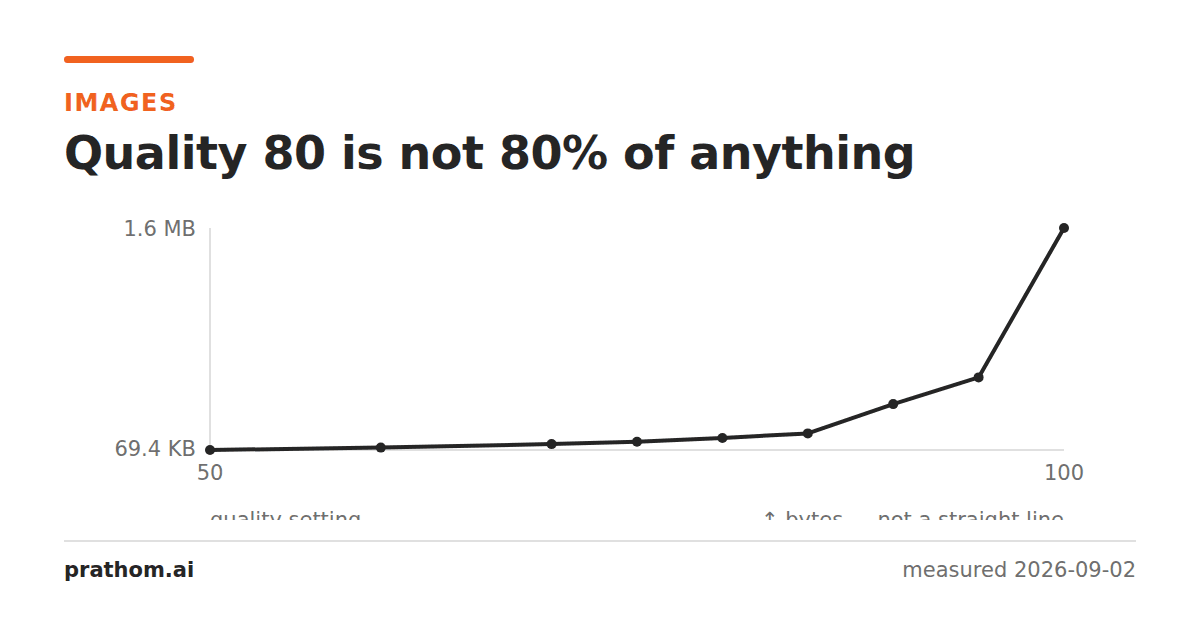
- 4 min read · Ganesh Patil
The Three Invisible Bytes at the Start of Your CSV
Your CSV has a column called `id`. Your code looks for a column called `id`. It is not there. Print the header and it says `id`. The problem is three bytes at the very start of the file that no editor displays, that Excel on Windows once needed, and that half the software in the world now has to work around.
csvencodingunicode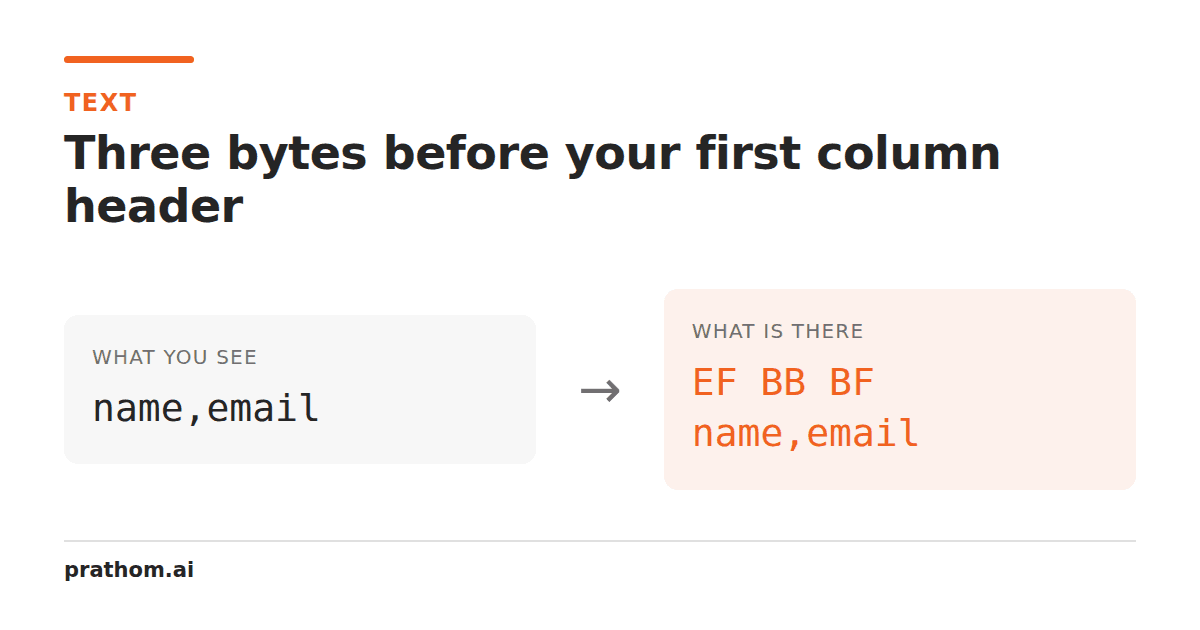
- 4 min read · Ganesh Patil
TIFF Was Larger Than PNG on Every Image, Including With LZW
TIFF has a reputation as the professional's lossless format — the one you archive in, the one print shops ask for. PNG is treated as the web's lightweight cousin. On file size that reputation is backwards, and the gap is not small. Here is the comparison on four different kinds of image, with both common TIFF compression schemes.
tiffpngimage formats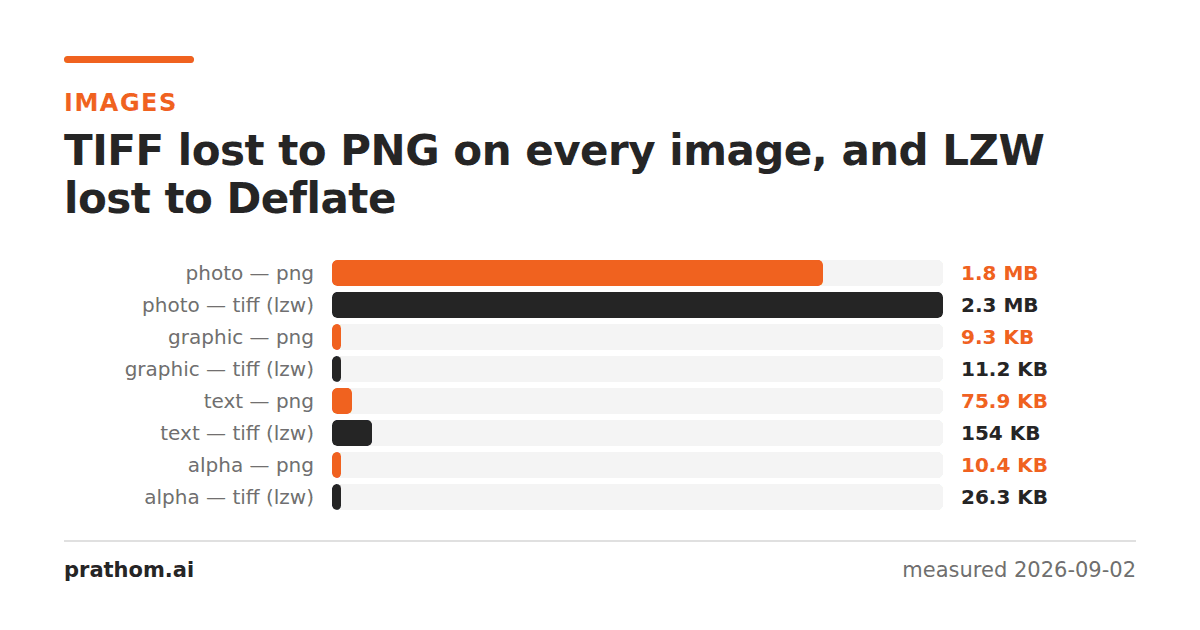
- 5 min read · Ganesh Patil
Two Words That Look Identical and Are Not the Same Text
A search that finds nothing, a duplicate that will not deduplicate, a login that fails with the right password. Often the cause is that two pieces of text that look exactly the same on screen are different sequences of bytes — and Unicode allows both spellings on purpose. Here is what is happening and the one-line fix.
unicodetextencoding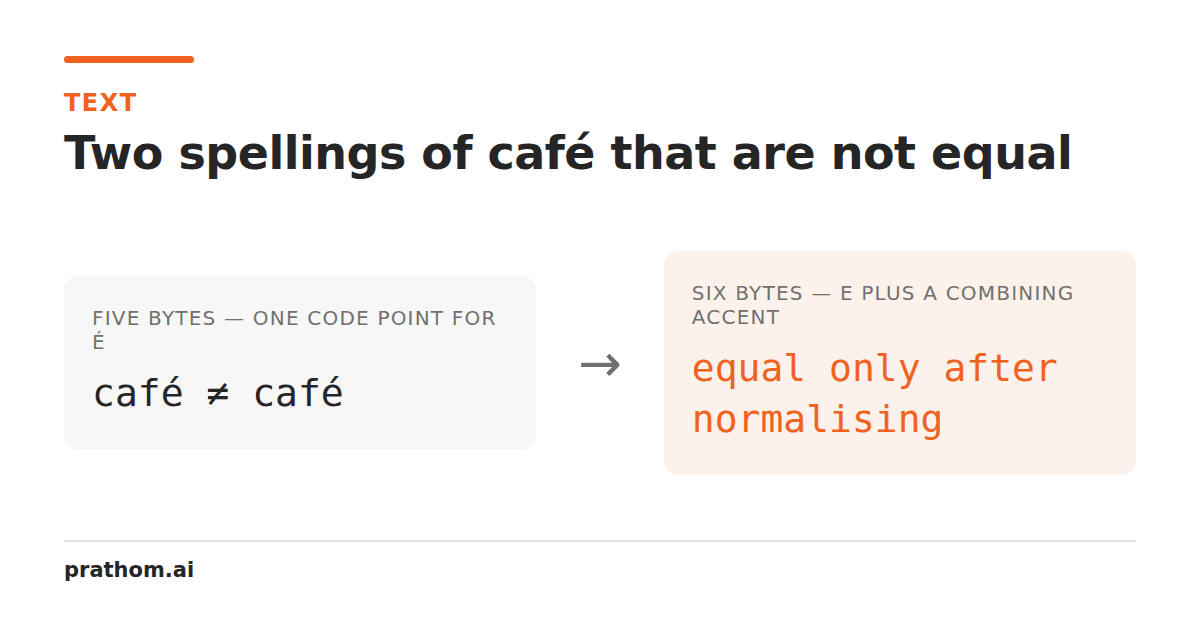
- 5 min read · Ganesh Patil
Saving as UTF-16 More Than Doubled the File, for No Benefit
Text editors offer an encoding dropdown with several UTF options and no guidance. Choosing the wrong one produces a file that is more than twice the size, that many tools will not read, and that looks like it is full of null bytes when anything goes wrong. Here is the size difference measured, and when UTF-16 is actually the right answer.
encodingunicodetext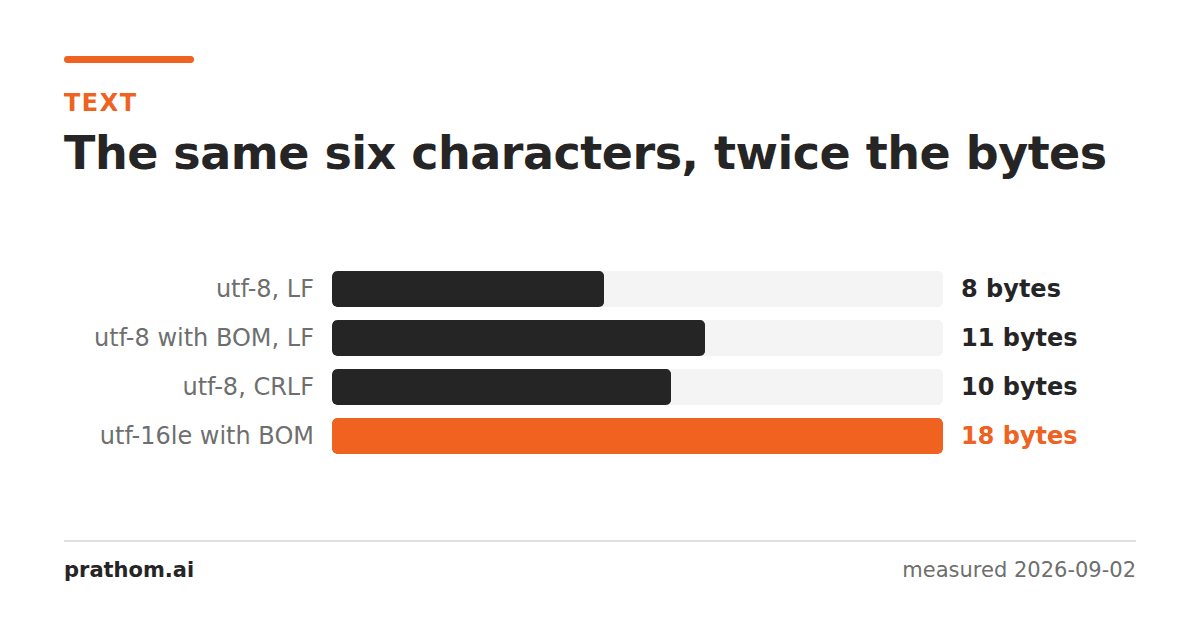
- 4 min read · Ganesh Patil
Lossless WebP Was Smaller Than PNG on Every Image We Tried
WebP has a reputation as the lossy format that replaces JPEG. It also has a lossless mode, and that mode is the more interesting one, because it competes with PNG rather than with JPEG — and in four separate tests it won every time, while producing files that were identical to the original pixel for pixel.
webppngimage formats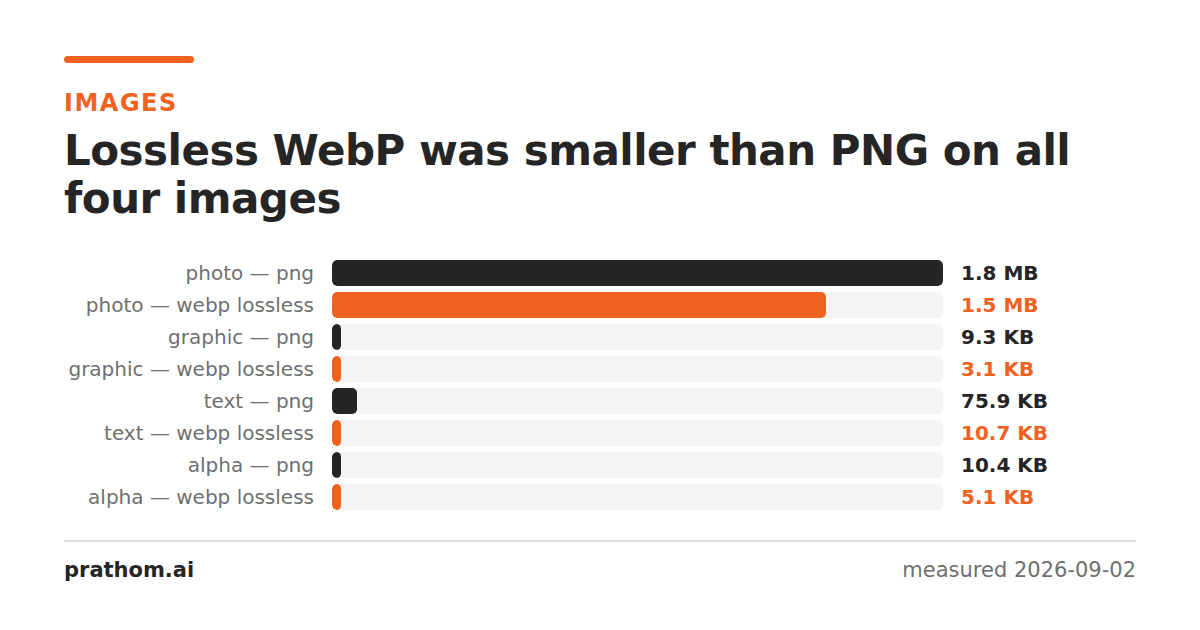
- 4 min read · Ganesh Patil
What "Compress PDF" Actually Removes, Preset by Preset
Nearly every "compress PDF" tool is Ghostscript underneath, running one of five named presets. Those presets do very different things, the differences are not what their names suggest, and the one that produced the smallest file also produced the worst-looking page. Here is all five measured on the same document.
pdfcompressionghostscript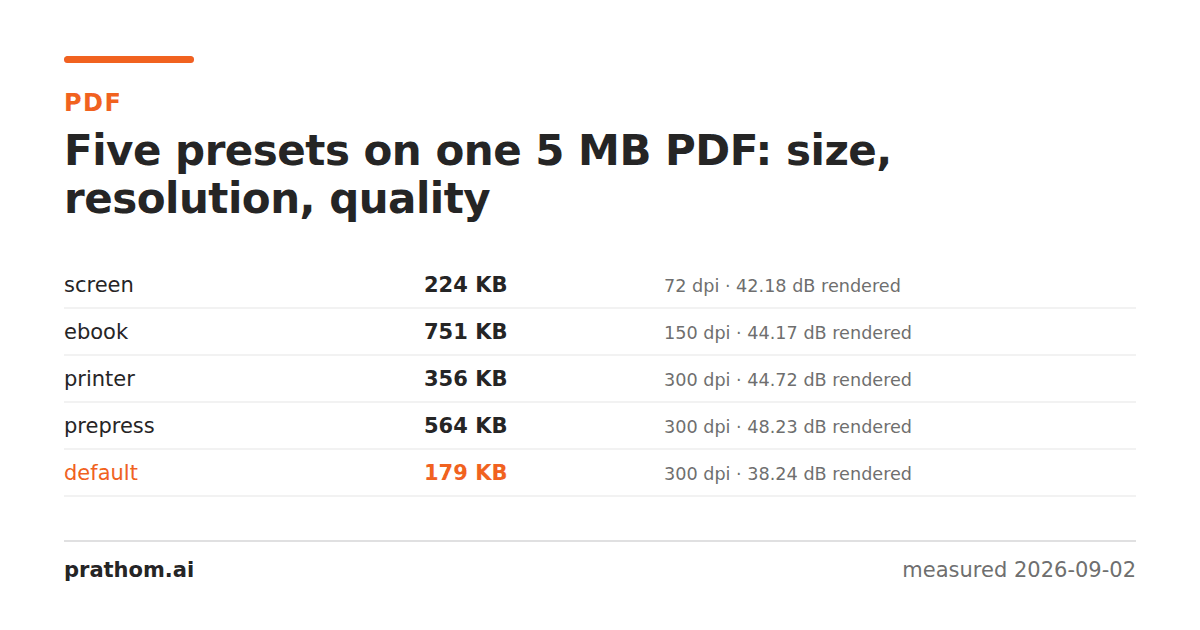
- 4 min read · Ganesh Patil
This Emoji Is One Character, Seven Characters and Eleven Characters
You paste something into a field with a 280-character limit and it says you are over by nine, but you counted 271. Neither of you is wrong. There are four different reasonable answers to "how many characters is this", they disagree most on exactly the text people paste, and knowing which one a system uses tells you why it rejected you.
textunicodecharacter count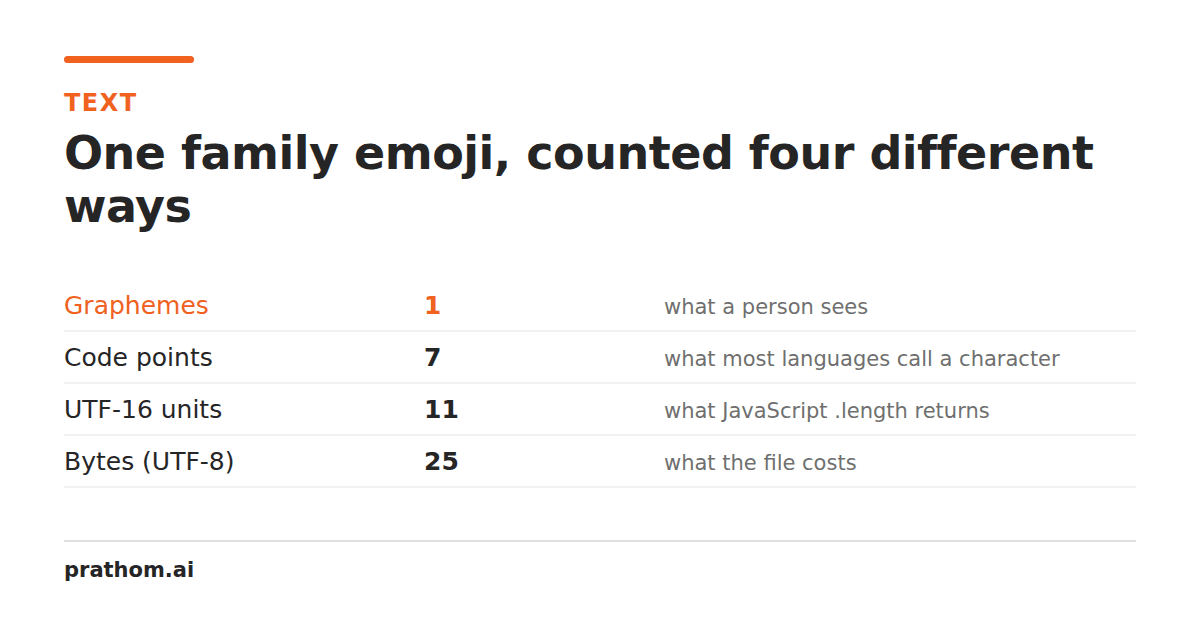
- 4 min read · Ganesh Patil
Six Ways to Shrink an Image, and What Each One Costs
Every image editor has a dropdown of resampling filters with names like Bicubic, Lanczos and Nearest Neighbor, and almost nobody changes it. The differences between them are real, they are measurable, and which one is right depends on what is in the picture rather than on which sounds most advanced.
resizeimage qualityimage formats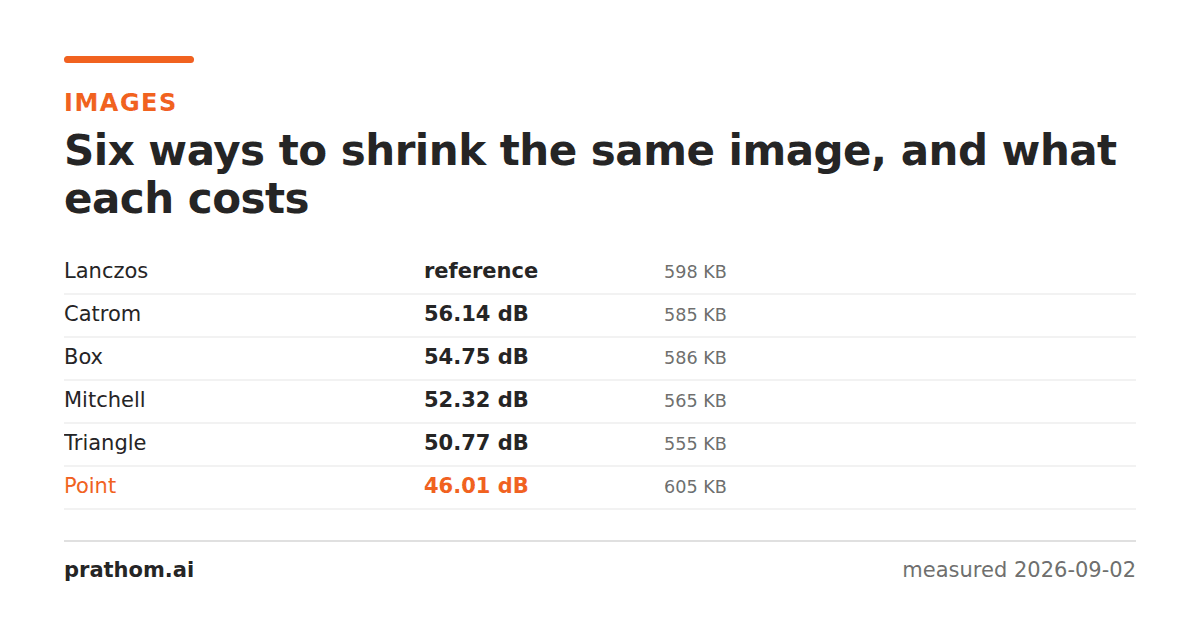
- 5 min read · Ganesh Patil
Why "no export filter" Names the Wrong File Entirely
Run one of the most ordinary conversions there is — an HTML file to a Word document — and LibreOffice refuses with an error pointing at the file it was supposed to create. The file does not exist, so there is nothing to inspect, and the message sends you to the wrong end of the problem. Here is what is actually happening.
libreofficedocumentsconversion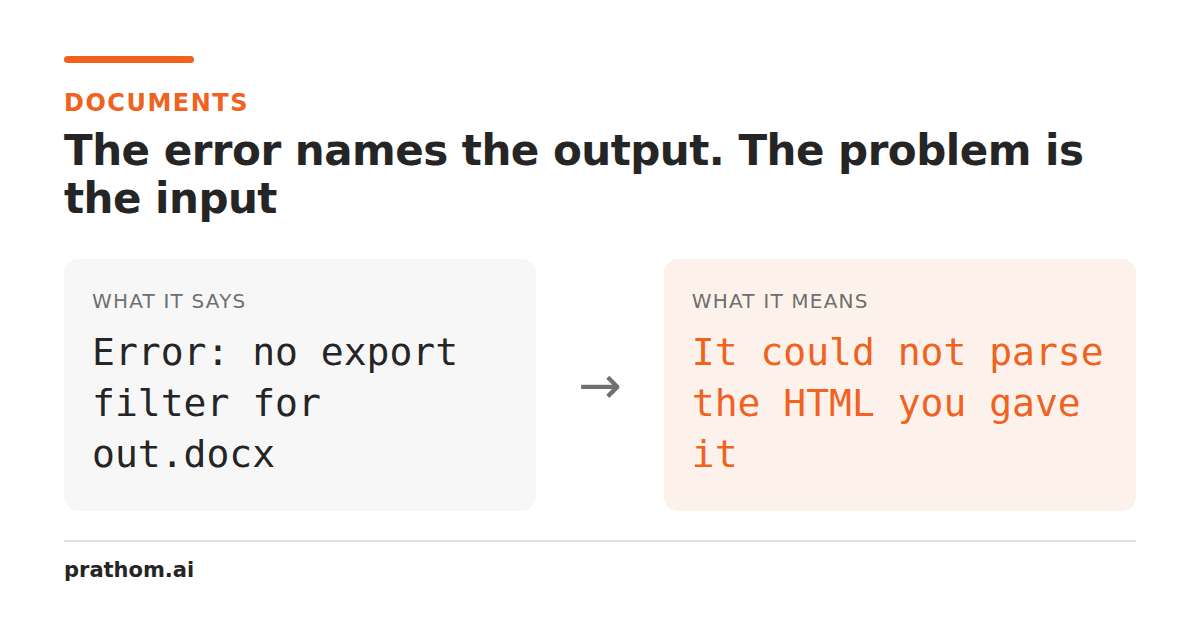
- 4 min read · Ganesh Patil
Why a Ten-Page Scan Is 40 MB and a Hundred-Page Report Is 400 KB
Two PDFs that look almost identical on screen can differ in size by a factor of a hundred, and the reason is not compression settings. One of them contains text and the other contains photographs of text. Almost every confusing thing about PDFs — why search fails, why compression barely helps, why the file is enormous — follows from which kind you have.
pdfscanningcompression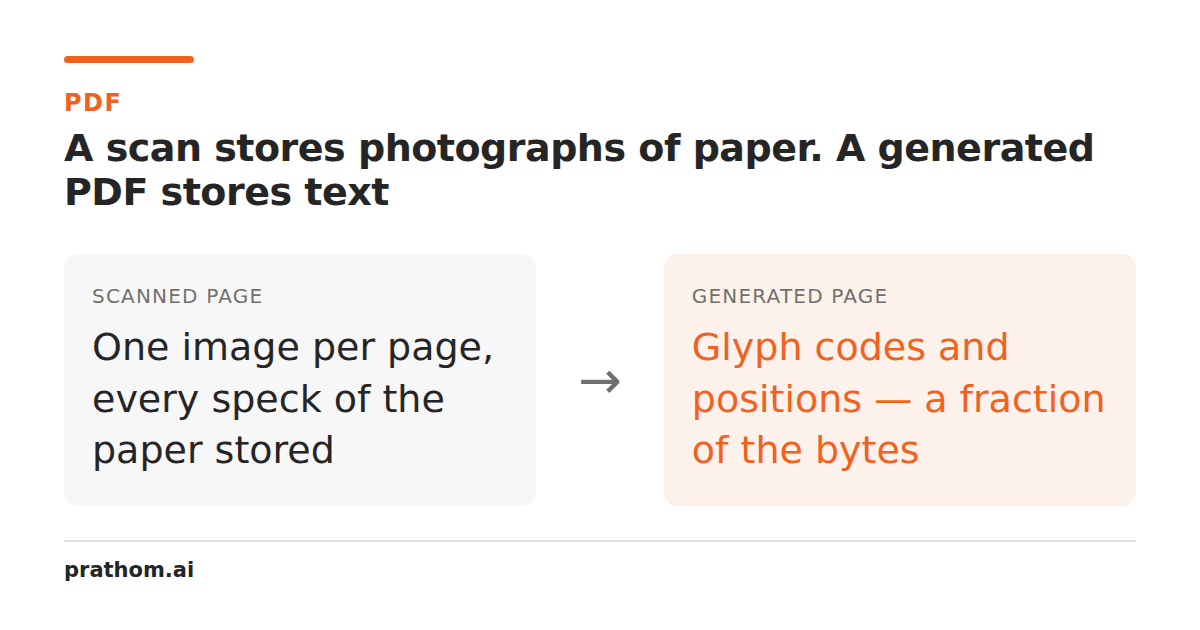
- 5 min read · Ganesh Patil
How to Open XPS Files When Windows Cannot Read Them
XPS files are fixed-layout documents, not damaged PDFs. Here is why Windows may refuse them, which viewer options are safe, and when converting XPS to PDF is the better handoff.
xpsoxpspdf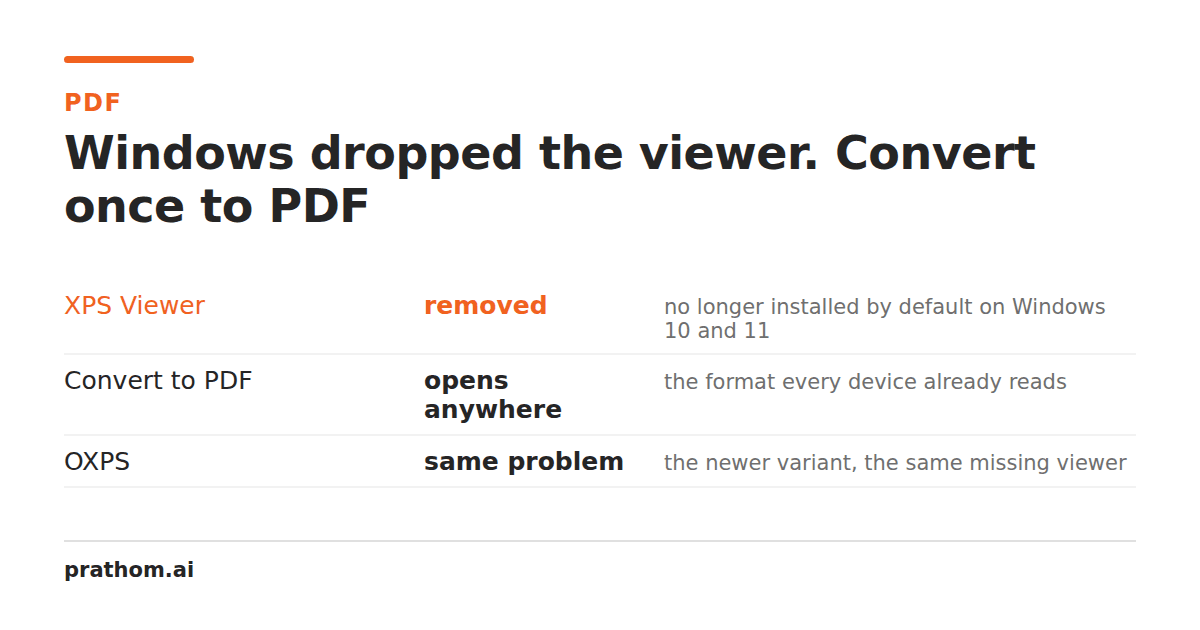
- 4 min read · Ganesh Patil
How to Make a PDF Smaller Without Making It Blurry
“Compress PDF” can mean two very different operations: cleaning the file's structure or throwing away visual information. Knowing which one you need is the difference between a smaller document that still prints well and a blurry scan that only looks acceptable at thumbnail size.
pdfcompressiondocuments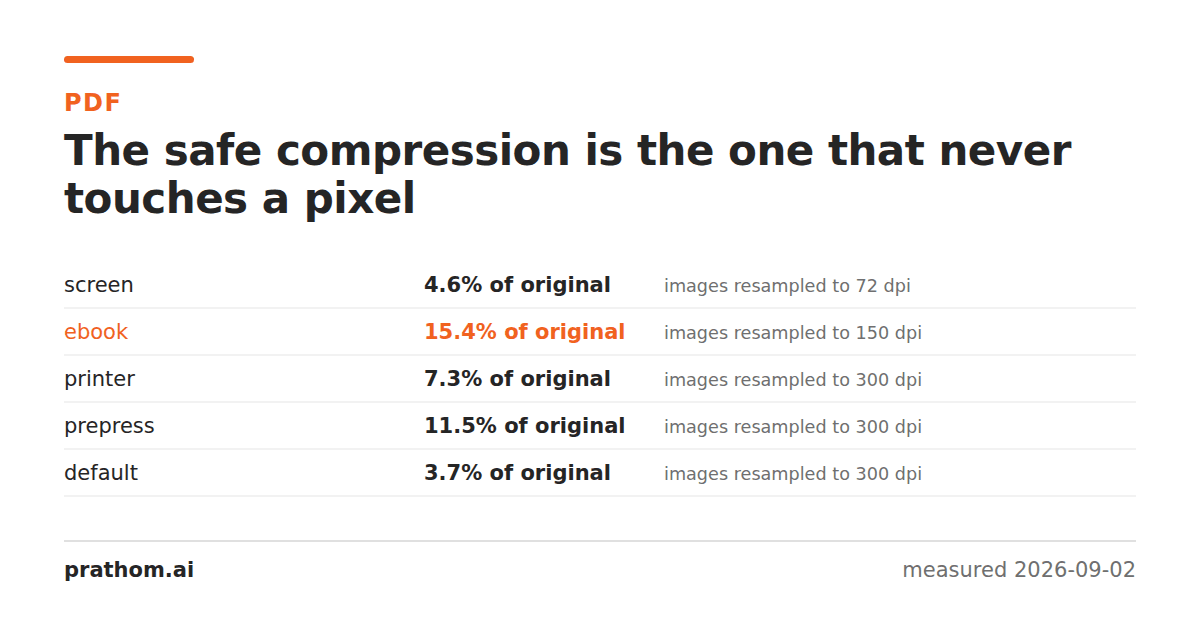
- 4 min read · Ganesh Patil
Why EPUB to PDF Changes the Shape of a Book
An EPUB does not contain the pages you see in a PDF. It contains a reading system that adapts to screen size, font settings, and margins. Converting it to PDF therefore creates a page design instead of simply exporting existing ones.
epubpdfebooks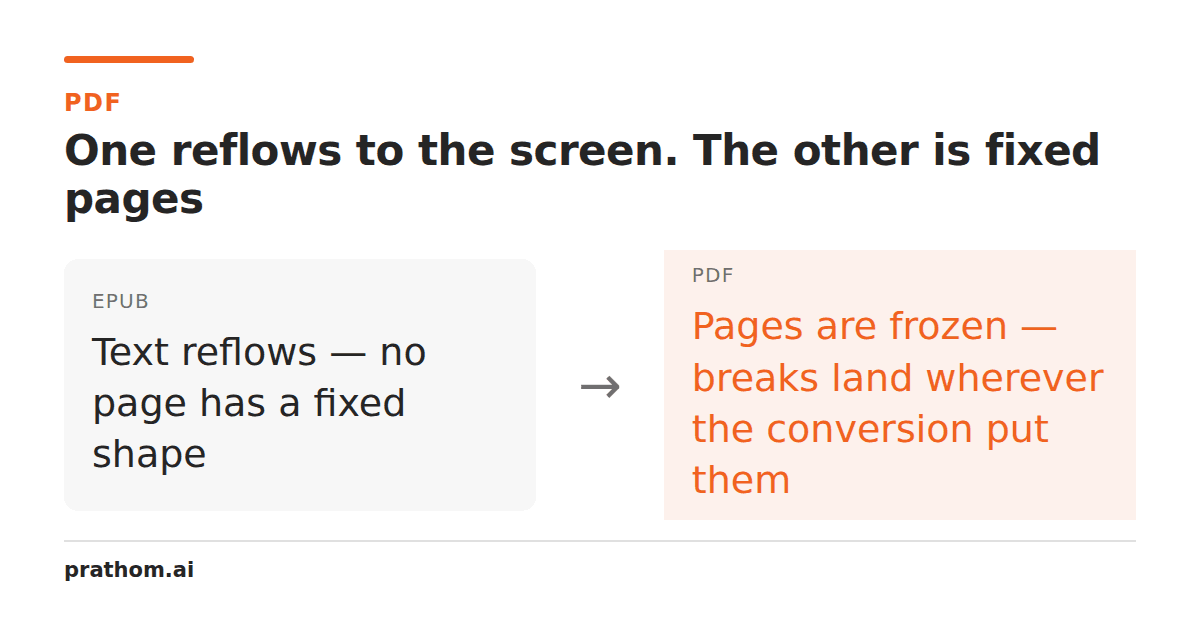
- 4 min read · Ganesh Patil
Why a Scanned PDF Has No Text to Copy
A PDF can look full of words while containing no characters at all. If every page is a photograph of a document, copy and search cannot work until optical character recognition creates a new text layer, and that layer still needs review.
pdfocrtext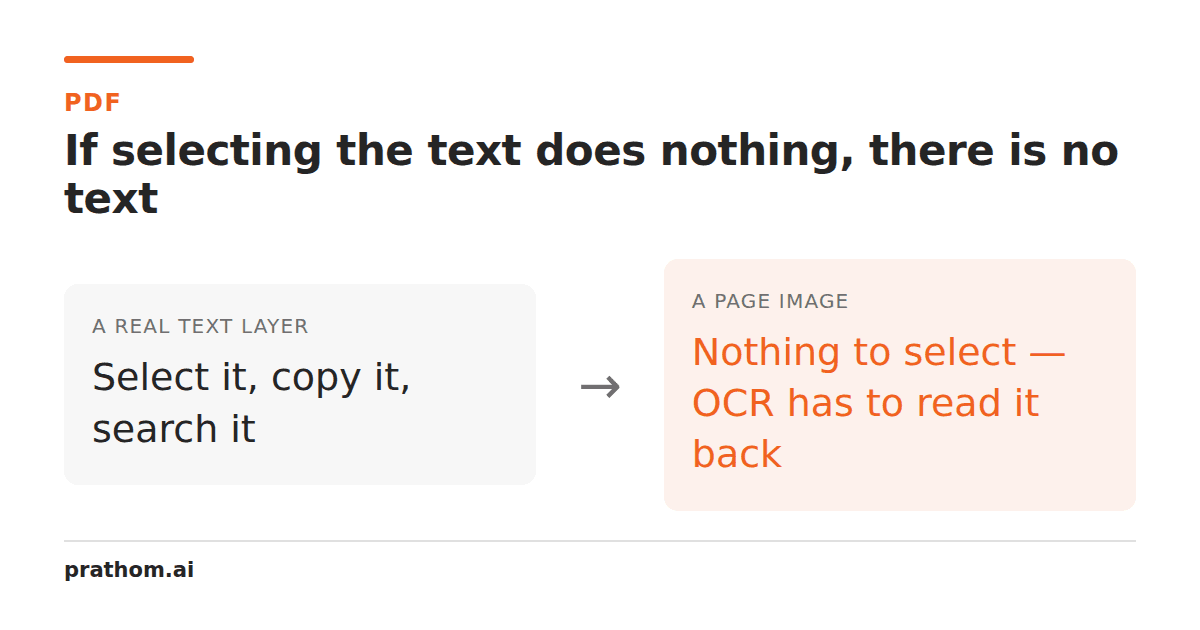
- 4 min read · Ganesh Patil
Why HEIC Photos Fail to Open, and What to Convert Them To
HEIC is not a damaged version of JPEG. It is a newer image container with a more efficient codec, and the reason it fails is usually the software around the photo rather than the photo itself. The right conversion depends on what needs to open it next.
heicimagescompatibility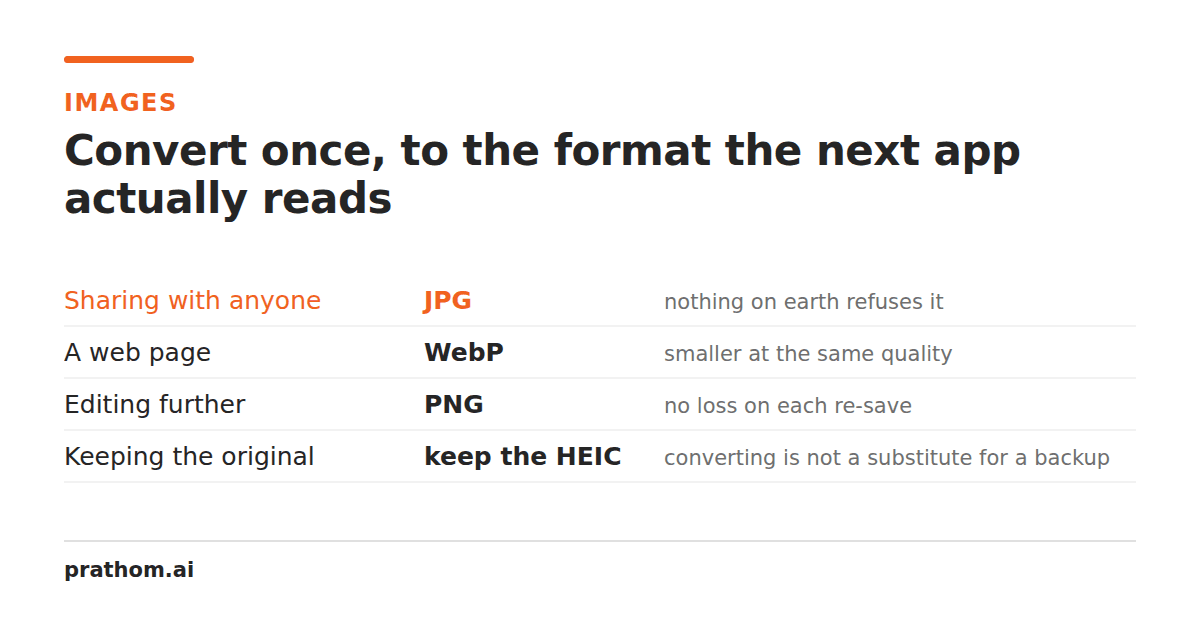
- 4 min read · Ganesh Patil
A Signature, a Redaction, and a Watermark Are Different Things
These three PDF actions can all change what a page looks like, but they answer different questions. A signature identifies a person, a redaction removes a visible detail, and a watermark communicates how the document should be used.
pdfprivacydocuments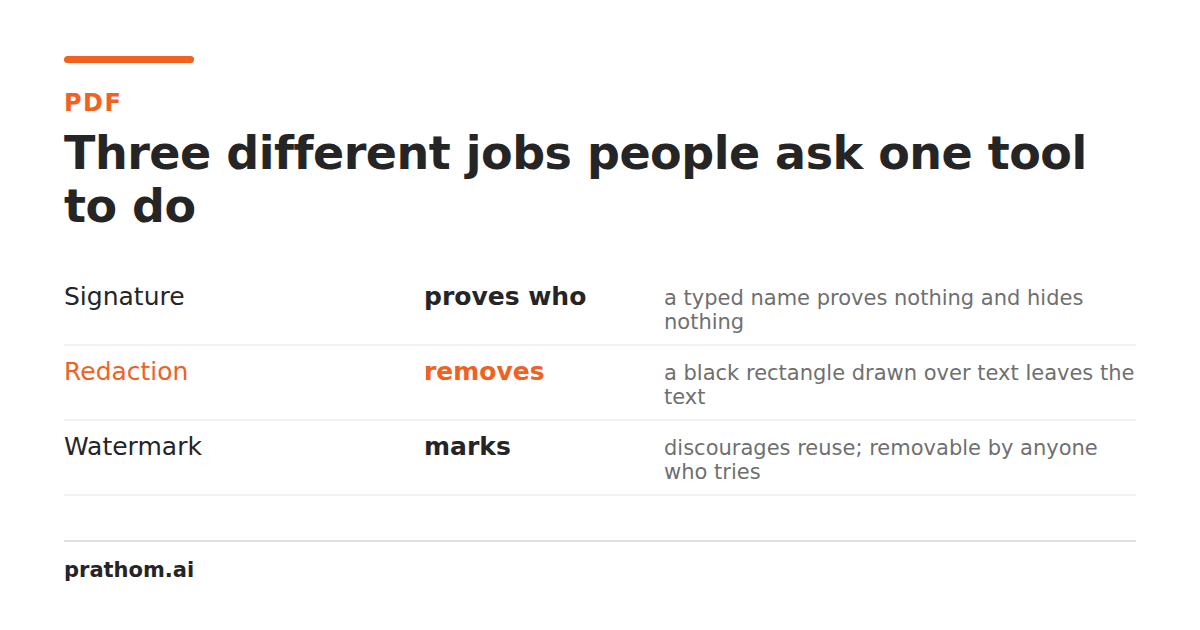
- 5 min read · Ganesh Patil
What Your Photos Are Carrying
A photograph is not only a picture. Attached to it is a small database your camera wrote — the model, the settings, the moment, and very often the coordinates. Most of it is harmless and some of it is useful. The problem is that it travels silently.
imagesprivacymetadata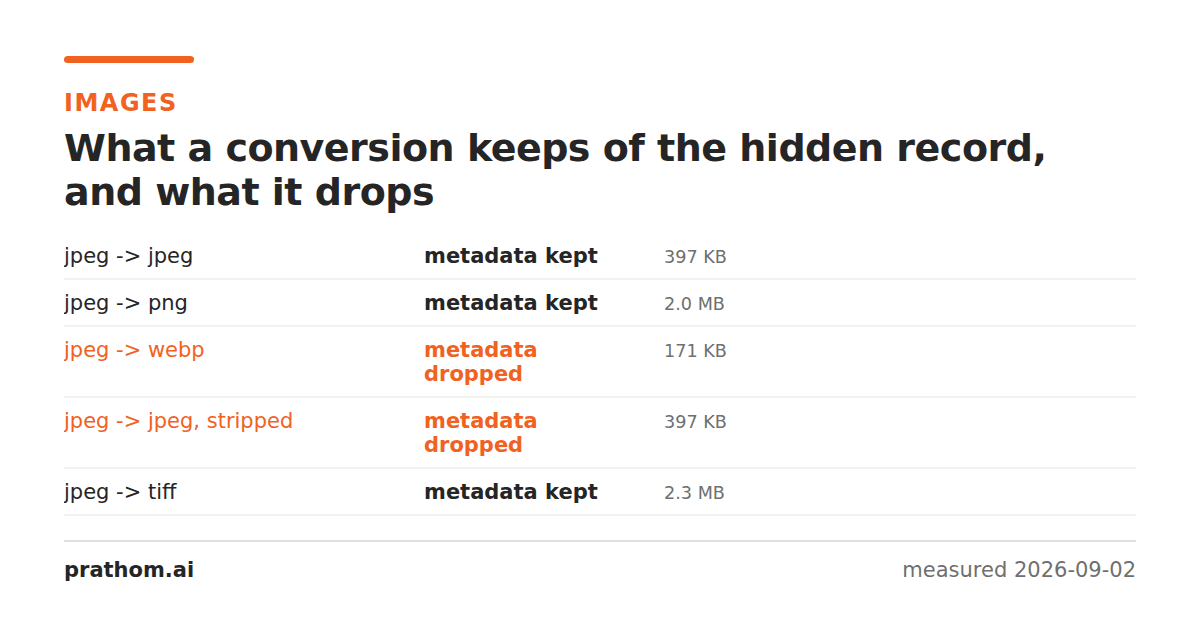
- 5 min read · Ganesh Patil
When a Form Demands Exactly 200 KB
Government portals, job boards, and exam registrations all do the same thing: demand a photo under some precise number of kilobytes and reject everything else without explaining why. The reason guesswork fails is that the two controls you have do completely different things.
imagescompressionworkflow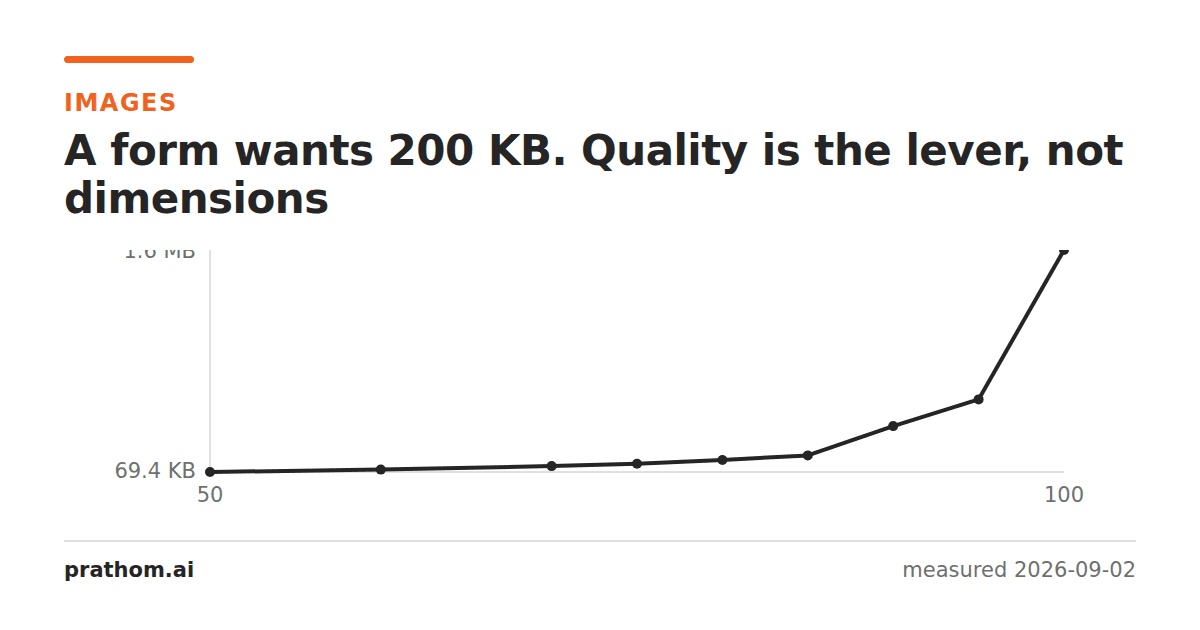
- 5 min read · Ganesh Patil
Choose an Image Format by Where It Is Going
There is no best image format, which is why comparison tables never settle the question. There is only a next program that has to open the file, and that program has opinions. Work backwards from it and the choice usually makes itself.
imagesformatsworkflow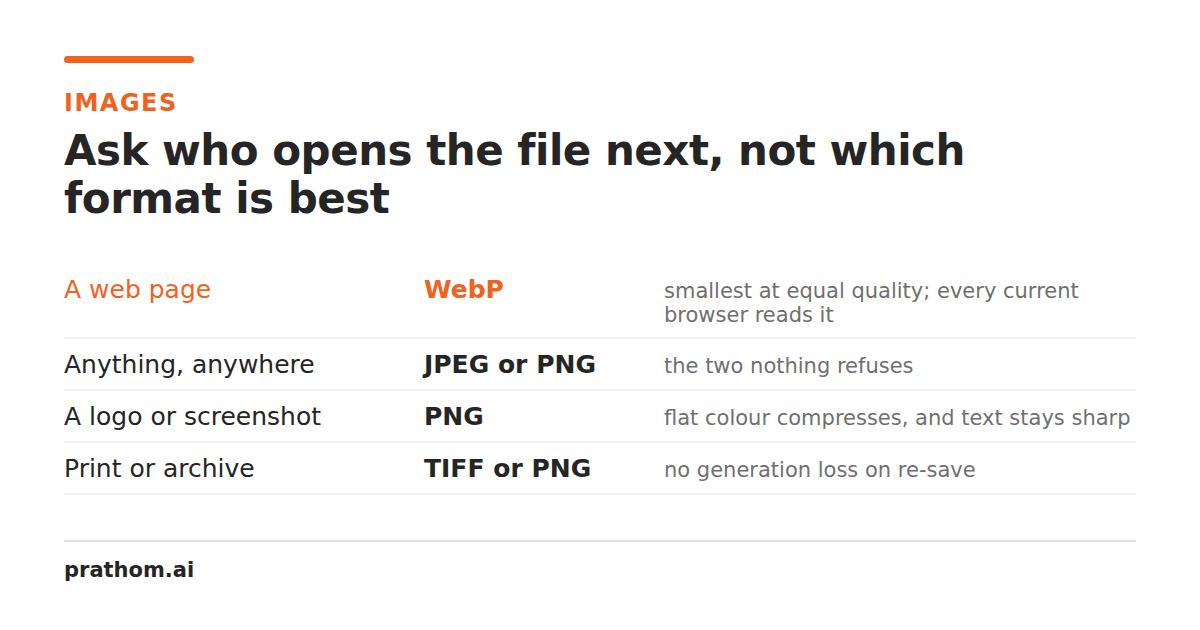
- 5 min read · Ganesh Patil
Why PDF to Word Never Comes Out Perfect
A PDF does not contain paragraphs. It contains characters at coordinates, in whatever order the program that made it happened to emit them. Everything a converter hands you above the level of a single character is a reconstruction, and knowing which parts were guessed tells you where to look first.
pdfdocumentsconverters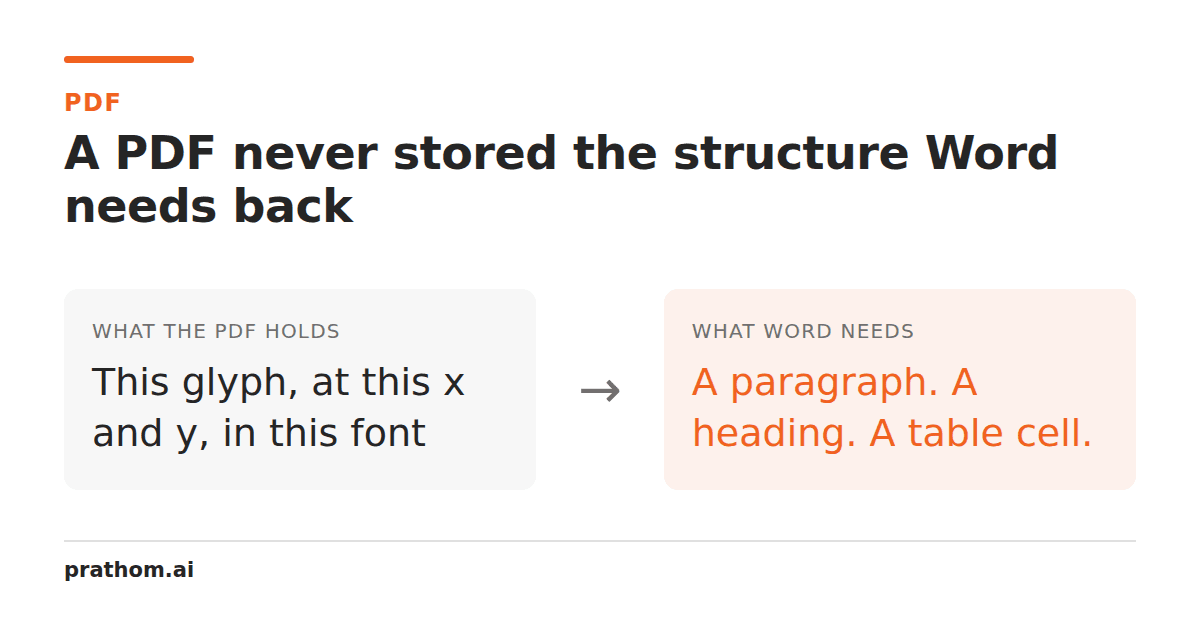
- 5 min read · Ganesh Patil
What Actually Happens When You Convert a File
Nothing is "turned into" anything. The original is taken apart into raw numbers, and a second program writes an entirely new file from those numbers in a different language. Almost everything people find surprising about converters follows from that one fact.
convertersformatsarchitecture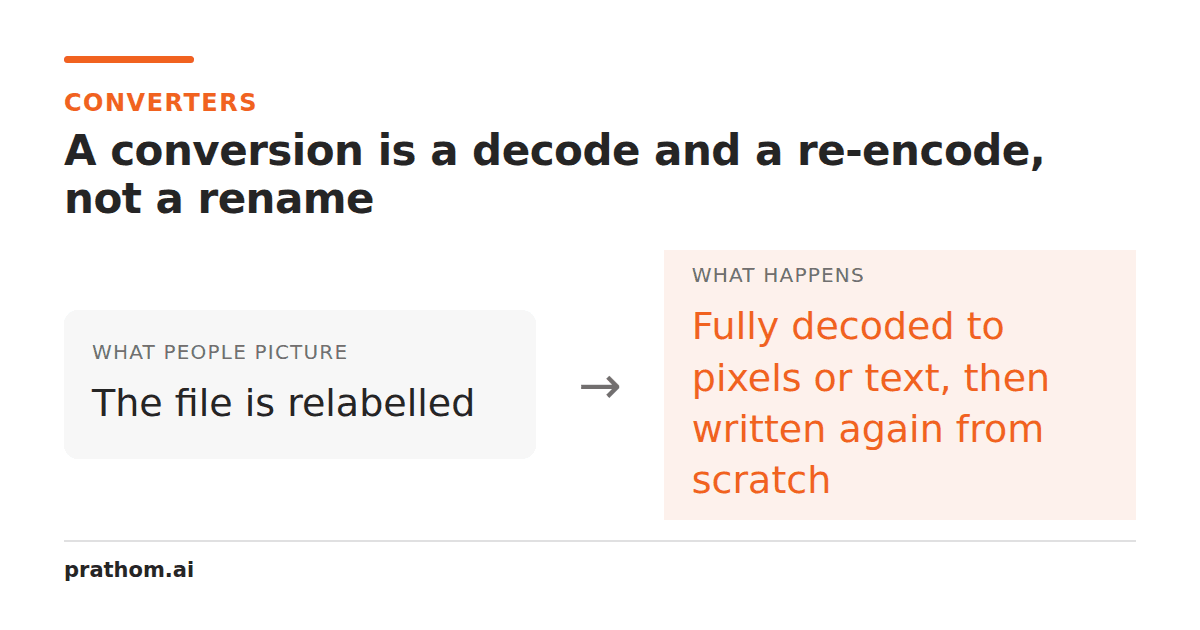
- 4 min read · Ganesh Patil
YouTube Title Length: Where Titles Actually Get Cut
The character limit is 100 and almost nobody hits it. The number that decides whether your title works is the point where each surface truncates, and those range from about 40 characters on a mobile home feed up to around 70 on desktop search. Which means the real skill is word order, not brevity.
youtubetitlescreator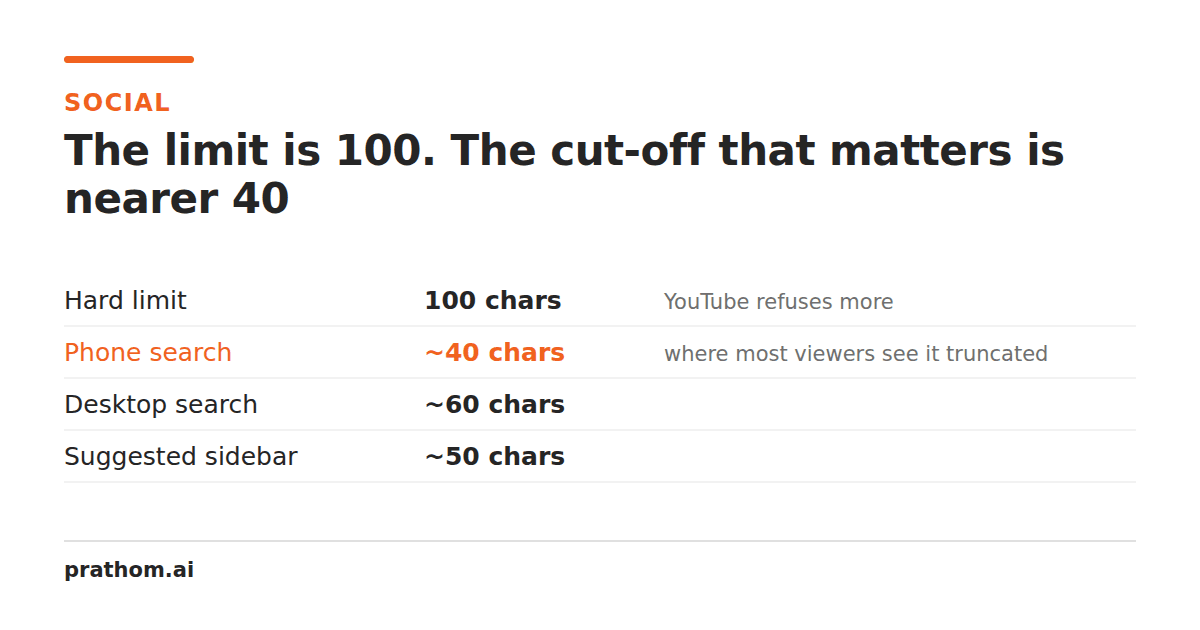
- 7 min read · Ganesh Patil
Which of These Tools Run in Your Browser
This post used to say almost every tool here ran in your browser. That stopped being true in August 2026, so it has been rewritten rather than quietly left up. Some tools still run entirely on your machine, many now run on our server, and the useful part is that you never have to take our word for which — you can check any of them yourself in ten seconds.
privacyarchitectureabout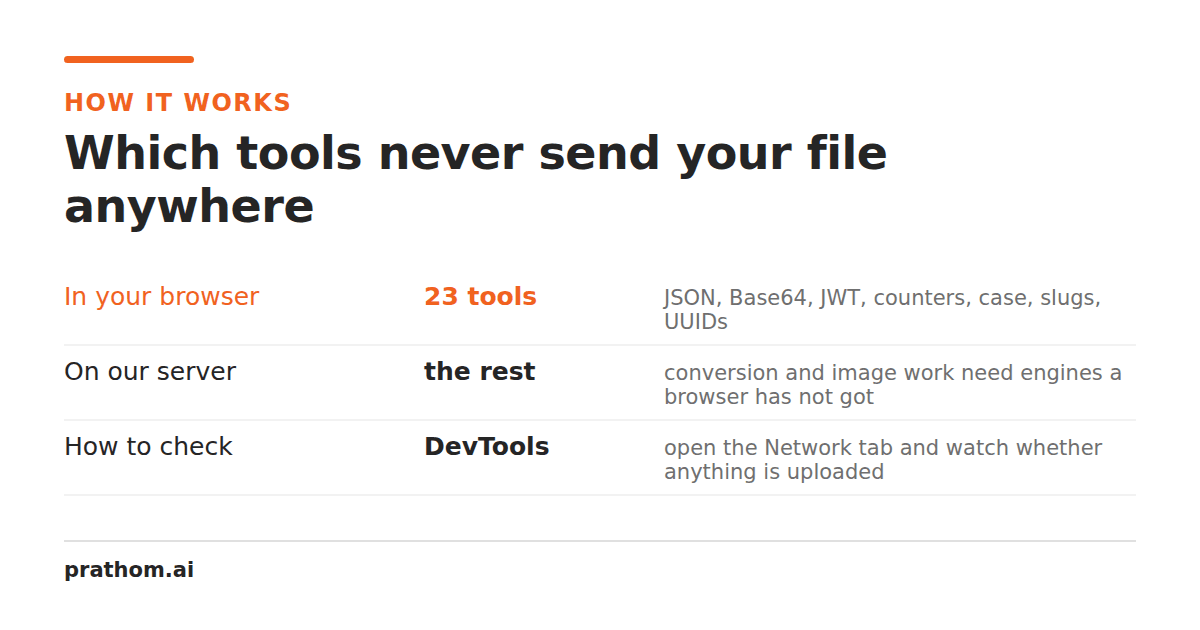
- 4 min read · Ganesh Patil
Why Emoji Break When You Reverse Text
Take "I ❤️ Delhi", reverse it in almost any free tool, and the heart comes back broken — often as a stray mark floating next to a replacement box. The bug is not in the emoji. It is that the word "character" means three incompatible things in programming, and the obvious one is the wrong one.
unicodetextengineering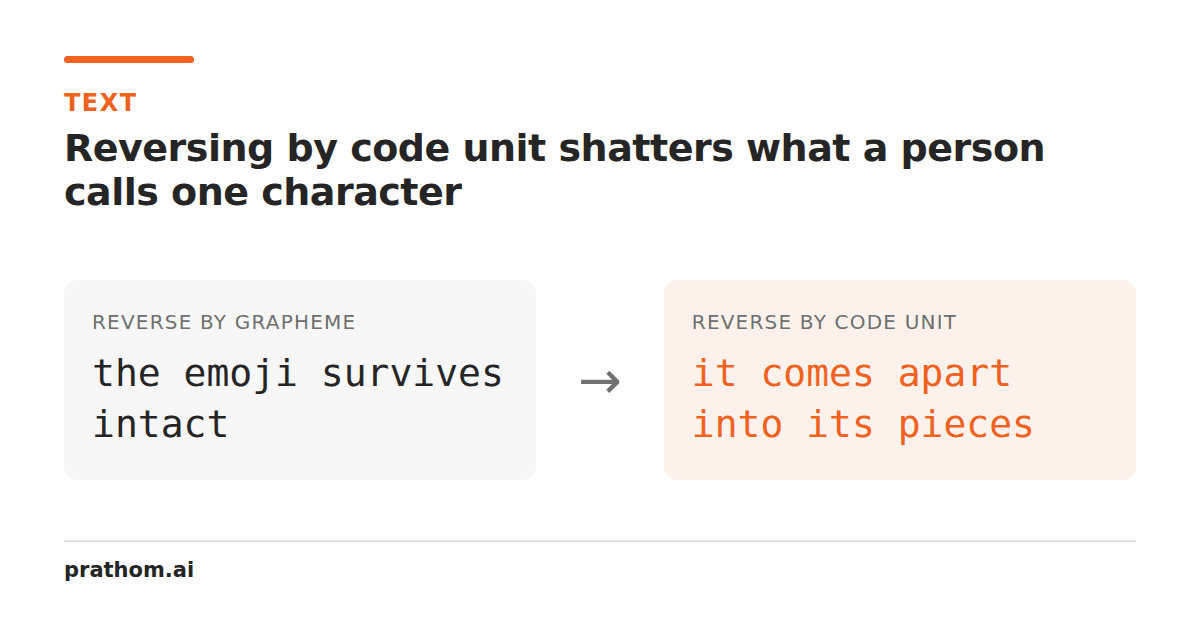
- 4 min read · Ganesh Patil
What Makes a Good URL Slug
Most slug advice is about length and hyphens, which are the easy parts. The decisions that actually cost something later are what to do with accented characters, whether to include a date, and the fact that a slug is effectively permanent the moment anyone links to it.
seourlsweb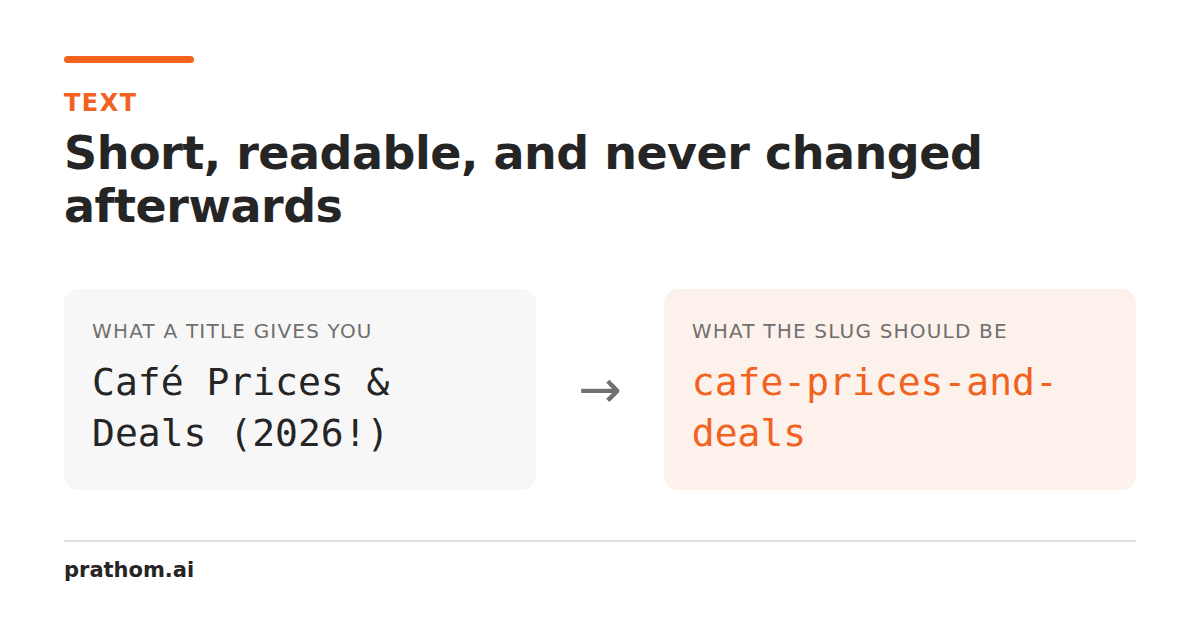
- 4 min read · Ganesh Patil
Why item10 Sorts Before item2
Sort a list of files and item10 lands before item2. This is not a bug and it is not a bad sort — it is the correct result of comparing text as text. Natural sort is the fix, and knowing when not to use it matters as much as knowing how.
sortingtextdata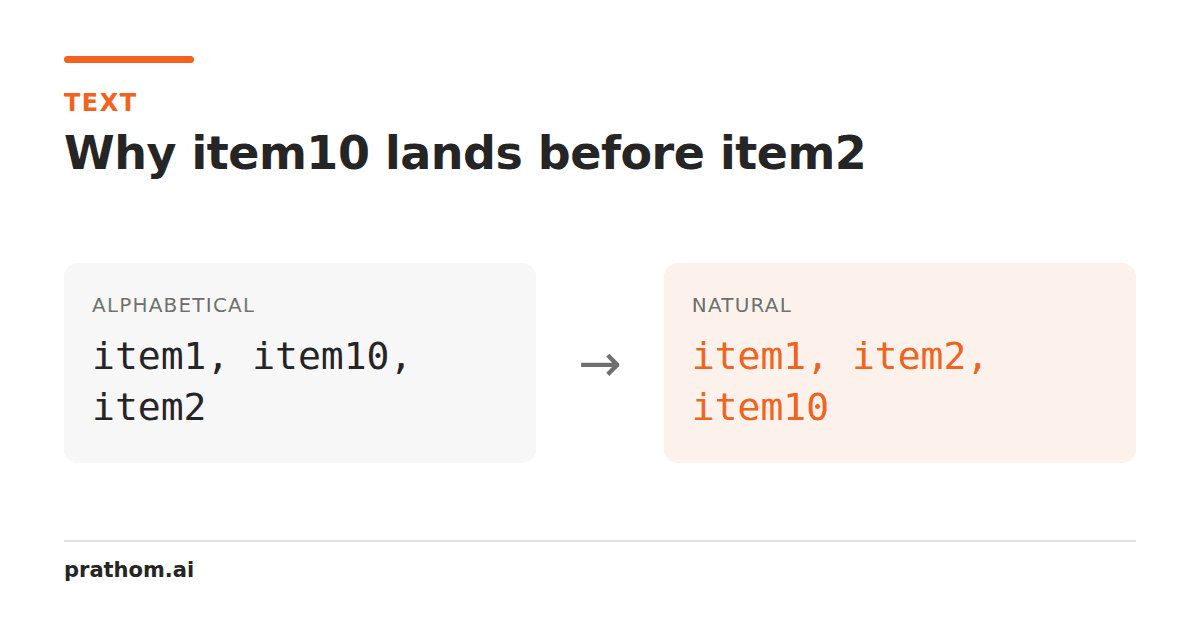
- 4 min read · Ganesh Patil
How to Remove Duplicate Lines From a List
Deduplicating a list sounds like one operation with one right answer. It is actually four decisions, and getting any of them wrong either leaves duplicates behind or silently deletes rows you needed. The decisions are more interesting than the operation.
textdatadeduplication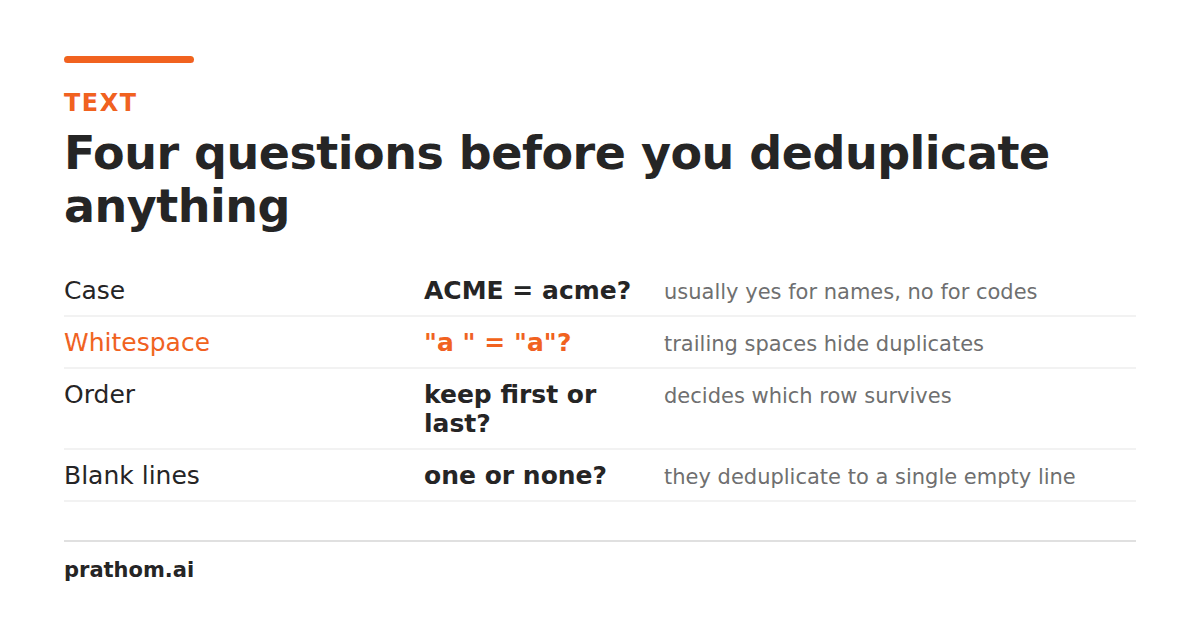
- 5 min read · Ganesh Patil
The Invisible Characters That Break Your Spreadsheet
Two cells look identical, and the lookup returns nothing. A search for a name that is visibly right on screen finds no match. Both have the same cause: a character with no width sitting inside the text, put there by a word processor or a web page, doing nothing except making two strings unequal.
unicodedataspreadsheets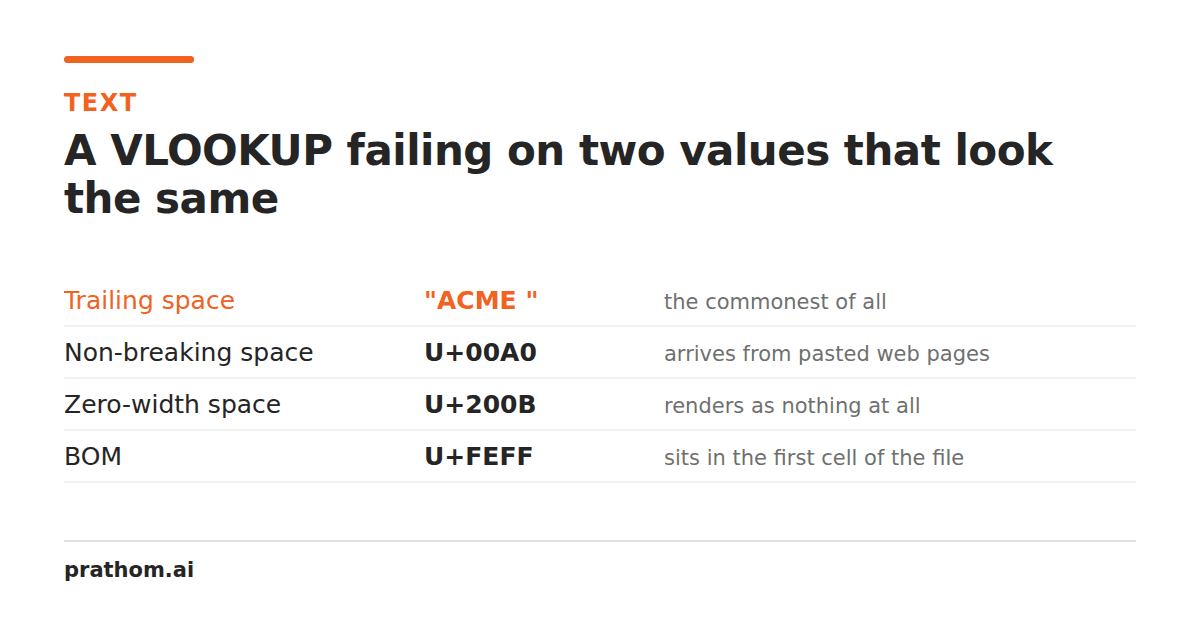
- 4 min read · Ganesh Patil
Why Two Word Count Tools Give You Different Numbers
Word count sounds like an objective measurement. Paste the same paragraph into Word, Google Docs, and a browser tool and you can get three different numbers. None of them is broken — they disagree about what a word is, and hyphens, numbers, and em dashes are where the disagreement lives.
writingword counttext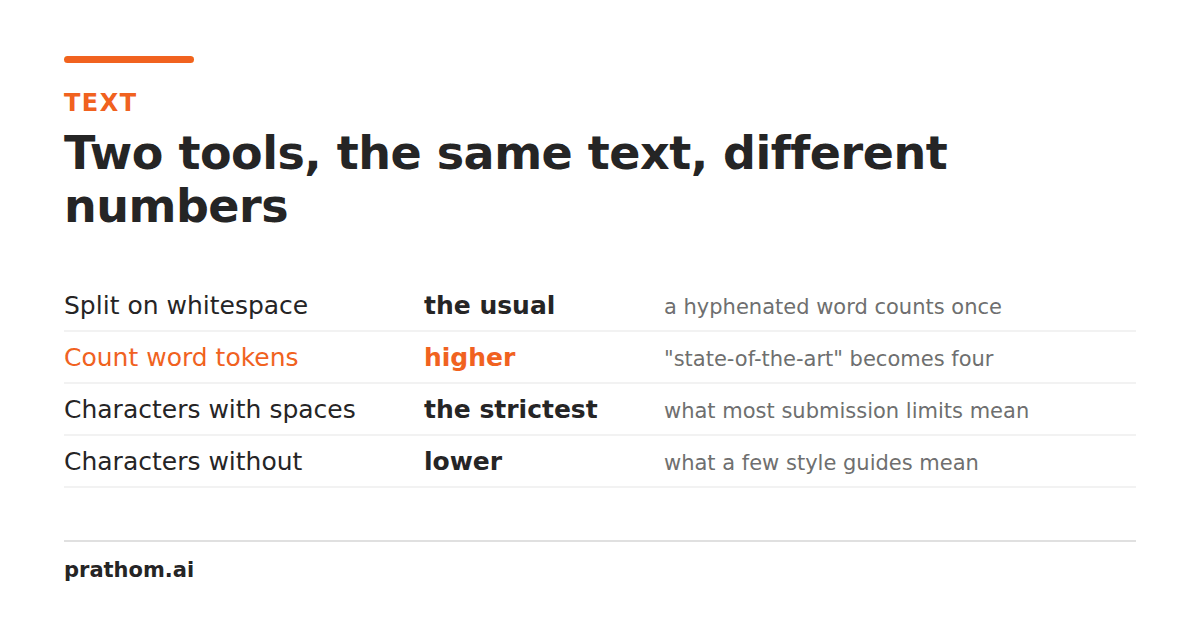
- 4 min read · Ganesh Patil
How Many Hashtags Should You Use?
Two of the four numbers people quote are rules the platforms enforce and two are just conventions, and nobody ever says which is which. One of the real rules fails in a way you would never notice: exceed YouTube's limit and it discards every hashtag on the video, not just the extras.
hashtagssocialcreator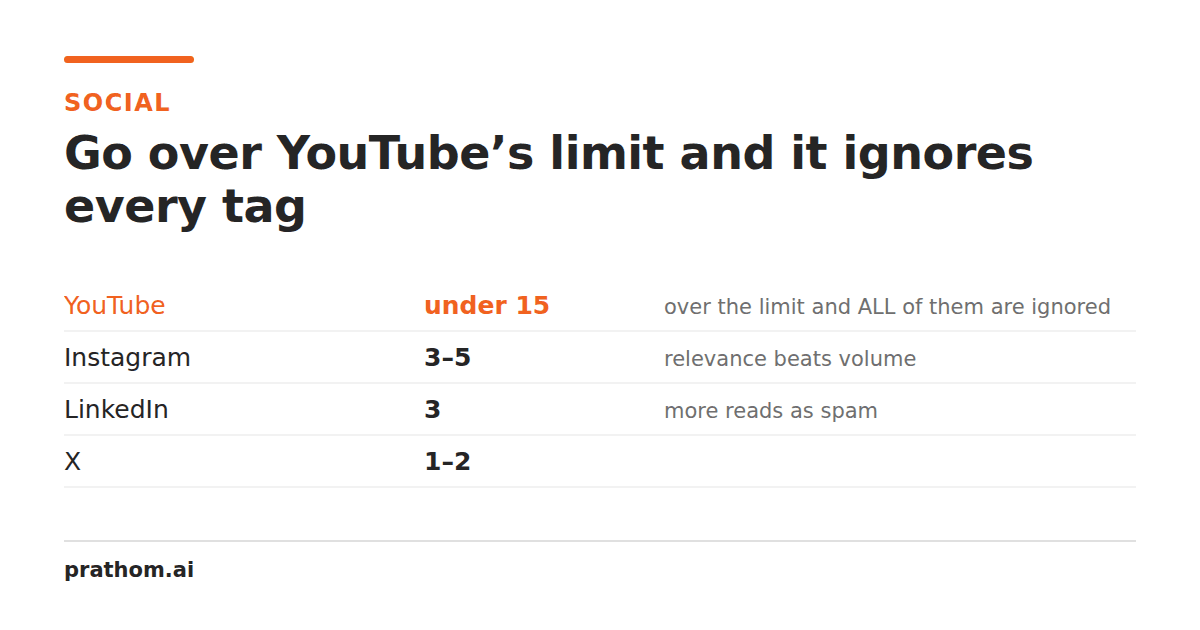
- 4 min read · Ganesh Patil
How Long Should a YouTube Description Be?
The limit is 5,000 characters, which is not the useful number. The number that matters is about 150 — the amount a viewer sees before pressing "Show more". Almost every mistake people make with descriptions is a consequence of optimizing for the wrong one of those two figures.
youtubedescriptionscreator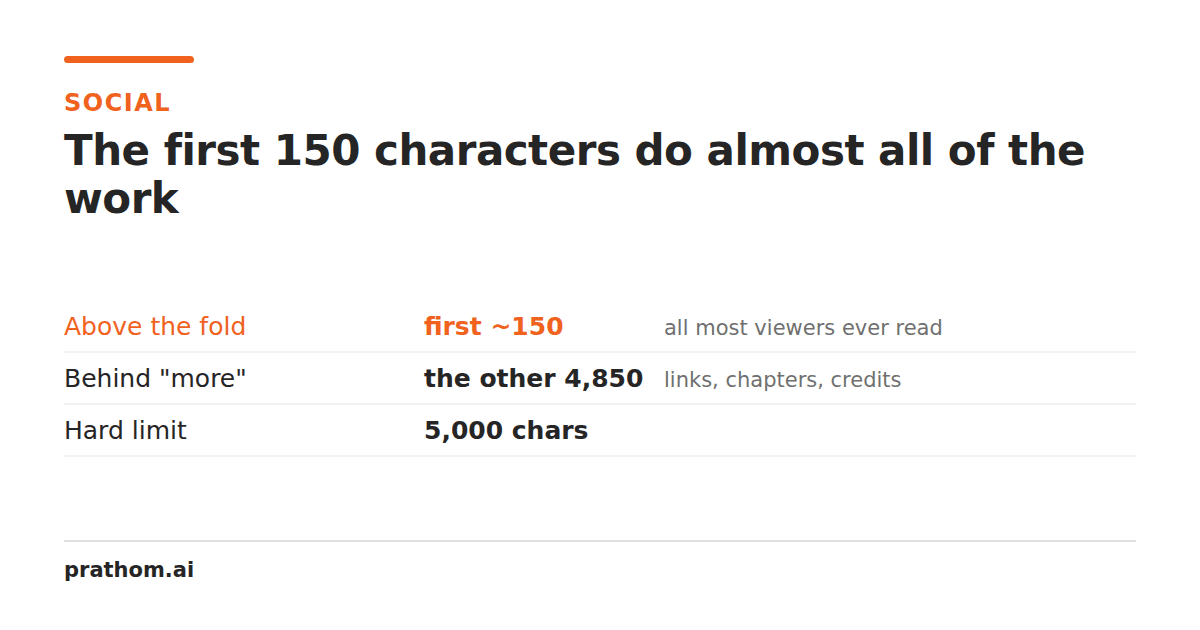
- 4 min read · Ganesh Patil
How Many Words Is a 5-Minute Speech?
The short answer is 600 to 700 words, and 650 is the number to plan with. The longer answer matters more, because the reason most people overrun is not that they miscounted — it is that they used a reading pace to plan a speaking task, and those differ by about 30%.
writingspeakingword count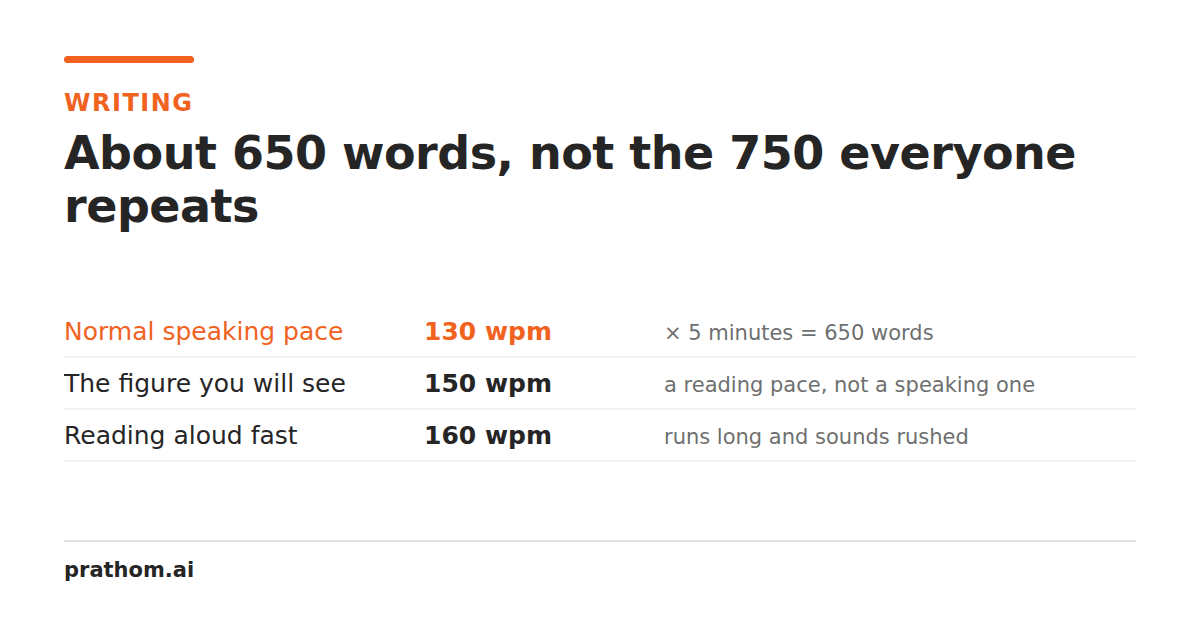
- 5 min read · Ganesh Patil
How to Fix Line Breaks After Copying From a PDF
Text copied out of a PDF arrives broken at the end of every visual line, with words split across those breaks by hyphens that were never in the original. The reason is that a PDF does not contain paragraphs at all, and knowing that tells you exactly which repairs are safe.
pdftextformatting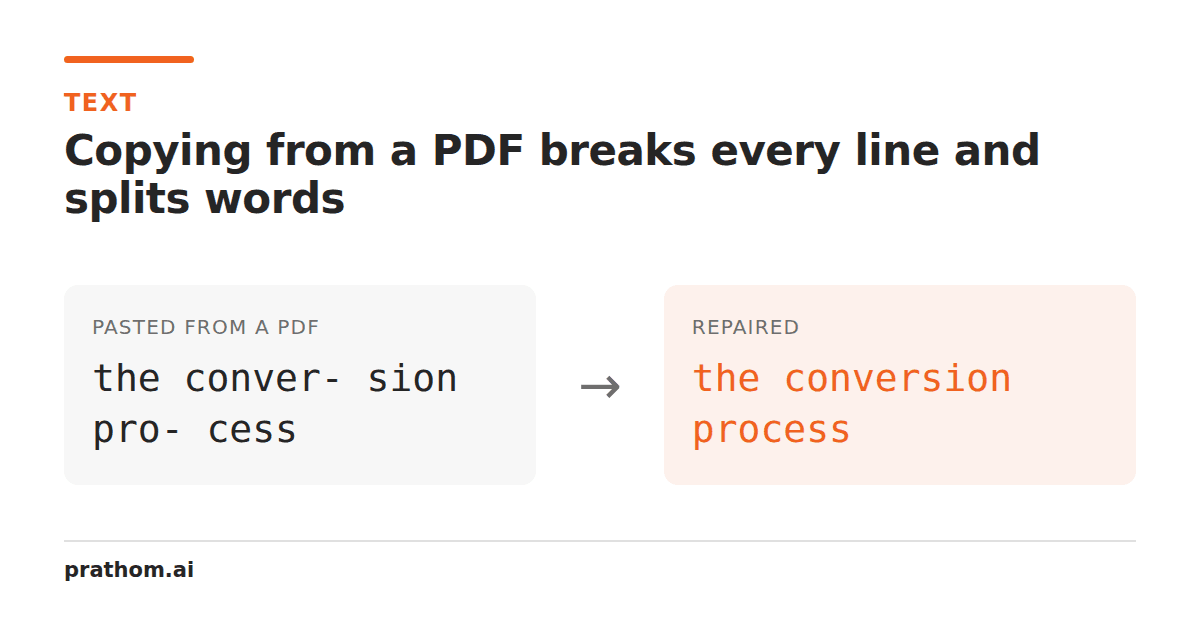
- 6 min read · Ganesh Patil
How to Extract Email Addresses From Text
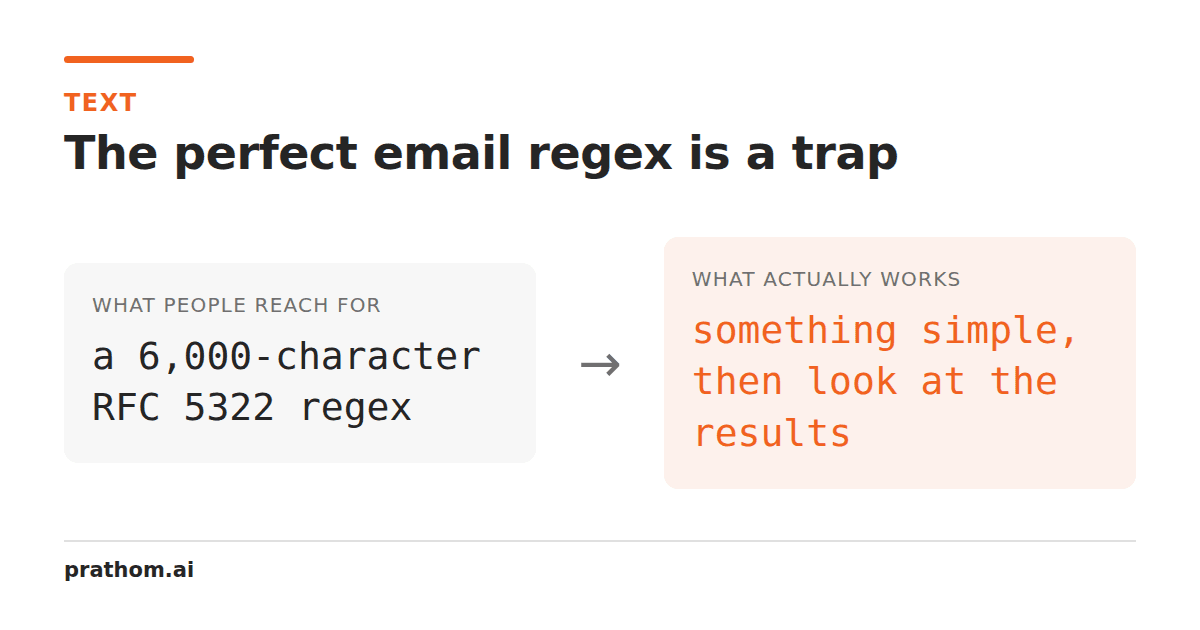
Pulling addresses out of a thread or an export is a five-second job with the right tool and a surprisingly deep rabbit hole if you try to do it properly with a regular expression. The specification for what counts as a valid address is much stranger than anyone expects.
emailtextregex